

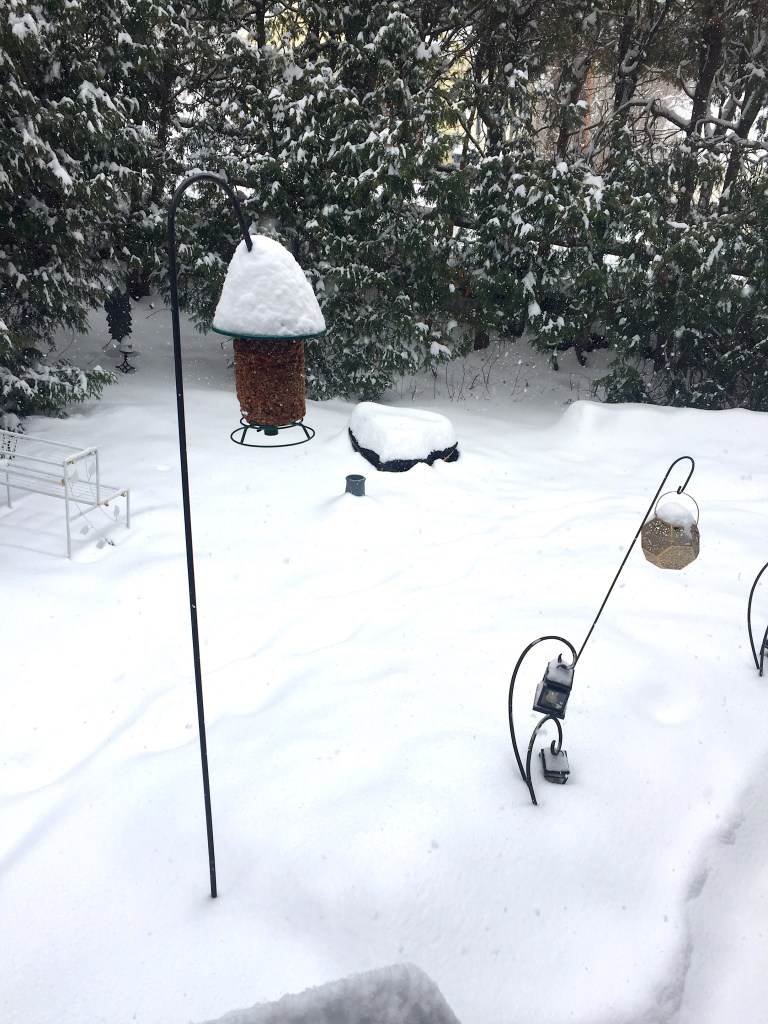
The fifth moon of my solar year is the Sap Moon. It is new between 24 February and 24 March, full between 10 March and 7 April. This is a period of rapid change. The Sap Moon rarely sees the same weather from year to year. When it’s early in the solar calendar, this month is dominated by mud and melt, if not snow and blizzards — like this year, even though this is not an early full Sap Moon. When late, there may be daffodils blooming. When it is close to the equinox, as it is this year, we may have blooming snowdrops, but nearly all the other bulbs and spring ephemerals are green shoots not more than a couple inches tall. But it’s just as likely that the full Sap Moon will be shining down on two feet of snow in my part of the world. In the garden, it is possible in most places to plant out hardy veggies for the first time during the Sap Moon — possible, but maybe not probable. This year, I tried to get the peas planted, but the snow has been relentless. Maybe I’ll get there in a week or two…
This year the Sap Moon is full on 25 March at 3:00am. There is a penumbral lunar eclipse with this full moon, from 12:51am to 5:35am. This is an interesting phenomenon on paper, showing that relative positions of the Earth, Moon and Sun are always in a wobbly dance, never quite the same from year to year. This time around the Moon is too close to the Earth to be completely shadowed. There is only a subtle diminution of the Moon’s glow, which might not be visible at all if the sky is not fully dark and free of even wispy clouds — which, in my part of the world, are a normal feature of spring mornings. And this year, the weather forecast, following the massive winter storm over the weekend, is for cloudy skies and single digit temperatures (°F). I shan’t be getting out of bed for this eclipse. But on the outside chance that you have clear skies and a yen to be awake in the early hours of Monday morning, I decided to put up the Full Moon Tales a day early.
This year’s Sap Moon is, once again, the first full moon after the equinox, so today is Palm Sunday and this coming weekend is Easter.

Back in New Mexico, this is the weekend of the pilgrimage to Santuario de Chimayo, when thousands converge on this small village in northern New Mexico to collect holy soil from a small hole in the floor of the shrine. It is said that on Good Friday in 1810, a crucifix appeared surrounded by a halo of dazzling light. The hole is said to be where the cross was embedded in the soil. Pilgrims come to this shrine from all over the world, many traveling the last miles on foot. Some arrive barefoot.
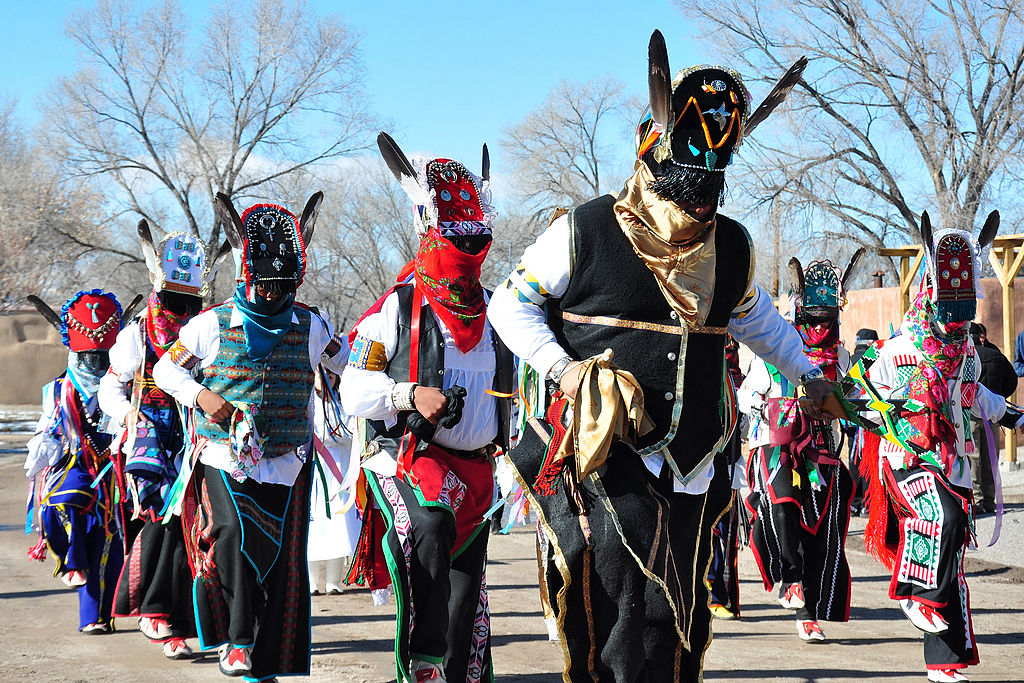
The Matachines de San Lorenzo from Bernalillo, New Mexico, dance at Chimayo during Easter weekend. This sword dance is akin to the Morris dances and is a unique blend of Indigenous and European influences. The troupe from Bernalillo has been dancing on Holy Days continuously for 300 years. Many of the Pueblos have their own Matachines dancers as well. Like the Morris, these dances have a few set characters that enact a simple drama, this one based on the story of Moctezuma seen through Native perspective. The villain, a wily Toro, leads the king astray. But Malinche lures him back with the help of the old ones, Abuelo and Abuela. In the end, the bull is slain, the king is reunited with his people, and the drama begins all over again.
In New England there are fewer cultural markers around this time of year. This is understandable, given the weather. If it’s not snowing and blowing, then there’s mud. Not the best time to be gathering outdoors. But there is also sap and sugar. Spring is more rightfully called maple season here. And, like the blending of cultures in the matachines, sugaring folds together traditions from the many peoples who have lived in this region.
The collection and concentration of sap was already an industry before Europeans arrived with their metal tools and cooking implements. Sugar was trade currency, a condensed, easily transportable form of delectable energy that could be stored for months. Sugar season began when the first crow appeared and lasted until the frogs began to sing. Each family matron had her own sugar bush and directed the entire village in gathering and boiling the sap in this time of year when not much else was available from garden or forage.

The colonists brought pots that could boil off the liquid more efficiently than the previous method of putting heated stones in a hollowed log filled with sap. They also introduced the spile, a somewhat gentler way of reaching the sap. This was originally just a wooden tube with one spiked end. It quickly evolved to a metal tap that could be reused from year to year, and it hasn’t changed much since then — though these days, the taps are connected to tubing that empties into a central collection bin.
The locals also showed the new-comers one of the delights of this season — sapsicles. Branches that are broken in winter storms don’t tend to heal until the growth season gets underway. So during sugar season any broken wood is liable to leak sap. After a few rounds of night freezing and day thawing, these drips form frozen slivers of sugar water that look much like icicles — candy, free for the taking, a spring favorite for kids in this part of the world for thousands of years.
This year the sap is running well. The maple farms are boiling nearly continuously, but they’re also still collecting raw sap from the trees. I had one customer who came in dragging last week. His eyes had dark rings and his back was bent. He didn’t say much except, “I’m tired of delivering sap”. He’d made three runs from various containment bins to the sugar house, and it wasn’t yet noon. There doesn’t seem to be a slowing of the flow, though we are heading into April, when the sugar season activity usually switches from primarily collecting sap to primarily boiling it all down. Maple buds are on the edge of opening, but the nights are still too cold. Significantly, most of the ponds still have some ice — no chance of that last frog run yet. Meaning that there is both furious collection and furious boiling here at the end of March. It must be exhausting!
Though one fantastic benefit of this long sap run is that Sugar on Snow at Morse Farm will have a special extra day for the April 8th eclipse viewing. Maple snow cones, cider donuts, dill pickles and a total solar eclipse! Vermont nerd fest if I ever heard of one!
The generosity of the maple is truly astounding. Maple is a grand old mother tree who keeps giving and giving and giving. Maples can be coppiced and pollarded and will repeatedly produce new growth around the cuts for decades, perhaps even hundreds of years. Maple wood can be formed into all manner of tools and household uses. It is not particularly rot-resistant, but it is very hard and will last for a long time if kept dry. My 19th century house has rock maple woodwork, and I can confirm that it is stony. Nothing penetrates it. In the woods, maple trees will remain standing for decades after their branches and bark have been shed. Most of the dead trunks in my jungle are maple, and all manner of creatures make these old trunks their home. The snags in my jungle are riddled with woodpecker holes. Owls and bats and swallows and many other wee beasties live in these excavated apartment complexes.
Still, there has to be a limit to the generosity. I can’t quite accept that the maples are happy and healthy with humans sucking them dry in the seasons when they are already too stressed to produce much sap. It can’t feel good for the trees. But then it doesn’t even seem smart for the farmers. If your sugar bush isn’t producing this year, best find some other form of income so that it will produce again next year. Taking more than the tree would shed naturally seems like you’d be shortening the tree’s life, taking away from the future for you and everybody else who depends on that tree.
I’m fairly certain the matrons who directed their villages in sugar collecting all those thousands of years did not stress their trees. Maybe they didn’t have the tools — like plastic tubing and enormous metal boilers — and so that constrained them. But I rather think they just wouldn’t have condoned taking more than the bush could provide. If a patch of trees wasn’t producing, they just moved. As in many things, our patterns of ‘owning’ property inhibit a farmer’s ability to let stressed areas lie fallow. Today’s farmer can’t just relocate operations to a healthier part of the woods, and with all the expense of evaporators and tubing and transport, they also can’t afford to turn off the income taps. It’s yet another wicked problem that will likely result in increased harm for the future. (As nearly everything involved in profit-mining does…)
Meanwhile, it’s not a particularly stressful year for the sugar bush. For those farmers that did not go out of business after the poor showings in 2022 and 2023, I suspect this will be a banner year for profits — not least because there is less competition. I’m not sure the maples would approve of that… but it does make Vermonters happy.
A Full Moon Tale for the Sap Moon

It is flowing.
The lethargy burned away in the growing light. The ice receded from the brook and darting silver minnows sparkled in the waters instead. Birds called from the wind-tossed pines, intent on home-making. Bold bloodroot and the first shy buttercups opened white and purple faces to the dawn. Time for the awakening.
She rambled from tree to tree with her pail. Third time for the day. Perfect sap weather, bright sun warming the buds, then an overnight plunge back into winter. But it was ending, she could tell. The buds were opening. Soon there would be peepers chorusing in the bogs. No sap after the frogs sing. She would collect as much as she could today. Maybe tomorrow. After that, maybe not.
The village had collected enough. They would begin boiling it down at the full moon. She guessed there would be plenty of sugar for her people and still many more boxes to trade. She hoped the coastal people came with their seal pelts. She needed to make a new pair of leg coverings for each of the twins. And her winter robe was worn so thin it might be good as a storage bag if she stitched it shut, but it did not do much to keep the cold off her shoulders. A cake or two of sugar would mean a warmer winter.
She brought her pail back to the village and poured it into the barrel. Then she went back out to look over her snares. As the sap flow slowed, planting season approached. She’d laid out traps around the clearing, hoping to irritate the garden marauders and maybe catch something good for the pot with the same snare. She’d brought in a few rabbits, a porcupine, and a very skinny woodchuck. In the lean spring months, none of them were good eating, but meat was meat. And not a great deal of effort to get it either. She thought there were fewer tracks around the clearing now. Perhaps they’d leave the seedlings alone. Still, the twins would be put on watch again this year. They were irritating to everybody, even the crows kept their distance.
Nothing in the traps, but a doe and twin fauns walked through the clearing while she was checking. That would need to be fixed. Deer would eat through the whole garden. She didn’t like hurting infants, but she couldn’t let them learn to eat from the village garden either. They’d been using this plot too long, she supposed. It was time to move on and let the birches and maples return. But they’d make do for one more season. Maybe put more children out here.
She returned to her village and picked up the grinder. She had some dried marsh roots that she pounded together with acorns and the last of the woodchuck meat. She worked the mash into round cakes and set them to cook on slate stones by the fire. As the meal cooked, she absentmindedly wove the marsh grasses into sunshades for the twins. Her fingers knew the motions; she could think on the deer problem.
Perhaps she should have the twins gather all the hunter scat they could find. They did seem to have a talent for finding it. Not always with intention. But there was that cat prowling around the maple wood over the winter. Deer hated that smell. Well, who wouldn’t? She hated the smell also. Her boys didn’t seem to care. They came home from adventures reeking more often than not.
That would have to do for now. After the sugar boil, she would start looking for a new place to garden.
From the Book Cellar
One of the best introductions to making your own maple syrup comes from Martha Adams Rubin in her Countryside, Garden & Table: A New England Seasonal Diary (1993: Fulcrum Publishing).
In Full Moon Feast (2006: Chelsea Green), Jessica Prentice dedicates a whole chapter to sugaring, and she talks about all forms of sap collecting — from her grandparents’ sorghum to maple to palm trees. She includes recipes and techniques with her history and culture lessons.
And while there is discussion of sucking stressed trees with vacuum tubing, the March chapter of the Vermont Almanac, Stories from and For the Land, vol.III (2022: For the Land Publishing) is a nuanced portrait of the maple tree in this part of the world. And it includes a heavenly recipe for Maple Cream Pie that uses black pepper to add a bit of complexity to the simple sweet.
Here are three more books on making and cooking with maple syrup:
— Backyard Sugaring: A Complete How-To Guide by Rink Mann (1991: Countryman Press).
— Maple Sugar from Sap to Syrup by Tim Herd (2010: Storey Publishing).
— Maple Syrup Cookbook by Ken Haedrich (2001: Storey Publishing).
There are quite a number of wonderful picture books on maple sugaring. All of them feature amazing art and storytelling. A few are award winners.
— Sugaring Time by Kathryn Lasky, photographs by Christopher G. Knight (my version is from Aladdin Paperbacks and dated 1998; original copyright is 1983).
— Sugaring by Jessie Haas, illustrations by Jos. A. Smith (1996: Greenwillow Books).
— At Grandpa's Sugar Bush by Margaret Carney, illustrations by Janet Wilson (1997: Kids Can Press).
— Maple Moon by Connie Brummel Crook, illustrations by Scott Cameron (1997: Fitzhenry & Whiteside).
— Pancakes for Supper by Anne Isaacs, illustrations by Mark Teague (2006: Scholastic).
— The Sugaring-Off Party by Jonathan London, illustrations by Gilles Pelletier (1995: Fitzhenry & Whiteside).
— Sugarbush Spring by Martha Wilson Chall, illustrations by Jim Daly (2000: Lothrop, Lee & Shepard Books).
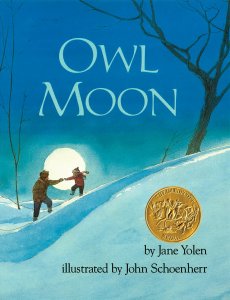
And last but not least, there is Jane Yolen’s tender depiction of her daughter and now-deceased husband learning about nature in the cold nights of earliest spring. There is no maple syrup, but there are maple trees — and owls! Owl Moon by Jane Yolen, illustrations by John Schoenherr (1987: Philomel Books).
©Elizabeth Anker 2024

 By My Solitary Hearth