


wampanoag lament
they washed up on the shore
treading winter’s cold edge
later than wont of their kin
beyond time for kind seas
beyond harvest and hunter
lost and unseasoned they came

with infants mewling
and stomachs distended
yet no choice but remain
before the moon waned
our seed stocks were sundered
our harvest stores plundered

but no gifts in return
no thanks nor entreaty
welcome rebuffed with barbarity
this vagabond tribe
drew lines in sand
daring us to cross our own homeland

still we forgave
knowing them for frightened children
for they knew not to plant the corn
nor dig the quahogs
and when spring opened leaves
we taught them land’s language

but they could not hear the song
too blind to abundance
too intent on their claiming
naming rocks and rivers their own
late come guests
building walls of stone

we laughed at their conceit
humoring infant hubris
with pats upon the head
yet to our enduring sorrow
we saw that they were fed
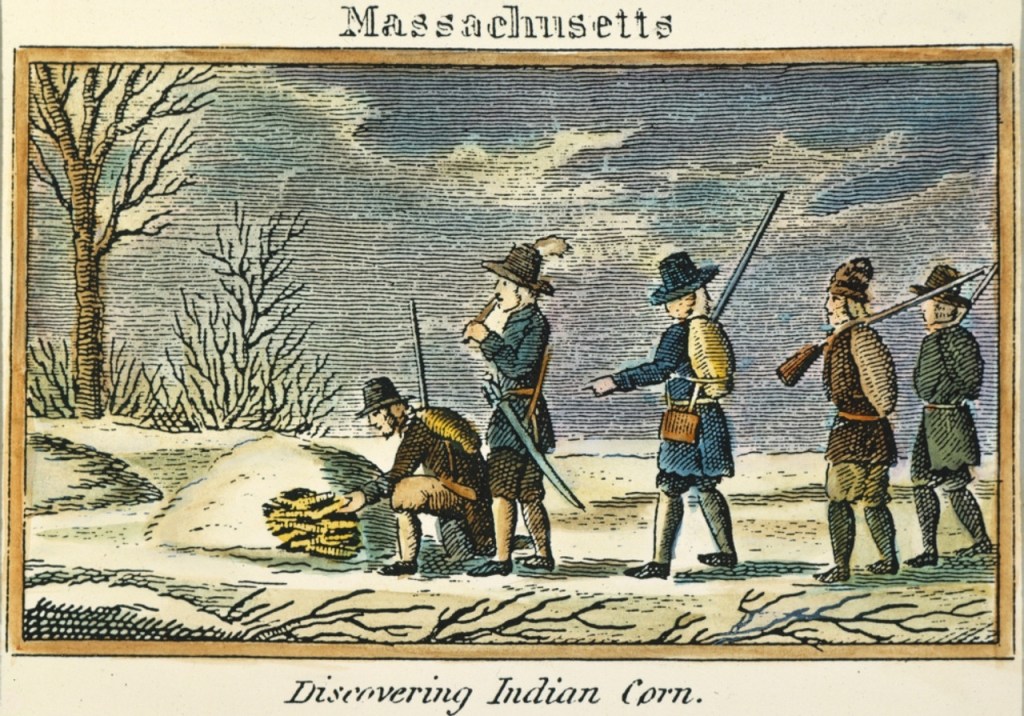
Having discovered the stores of grain in a seasonally uninhabited summer village on Cape Cod, the Puritans thanked their god for such divine providence and promptly carted off all of it, approximately 40 bushels by some estimates. The place where the corn was buried is now called Corn Hill. Some claim that the Puritans swore an oath to repay the Natives. Maybe. The journal entries I’ve read on the event seem to feel that the Natives, being benighted heathens, were not owed anything. God, knowing beforehand of their extremity, delivered the corn to the colonists, using the locals as tools. In any case, it was a long time before the colonists could grow corn reliably enough to produce a surplus, and by that time relations between Native and colonist had decidedly soured. It is unlikely the debt was ever repaid. A bit over a half century later, the colonists had killed or enslaved nearly all of the Wampanoag.
Wednesday Word
for 27 November 2024
obligation
Gratitude in this society is often objectless, portrayed as a proper general orientation to the world, not as a response, much less a debt. Practice gratitude, the serenity gurus all say. But gratitude for what? And more importantly to whom? Thankfulness is not vague sentiment. It is a response to generosity, to assistance, to care, to work done. Gratitude is not a mark of good character. It is the least one can do to repay obligation. All of us owe our lives — to our parents and ancestors of many kinds, to the lands we live in, to the food we eat, to the plants that make the air we breathe. We are all obligated. Saying thank you isn’t good manners. It is what we owe.
What does obligation mean to you? To whom are you indebted? How do you repay that bond? Or do you pay it forward? And how is that possible in a crumbling world? Just a few things to consider going into the holidays…
©Elizabeth Anker 2024

 By My Solitary Hearth