

Today is Palm Sunday and this coming weekend is Easter. There are palm parades and processions all over, and today is a traditional day for Pace Egg plays, a sort of mumming that features St George and the Dragon. Bake a Pax cake (which are shortbreads with springy decorations in jam or frosting) or figgy pie (an eggy custard pie filled with figs — dried in spring, fresh in autumn), and take it to any who have wronged you as a lovely way to grant forgiveness. Sharing cake makes it easy to put aside a quarrel and renew your friendship.
This is also the beginning of Care Week, a time of tending to graves and memorials. Take a fresh wreath or bouquet to the cemetery and clean up around the grave. Then settle in to chat with your deceased loved one, giving them all the good news of the last year. (This is as much for you as for whatever spirit is left in the graveyard…) It is also a good time to tend to the elderly, lest they breed new gravestones before their time. Take tea to an older relative who you don’t see often. Visit elderly neighbors, bringing cookies and flowers. Get a group of people together and go sing spring carols in an elder care home.
In Celtic lands — cold places not known for their palm trees — the traditional palm is replaced with the pussy willow which has similarly strappy compound leaves. In New England, willow is not yet leafing out by Palm Sunday even when it falls late like this year, but the branches are laden with catkins right now. I make those into my “palms” because willow is a symbol of remembrance, especially of those I want to keep close. (Plus pussy willow is appropriately adorable, rather bunny-like…) Gather your palm of whatever variety and make a bouquet of fresh green or drooping catkins for the table. If you are traditional, burn the palms on Easter Monday and keep the ashes until next year as a memento mori for Ash Wednesday.

Back in New Mexico, this is the weekend of the pilgrimage to Santuario de Chimayo, when thousands converge on this small village in northern New Mexico to collect holy soil from a small hole in the floor of the shrine. It is said that on Good Friday in 1810, a crucifix appeared surrounded by a halo of dazzling light. The hole is said to be where the cross was embedded in the soil. Pilgrims come to this shrine from all over the world, many traveling the last miles on foot. Some arrive barefoot.
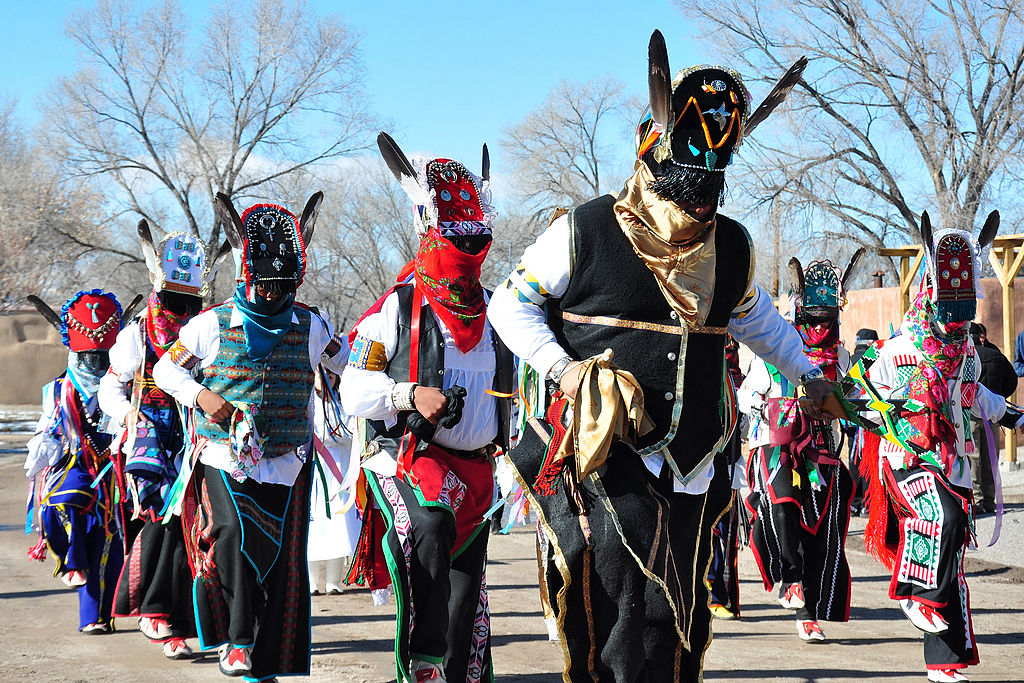
The Matachines de San Lorenzo from Bernalillo, New Mexico, dance at Chimayo during Easter weekend. This sword dance is akin to the Morris dances and is a unique blend of Indigenous and European influences. The troupe from Bernalillo has been dancing on Holy Days continuously for 300 years. Many of the Pueblos have their own Matachines dancers as well. Like the Morris, these dances have a few set characters that enact a simple drama, this one based on the story of Moctezuma seen through Native perspective. The villain, a wily Toro, leads the king astray. But Malinche lures him back with the help of the old ones, Abuelo and Abuela. In the end, the bull is slain, the king is reunited with his people, and the drama begins all over again.
©Elizabeth Anker 2025

 By My Solitary Hearth
This is so interesting – thank you!
LikeLike