

The Flower Moon is full at 12:55pm today. I suspect in lunisolar calendars like that of the Irish and Cymri, this full moon after the hawthorn bloomed would have marked Beltaine. Or perhaps Beltaine, the beginning of summer, was set to the seventh full moon after Samhaine, the end of summer — which was also likely determined by the moon, not the sun. In any case, it may be that what I (and The Old Farmer’s Almanac among many others) call the full Flower Moon is the ancient holiday of Beltaine, the advent of the summer. Or at least the beginning of the upland grazing season.
I don’t think Beltaine is a day so much as it is a season, for precisely the reason that it is very difficult to tie Beltaine to a day. It was certainly not May 1st in the Irish calendars that observed Beltaine. The one preserved calendar that we have from a Celtic-language culture, the Coligny Calendar, did not contain May, nor even an equivalent. In the Coligny Calendar, months hung on the solar cycle in an elegant cycle of 62 months every five years. There were 12 months in each year, with an intercalary month added every 2.5 years to prevent seasonal drift. Now, this calendar was created by Roman citizens, the elites of Gaul, and yet they refused to adhere to Roman time. So I think it’s rather unlikely that the wild Hibernians well beyond the pale marked time with the Roman calendar, the one we inherited and still use today, the one that has a May 1st. It is far more likely that they marked time by the moon and by seasonal events.
Beltaine, the beginning of summer, was naturally when summer weather showed up. A simple determination of summer weather is when the Green World trusts the temperatures enough to put out their delicate blossoms. And, in fact, the Celtic cultures of Britain and Ireland have many traditions of summer a’coming in when the hawthorn bloomed. There is one word for both “May” and “hawthorn” in Cymraeg (Welsh). Similarly, the hawthorn in full blossom is so central to so many Beltaine customs, there would be little celebration if the “may” failed to bloom, which is all too likely if the bush had to follow the secular calendar, regardless of the year’s weather.
Now, it may be that the holiday was simply observed whenever the buds opened. But since the moon ruled time in this culture — as in most human cultures, past and present — it makes sense to me that the season of summer would be formally ushered in by the full moon closest to the blooming hawthorn. Which is probably why the Cymri call this whole month Mai, Hawthorn.
There are interesting threads connecting the hawthorn, the summer, the Green Man, and Arthurian legend. Because, of course, Arthur was Celtic. Romanized, for sure, but if he existed at all, he was born in Tintagel Castle in Cornwall. He had a Cornish mother. He may have spoken Latin, maybe even some of the barbaric German languages, but his native tongue was Cornish, a language that was carried across the English Channel to put down its roots around the Brocéliande Forest of Brittany. This forest is, not coincidentally, where much of the Matter of Britain plays out.
Arthur is sometimes called a summer lord, except… he’s really not. He might have been the golden boy of the Britains, but he died a cuckhold at the hand of a younger man who might have been both nephew and son, depending on the storyteller. Arthur has more in common with the Winter Kings, who take the hand of the Land Goddess when she is resting in her somnolent, chthonic state, when she is not in her full productive capacity. When she awakens to walk in the Green World, she turns from the Winter King to the Summer Lord.
Guinevere turns from Arthur repeatedly. Sometimes she is “abducted”. Sometimes she seems to become two or three women of the same name — a common enough theme in many European cultures — all queen in different castles — a rather uncommon plot device. But we mostly remember that she betrayed Arthur with Arthur’s closest companion, Lancelot. And here we might find summer.
Lancelot’s name may be derived from words relating to the javelin, casting Lancelot as the weapon in the king’s hand. It could also be L’Ancelot (it is written this way in many stories), which means “the servant” — or perhaps The Servant — again, the hand of the king. But the name can also be derived from the mythological hero and sometime deity, Llew Llaw Gyffes. These derivations seem a bit tortuous, but I understand the urge to reach. Lance shares too many characteristics with Llew to not be related in some fashion. They are both born of Faerie mothers who apparently believed in tough love. They both are ambivalent characters in their own right, ageless and, apart from a disastrous dalliance with the Flower Maiden, generally genderless. They are both fierce warriors that spend quite a lot of time in positions of weakness, largely voluntarily. They are also both nearly silent in all the stories.
Llew seems to be a puppet in the hands of his powerful shamanic uncle. He hardly utters a word in the entirety of his story until he is compelled to tell his young wife, the Flower Maiden, the only way he can be killed — which turns out not to be strictly true, since he does not die but flies off in the shape of an ailing eagle. Lancelot says absolutely nothing for most of his story. It is not until he is driven mad and living far from courtly society that he begins to talk. Llew and Lance are not characters; they are tools in the hands of the shadowy Winter King. They may be the young Summer Lord. They both seem summery. They, at least, win the heart of the Land Goddess… for a time.
But there is one other Summer Lord in the Matter of Britain, Gawain, Gwalchmai, The Hawk of May. Or the Hawk of the Hawthorn. In the stories, Gawain is the young nephew of Arthur, but Gwalchmai may be older than Arthur. His story was certainly recorded long before Chretien got ahold of the Arthurian myth cycle. In all the stories, Gawain is perpetually young and strong and not particularly brilliant, but fiercely loyal and true. In Monmouth’s version of Lancelot’s betrayal of Arthur, it is Gawain who tells the king and who then entraps the lovers — not because of any enmity toward either the queen or Lancelot, but because it is the right thing to do in spite of the pain it causes.
It is never explicitly said, but I have always felt that Gawain and Lancelot were actually closer than either’s relationship with the king. They seem to be the same age, or maybe the same agelessness. Gawain’s mother is Morgaine, or Morgause — one of Arthur’s faerie-witch sisters, anyway — so both Gawain and Lancelot tend to be something other than human. They are both Knights who fight for the king, servants and swords. They also are both strangely fatherless. In a story cycle built around men, they are cut off from male parentage. Gawain’s father, King Lot of Orkney, is a dark blot on the edge of Gawain’s tale. Gawain stands by his uncle and one gets the sense that he would not willingly return to Orkney, if Orkney is a place in this world at all, which is not a given. Lot is portrayed as powerful but insular, cold and dark like the land he rules. He is decidedly Plutonic, perhaps even a king of the dead. Similarly, Lancelot’s father, King Ban, is a shadow. It seems that the mythographers were compelled to explain why Lance is raised by women in the mists, so he is styled an orphan from a lost kingdom. The result is that both King Lot and King Ban are distant and, if not dead, then certainly deathly.
(Incidentally, Ban and his “brother” Bors were two of the original Knights before there was a Round Table, and before Arthur was king. Ban, whose name might be eponymous with the name of his land, Benioc or Benwick, fought alongside the brilliant Roman tactician who held back the Saxon invasion for a time. That legionary became Arthur, and Ban became the lost father of Lancelot.)
So Lancelot and Gawain have faerie mothers and underworld fathers. But remember that Lancelot might also be derived from Llew whose totem animal is the eagle, or more accurately, a large bird of prey, like a hawk. And note that Gawain’s name is actually Hawk of May. The Hawk’thorn. Here we have the Summer Lord. It seems to me that Lance and Gawain are two versions of Summer. And they are both as ancient and young as the blooming hawthorn under the Full Flower Moon.
I am not inordinately fond of anthropomorphizing the world, but I do love stories and this story of the complex Summer Lord — the youthful bright elder who comes from darkness and recedes into darkness but does not die — this seems a very good description of the Green World. In my personal mythography, I call this archetype the Green Man, but I could easily call them The Forest. Perhaps Brocéliande. Or the Green Mountains. Today, the Green Man is dancing over the hills around me, full of exuberant growth and bright blossom. It is all potential today. Summer is a’coming in.
But summer is short and potentials often fail. So take today to hail what may be in this season of passionate growth.
Because soon enough the Land will turn from the Summer Lord to return to her dark Winter King, and another Green Summer will fade away into the faerie mists.
This year the Full Flower Moon is very near apogee, the furthest it strays from the Earth. So, it looks smallish, though you never have a closer moon hanging side-by-side for comparison. However, when the moon rises today, at 8:37pm in my part of the world, it will be about 8 hours past the full. And that will have a bit more effect on the size we see. It may not be flattened, but it will be less brilliant than full. Still beautiful, I’m sure, as long as the clouds clear off.
This moon is not in eclipse, but my Full Moon Tale this month is set under a blood moon. It’s also set some time in the not-so-near future, after things have settled down again. And it’s in a bookstore… because it is my hope that books remain, even when things like black tea and 24/7 electrical power become history.
So, I give you The Man in the Moon…
The Man in the Moon
I closed the shop early. No point to staying open in this storm. If anyone were foolhardy enough to venture out, I’d not want to sell books that would likely only get ruined on the walk back home. But there were no people, nobody dashing from one shop to the next, nobody walking the dog or dragging a marketing cart or pushing a baby carriage. Not even a stray dog, nosing the flooded gutters. Nothing moving at all. Only sheets of water pouring from the sky.
Rain without wind is oddly static, as though grey lines are painted on the air, the only motion to arrest the eye being the visual white noise of droplets continually impacting puddles in a misty scrim of tiny eruptions. Loud eruptions. The rain drummed on the awnings above the shop windows, drowning out all other sound. Standing inside, I could see the key turning in the lock and feel the pins click into place, however I could hear no sound but the outside rain hissing on the pavements and pummeling the canvas.
I stood looking out the front window. The storm darkness made twilight of the afternoon, but the solar streetlights hadn’t received enough charge to be fully lit. They emitted a pale luminescence that did not reach the ground, like firefly-filled jars perched atop iron posts, glowing eerily through the gloom. My shop was one of the few that opened on Sundays, but there were even fewer pools of light around the Common than usual. I was not the only one to shutter early. In fact, several had already hung out actual shutters to protect costly plate glass from errant branches on the wind. At the moment, the town center was in between storm cells. The rain sheeted down; but the violent wind, hail and lightning of earlier had calmed for a spell. Calmed, but not gone. Clouds this dark likely bore enough pent-up energy to send out wind and lightning for hours to come. I decided I should lower my own shutters.
I turned the cranks that ratcheted chainlink gratings down in front of the display windows that projected out on either side of the door. My shutters let the light out but didn’t let damaging debris in. I don’t know why this old building came so equipped, but I appreciated the ability to watch the storm without much fear. In evenings, especially in the long nights of winter, I often sat curled up in the front windows with a cup of tea, reading by candlelight and staring out over the dark Common. Today, the darkness was not so complete as to need candles indoors. In any case, it was still afternoon and the electric power was running. The light from my windows cast an apron of warm golden light on the walkway out front. It was comforting to be in the bookshop looking out at the storm. Welcoming.
Which is undoubtedly why the stranger chose my door.
Well, that, and the fact that this is a bookstore. Which is to say it’s a magnet for weirdness.
I had just turned away to go make that cup of tea and grab my current book — a thoroughly diverting comedy of mannered errors from the century before last — when there was a pounding on the front door. I reflexively turned back toward the clamor and came face to face with a tall man. He was almost pressed against the door, near enough for his breath to fog the glass, though there was ample space in the entry alcove to stand out of the rain without being so close. So there we were, separated by less than a hand’s breadth on either side of the door. It was disconcerting to be so physically close to someone I didn’t recognize — particularly as I had just been looking out at a deserted town center. I do not know how he managed to appear at my door in the span of a few heartbeats that my back was turned.
It was even more disconcerting to notice that he was not notably wet. True, he wore a broad-brimmed hat. But in this rain his long, silvered-black hair should not have been quite so feather-dry.
And I was quite sure I’d never in my life seen the person underneath that hat. I have always lived in this town. Truly, I’ve spent most of my life right here in this bookstore. My mother ran this shop before me and her mother before her, so it’s no exaggeration to say that I grew up watching the town through the shop windows. This is not a very small place, not like some villages around here where one has to be very careful about marriage partners; and my town welcomes many new immigrants each season, as in any inhabitable location these days. Even so, I know most of the town’s people at least by face. Yet, I’d never seen this person before. He was very tall, which is not common around here. I’m not short; I usually look down on the balding pates of men. But this man was at least a head taller than me. I’m fairly certain I would have noticed someone of his stature, if for no other reason than relief at not being the largest body for a change.
He was also painfully thin. His angular face had the gaunt look of someone not quite recovered from the plague. His eyes were large and deep-set, underscored with purple crescents, and they were tinted a black so complete that there was no obvious division between iris and pupil. But apart from the half-moons under his eyes, his skin was as pale as moonlight, so translucent that veins traced blue rivers over his nose and down his temples and jawline. But his cheeks were painted in a fevered flush. As these tell-tale signs of potential contagion registered, I stepped back instinctually, even with the door between us.
He began speaking but I couldn’t hear his voice both through the door and over the rain racket. I shook my head to convey incomprehension and, hopefully, my reluctance to open the door. He huffed out a glass-clouding breath of frustration and began to dig about in his raincoat — which I now noticed was a strange style, like an ancient adventurer’s coat, long, flared at the knees, slightly caped across the shoulder, and completely riddled with pockets.
The rest of his clothes were similarly antique and whimsically romantic. He wore loose trousers tucked into top-folded, knee-high boots that looked to be made of a soft, supple leather. A white linen shirt draped down to his thighs. This was open at the collar, revealing a twisted, almost runic pendant wrought from some heavy, black metal and set with a single cabochon of opalescent moonstone. Over the shirt, he wore a long vest of complicated vining jacquard in the last tint of blue in the evening sky before darkness falls. He seemed to be aiming for a caricature of the characters in my mother’s favorite, breathlessly titillating, novels.
His rummaging hands finally found what he’d sought. He placed a palm-sized square of paper up against the door glass. Being a creature who responds to printed material, I automatically perched my reading glasses on my nose, stepped closer to the door, and scanned the sheet. It appeared to be a vaccination passport. One “Amaris López” was declared inoculated against all relevant disease and cleared for travel within any Turtle Island state. I looked up from the card and saw his eyebrows raised in disarming expectancy.
What can I say? I’m a sucker for an expressive brow-line. I fished my keys out of my apron pocket.
I unlocked the door and pulled it open, stepping aside to keep some distance between us, vaccination card notwithstanding. He swept in, already shedding his hat and coat as he entered and pointedly looking about for a place to hang them. We don’t have a coatrack, and even though he was much less soaked than he should have been in this rain, his outer garments were still too wet to lie on top of the book tables. So I took them from his hand, carried them behind the counter, and draped them over my stool.
I turned to find him looming over me. Apparently, he moved with uncanny quiet. I hadn’t even heard the floorboards creak. I stumbled backwards, putting the stool between us. A frisson of fear fluttered my heartbeat, and I hoped that unlocking the door hadn’t been a colossally stupid mistake. Then I gathered myself together. After all, I was a bookseller. We’ve seen it all. Usually before elevenses.
“Flora Gauthier” I said, bowing my head over my hands in the common greeting.
He copied my posture but then bowed deeper than was common as he replied, “Amaris López. Most pleased to meet you.” His voice was unexpectedly deep and had a peculiarly fluid timbre, like the warble of a wood thrush.
“Pleased to meet you as well,” I responded. “Now, how can I help you?”
He looked confused, so I continued “Was there a particular book you wanted? Or would you like to browse?” I couldn’t help adding “I had intended to close up early because of the storm,” glancing wistfully at the front door.
“I’ll only be a moment,” he declared before gliding silently into the stacks with the familiarity of a regular.
I sighed.
After a few minutes, I decided I still wanted that cup of tea. It seemed polite to offer him something as well, and I am nothing if not of abiding good form.
“I’m going to make a cuppa. Would you care for any tea?” I called into the shelves.
He did not respond immediately. I had started heading toward the stairs to our mezzanine office when he stepped out from shelves much closer to the register counter than I’d expected.
“Thank you. I take mine black,” he belatedly answered.
Black? Oh!
“Not that kind of tea,” I clarified. “It’s just regular chamomile here.” I’d never even had camellia tea, never mind the fermented black variety. Strange. He certainly didn’t look wealthy enough for black tea to be habitual. I admit to blinking somewhat stupidly for a few breaths, trying to reconcile his frayed appearance and his presence in my shop on a stormy May afternoon with a person who drank his tea black.
For a moment he seemed to be doing his own version of internal calibration. But then his face cleared and he declared chamomile to be perfectly delightful.
I kept my face carefully neutral as I nodded and headed up the stairs. Why today? But then, why ever? This was a bookstore. Strange happened.
When I came back down with two hot mugs, he was sitting in the reading nook, long legs folded elegantly, a book open in one hand, and a large stack of books neatly piled on the table next to his elbow. He was, however, not reading, but watching me descend the staircase.
I hitched on my best shop-keeper smile. “I see you found your books,” I said brightly, as I approached. Then I noticed what he was not reading and I faltered. He was holding my vintage comedy of errors in his long-fingered hand.
Now, like any half-decent bookseller, I know every book in my shop. I buy all the inventory and I shelve it all carefully. I knew there was only one copy of the novel I was reading. Quite likely, there was only one copy in my entire town. But certainly there was no other copy in my store. And I knew the one in my shop had last been lying on my office desk upstairs. My heart fluttered again.
As if acknowledging my discomfort, he smiled enigmatically and then said “I do enjoy the freedom of narrative created by this Lucien’s utter lack of sense. Don’t you?”
This was so extraordinary, so unusually engaging, it startled me right out of my fears.
While considering how to respond to his odd declaration, I placed the mugs on the table and sat down in the chair opposite him. Finally, I replied, “I’m not sure that was Balzac’s intent, but yes, I suppose, idiocy can be rather liberating for an author.”
“Liberating and perhaps a bit lazy?”
I thought about that, warming to the first real book talk I’d had in… well, since my mother died. To all appearances, he seemed genuinely interested in hearing my answer. Quite a seductive spell to lay on a bookworm. I smothered the small voice that was still insistently questioning how he came to be holding that particular book. Among other oddities…
“Yes, lazy is a good description. But as you said, this utter lack of sense does move the story in unexpected directions. And I’m not sure how else an author would get from here to there with a more normal character.”
“For that matter, what is a normal character?” came his rejoinder. “Doesn’t normalcy preclude that singularity necessary to being a novel character?”
“Maybe so,” I mused. Absolutely delighted to have found someone to inspire musing at long last!
Our tea turned cold, forgotten, as we talked. The storm outside intensified again, the winds shrieking through the cracks and thunder rattling the window glass. The darkness deepened into true nightfall, and we moved upstairs to my home above the shop to be more comfortable. The electricity cycled down for the evening, and I lit the oil lamps and laid in a small fire in the wood stove. And all the while we talked like old friends reunited after long absence.
As I surrendered to the enchantment, I was vaguely aware of the strangeness. I am not an open person. I’m a bookseller. I give my heart to the printed page and generally reserve speech for marketing and instruction.
But a dam had been breached. So engrossed was I in our far-ranging conversation, that I found myself freely telling this Amaris, this complete stranger, my most intimate thoughts. We dissected books and constructed ideal narratives from the salvage. We shared anxieties about the weather, about the future of print, about the future of humanity. As it grew late, we talked of grief, of hope, of secret longings. Things I had never given voice to came easily in that flood of ideas rushing in confluence. And yet, we could also sit together in comfortable silence, giving full consideration to our words and thoughts.
Until… apropos of nothing he announced “The moon is coming out of eclipse.”
I tried unsuccessfully to relate this to the last thing we’d been talking about, the unpredictability of yogurt cultures. Perhaps a difficult metaphor?
He made a small, strangled noise, and I looked up to see his face a mask of raw anguish. Yet still he was smiling sadly through the pain.
“Oh, my heavens! What’s wrong?” I cried, jumping up from my pillow on the floor.
His jaw clenched down on his words, seemingly trying to hold them back. “The moon is coming out of eclipse,” he repeated, slowly and precisely.
When, in utter confusion, I did not respond, he continued. “I am given but a brief time here, and it is ending. I want to thank you, Flora, for so generously giving me these wonderful few hours.”
I did not understand and I said so. But as I watched, he seemed to be fading. And suddenly I remembered his story. Amaris. Son of the Moon. The Wolf that bays to the Blood Moon.
Panic flooded my veins. Here, for a short time, I’d found a soul-mate and he was a… what? A myth? A spectral being? A fiction.
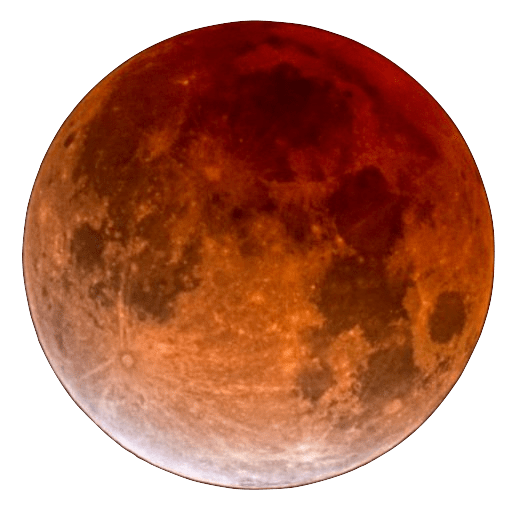
I startled awake. Stiff from being curled up in the bookshop window well for hours, my back and legs screamed in protest as I tried to stand. The storm had blown itself out, but the lunar eclipse was over also. The full white face shown bright through ragged cloud remnants.
Another missed eclipse. This time dreaming some ridiculous nonsense about the man in the moon.
I dragged my tired old body toward the stairs that led to my apartment. But as I passed the reading nook, I noticed a pile of books on the table with Balzac resting on top. Where I had definitely not left that book.
Then my eyes darted to the stool behind the counter. Upon which were draped a strangely dry antique coat and a broad brimmed hat…
It is a bookstore after all… a vortex of weird… where fiction lives.
©Elizabeth Anker 2025

 By My Solitary Hearth