

The Nutting Moon went dark at 3:54pm yesterday, September 21. The Harvest Moon is new today. Today, Mabon, also ushers in the autumnal equinox at 2:19pm in my part of the world. With the skies aligned as they are, this is the season of Harvest Home. It’s the most wonderful time of the year! The season of the witch! Oh yeah… and food!
Now, the true equinox has probably not happened yet for you, unless you live close to the equator. At my latitude, the last day with more than 12 hours of light is Thursday, the 25th. That is when day and night are of roughly equal duration. On Friday, night becomes longer than day. However, if you need to mark true east and west by the sunrise in northern New England, the 24th actually does see sunrise at 90°E (at 6:39am here) and sunset at 270°W (at 6:43pm). Which is sort of a rarity. Most equinoctial sunrises and sunsets happen at least a few hundredths of a degree off of exact east and west.
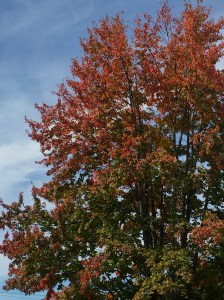
Here in central Vermont, autumn is sluggish this year. My jungle trees are mostly still green — or brown from the drought. The frost on the pumpkin is still absent, as are the pumpkins in my garden, though we do have pumpkins from some farms. But, in truth, this has been a terrible harvest. Hay is in very short supply. Corn and blueberries were almost nonexistent. The newspaper carries at least one story a day about dairy farms that are buying feed from Canada or culling herds or just throwing in the towel. This drought is following on two years of flooding that wiped out numerous farms — and homes and businesses and etc. With high tariffs and negligible government assistance compounding the financial burden, there isn’t much a farmer can do to weather the weather. Not for three disastrous growing seasons in a row.
On a positive note, groundhogs tend to begin hibernation around now. Thank heaven… Wish the squirrels would go away also…
I planted a few iris and perennials in the dead patch of “lawn” in the front of my house last week. I say last week. In reality, I have had to put every single plant back into the ground at least once because the damn rodents keep yanking the plants out of the soil and leaving them for dead. The iris seem to be molested every day, which is bizarre because iris causes rather severe diarrhea in most mammals. Nobody eats it. That’s why I bought it… But I have idiot rodents… who probably have drastic digestive issues by now… if they’re still alive… I don’t know if any of my plants will live. But then, the grass wasn’t alive either. Maybe something will surprise me next spring. If not, I’ll go find more plants then. Even more toxic ones… Maybe it’s time for monkshood and foxglove… Obnoxious squirrels…
I do like that the grass was killed though. That’s one benefit of drought. I could never mow that area. My power-less rotary mower only cuts if it is moving forward. It can’t cut tight corners. Most of the time I had to trim that part of the lawn with clippers. So, not having to trim it at all is an improvement, even if I have to plant several times to fill in the dirt and keep the weeds from taking over… Weeds mostly in the form of crabgrass and sedge… so… obnoxious grass…
Obnoxious seems to be a theme in my garden…
Now, the drought has spared the northwestern part of the state. Though, since water flows north around here, Lake Champlain has reached historic lows. However, the bottomland farms in the Champlain Valley are doing tolerably well. Also, the drought was only mild up until August. So the wheat harvest, mostly completed before Vermont became a desert, was just shy of normal. Rice was a bit less happy, but not decimated like the corn.
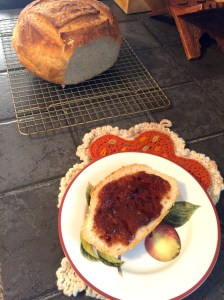
Apples seem to be doing well everywhere. My tree was heavy with fruit, enough so that I just left a bunch on the branches for whoever cares to eat them. The owner of the orchard I frequent says that the drought might be producing smaller fruit, but the sunshine is pumping up the flavor. I can attest to that. Even Empires, not known for their sweetness, are loaded with sugar this year. They make excellent apple butter. Which goes great on fresh bread!
Made with Champlain Valley whole grain flour, of course!

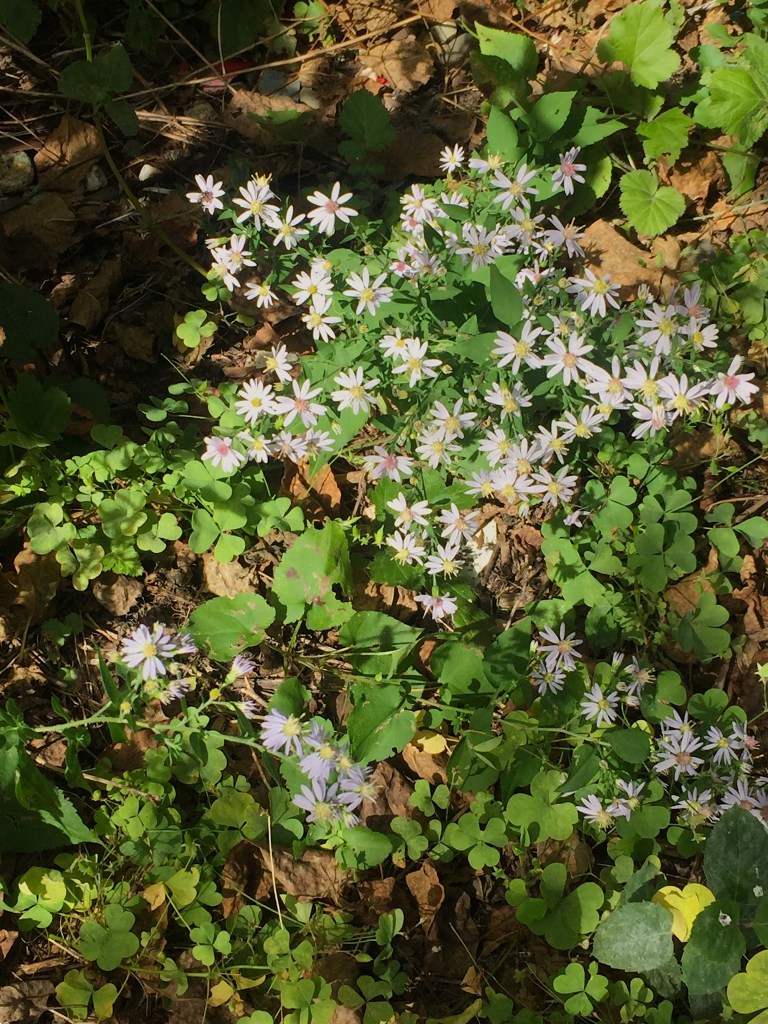
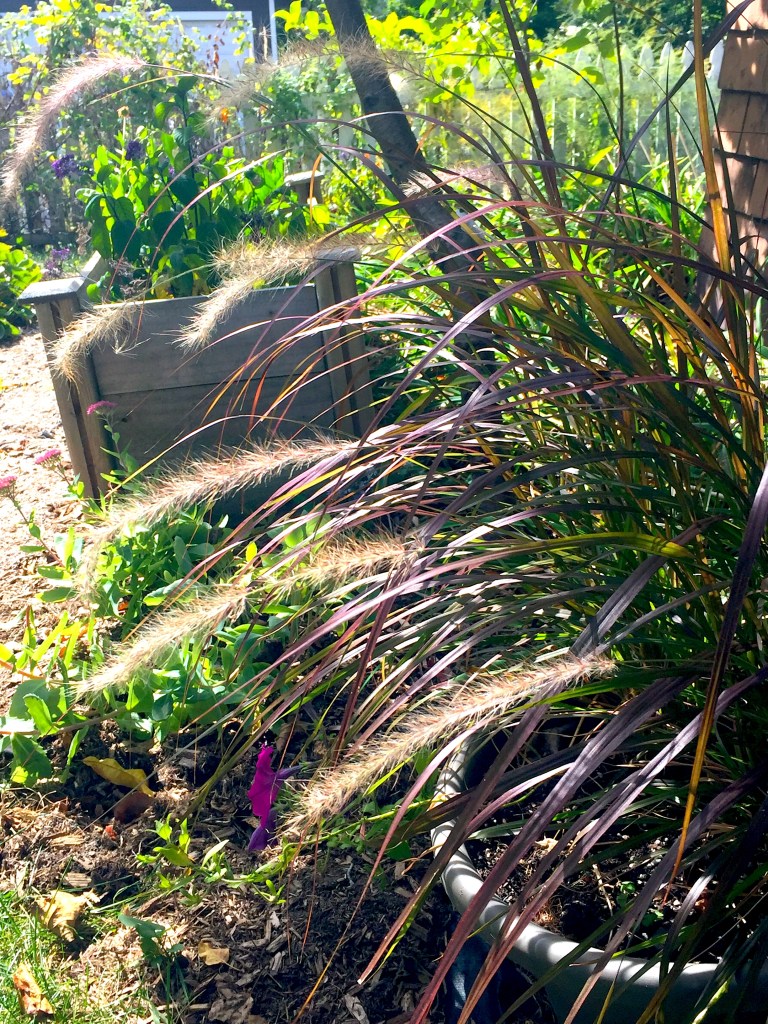
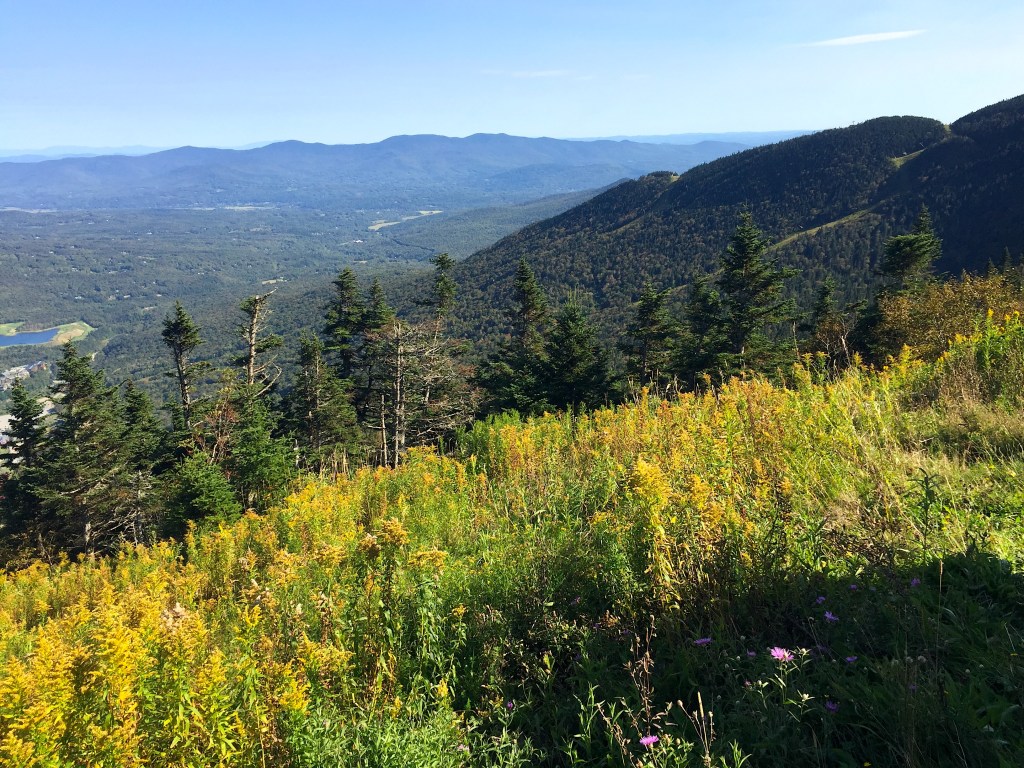
More pictures from my garden…

Happy Mabon?
Is it possible to unselfconsciously use the Wiccan-derived names for the quarter days? Because I can’t seem to get there. They chose a rather obscure deity to name this holiday, the third quarter day in the year. I couldn’t say what the Cymric (Welsh) Mabon, or Maponos, the perpetually young Son of the Great Mother, has to do with the middle of the harvest season. Perhaps if you squint in just the right way, Mabon’s characteristics could lean toward being cognate with Kore, Demeter’s daughter. So he could be a grain god on his autumnal return to the Otherworld. But that interpretation is a stretch.
It would be one thing if the holiday had been traditionally named Mabon and anthropology then had to come up with an explanation for this strange appellation. Then you might turn to grain gods (though, to paraphrase House, it’s never grain gods…). But to apply tortured grain god logic to a choice made in the mid 20th century probably indicates that there was no logic — nor grain gods — in the choice. In any case, it feels awkward saying Happy Mabon, when what I mean is Happy Harvest Home. That also goes for Ostara (not a thing) and Litha (a word taken from a Tolkien appendix). The only quarter day name I use is Yule — because that is, in fact, a traditional name for the fourth quarter day in the year, the winter solstice.
To be honest, I don’t always use the NeoPagan names for the cross-quarter days either. I’m not convinced those days were ever called by their Celt-esque names. Take Samhaine, for example. In the Romano-Gaulic Coligny Calendar, there was a month named Samonios, which means something like “month of summer”, but that moon cycle began in mid to late May and stretched into June — and there’s no reason to assume that this early summer month was called Samonios anywhere else in the Celtic world nor at any time period other than late Roman Gaul. So the name for an ubiquitous late autumn holiday probably doesn’t derive from Samonios.
Now, there was a sacred time that in Irish myths was called Samhaine, end of summer, or in Cymraeg, Calan Gaeaff, beginning of winter, but there is scant evidence that this corresponded to the last day of October. For that matter, October, as such, was not a recognized time period among the insular Celtic tribes nor in the Coligny Calendar. There might have been a Samhaine, but it wasn’t necessarily Halloween, nor does the mythic Samhaine have much thematically in common with the modern celebration. So, for me, that really fun time from October 31 (or… September 30… ahem… ) through somewhere around Bonfire Night on November 5th is not Samhaine; it’s Halloween — with special dispensation for All Saints and Día de los Muertos.
In any case, these names don’t have much of a pedigree. The Wiccan calendar is a Wiccan invention — which is not a bad thing. It’s quite a functional ritual year, with eight holidays and thirteen moon cycles to mark the time and give us reasons to gather and celebrate life. But it’s not old and we really shouldn’t be pretending otherwise with silly anachronistic appellations and synthetic traditions that don’t quite fit the days. Hence this project to come up with a ritual calendar that is a bit more organic — definitely more rooted in my particular place and ancestry.
The cross-quarter days — Candlemas, May Day, Lammas, and Halloween — do have old roots, but we’re not sure what any of them actually meant to the peoples who celebrated them, though we can be reasonably certain that nobody knew these holidays as Imbolg, Beltaine, Lughnasadh or Samhaine. We can also be reasonably certain that none of these holidays fell on their modern dates since the modern calendar is Roman, based on the sun, and the cross-quarter days were from cultures that followed the moon. Lunar and lunisolar calendars shift, though perhaps observant cultures counted from the mostly fixed quarter days to get to mostly fixed cross-quarter days (in which case they should all be around the 4th or 5th of the Roman month rather than the 1st, but whatever). So maybe… but these cross-quarter days were more about culture and myth than seasons. There were seasonal markers — the ewes began to lactate, the hawthorn bloomed — but these celebrations were not directly tied to the solar cycle. They floated around based on the weather, natural events, and tribal traditions. A rather subjective ritual calendar, as all well-rooted things should be.
One might think that the quarter days — the winter solstice, spring equinox, summer solstice and autumn equinox — being actual seasonal markers, might have been more widely observed. And this is true in deeper time than European history. But for the last millennia in Europe, it was quite dangerous to openly honor the seasons, so we have few stories and traditions and no names for these days. Tellingly, few of those who practice traditional witchcraft, those who come from families that quietly passed down pagan rituals and lore for generations (usually with names other than “pagan” and “witchcraft”), recognize the quarter days. And hardly anyone celebrated the autumn equinox.
The one notable exception is the Anglo-Saxon “holy moon” centered on this solar event. But they surely didn’t call it Mabon. Nor even an equinox. We can’t be certain that they even had a word for autumn since many cultures do not. But whatever they called it, they were celebrating the Harvest Moon, the moon that was full closest to the equinox, not the equinox itself. The Romans thought that this moon cycle was the seventh month in their old calendar, September. But it might have been the moon cycle that followed the end of the harvest. In other words, it might not have been a fixed event at all, though on average the harvest in northern Europe would have been completed by the end of August, making September’s moon cycle the Holy Moon, Haligmonath.
Whatever its name and however it is observed, all across the northern hemisphere today is the autumnal equinox, the day the sun passes the ecliptic on its apparent trip south. (In the south it’s the vernal equinox… so, time for flowers and eggs…still not grain gods…) In my part of the world, today is not quite the first day of less than twelve hours of daylight. It’s also not the day that the sun rises and sets directly east and west on the horizon. It is merely the day that the sun has crossed an imaginary line in the sky into the southern hemisphere. That happens today at 2:19pm. For me, this is the beginning of the dark half of the year. A time of rest… with maybe a bit of scary winter looming… It is the fall.

Despite all evidence to the contrary here in central Vermont, it is now the middle of fall, and fall is the reason people choose to live in New England. Fall is a fetish in this part of the world, for obvious reasons. In “normal” years, New England has absolutely arresting fall foliage. The combination of sunshine yellow birches, fuchsia sumacs, and maples that range from outrageous orange to fire engine red against a background of deep green pines and nearly black firs is unmatched – even in years like this one when the colors are tempered by brown and rust. It seems that we won’t get the full autumnal palette this year, but it’s still beautiful. Maybe a bit melancholy, but that’s what autumn is after all.
Another reason to especially love fall is that New England’s harvest is heavily skewed to the autumn fruits and veg. We have brief encounters with peppers and cucumbers. Melons are a rare treat. But summer is only the appetizer on the full flow of fall foods. Beans and peas tend to be more prolific in the fall. Greens of all kinds prefer the cool weather; but more importantly, heading into October, there is less predation from insects and rodents. It is cold enough at night now that most of the bugs are sluggish, and the main leaf-eating rodents are groundhogs who bed down in their winter burrows around Michaelmas. But the bulk of the garden harvest comes from the long season squashes, potatoes, and the autumn apples and pears — which are also a rainbow of warm autumnal color. And all of that is overflowing from the farm stands — even in the midst of a drought!.
So we love fall. This is a season of gorgeous opulence. Yet…
…even in a good year, there is a nervous edge to New England autumn celebrations, a frenetic note jangling underneath the joy. Because fall leads into winter… And winter means something in this part of the world. For the next five or six months, we can expect deadly cold, deep snow, and a prodigious number of ways to be cut off from all contact with the world. Power outages, and the resultant loss in communications, happen regularly. Deliveries of food to markets or heating fuel to homes and businesses can be interrupted for days. Travel to work or to buy necessities becomes impossible at least several times a month. In New England, the autumn harvest season precedes months of real dearth.
And today we are halfway through fall…
Even in this modern age, in New England, fall is the season of frantic stockpiling. Maybe I should say despite this modern age, as many aspects of our culture put us at a disadvantage when it comes to muddling through disaster. When supply lines and transport distances were shorter, winter was a less fragile time. Today, many of us don’t have space to store what we need, even if we could procure it locally. Yet, in a culture where heat and water are reliant on a functioning electrical grid and food comes from half a world away, even a mild winter storm wreaks havoc.
In Vermont, we have too much experience with winter’s disruption to trust that the modern age will keep the heat on and the food on the table. Those that live by more durable life-ways are rushing to put by enough before winter ends all activity. Most of the people I work with, people who work in a bank, I should say, have been stacking wood over the last many weeks. One cut her own firewood over Labor Day weekend… though that won’t be ready to burn until this time next year at earliest. There are regular pantry discussions and anxious comparisons, as people try to reassure themselves that there will be food despite the inevitable isolation. And this year, our gardens have not been notably productive… Yes, Vermonters are, once again, worrying away at the uncertainty of sufficiency. In our minds is a constant apprehensive refrain: Will it be enough?… And the terrifying corollary: What happens if it isn’t?
It’s all well and good to take each day as it comes and not worry about tomorrow if you can reasonably expect that tomorrow is not a cause for concern, but all such philosophy falls apart in a Vermont winter. The grasshopper will die. The ants might make it… if they’ve taken advantage of every last scrap of autumnal abundance. And if there isn’t some extreme event that has substantially diminished that abundance. Like a flood… Like a drought… So Vermonters are trying to convince themselves that they’ve been diligent ants despite another summer of extremity. We are celebrating loudly, perhaps hoping thereby to propitiate the grain gods and their vengeful mothers. But as we cheer the parades and roast the pumpkins and down cider by the bucketful, there’s that needling unease.
Will it be enough? And what happens when it isn’t?
This weekend, to celebrate the harvest and thumb my nose at the approaching winter, I made four quarts of apple butter and a few pints of peach butter. I also made a really good roasted root stew with the skinny carrots and beets from my garden, a few turnips (also skinny) that I bought from the co-op, a couple pints of corn, some garlic and onions, a bag of green chile, and half a dozen large baking potatoes that I found at the farmers’ market. It smells so good! And a bowlful fills me up!
It is not quite cold yet, but still I have closed most of the storm windows and will put away the air conditioners next weekend with Son#2’s help. I am putting off turning on the furnace though, because I am still feeling rather short on cash and don’t want to start burning oil already. So I dug out all the warm bedding and my sweaters this weekend instead. If it does turn cold, it is easier to take off layers than to go find them in the storage closet. There was also a false warning about frost on Friday, and I moved the tender perennials indoors. I haven’t bought mums yet — again, cash-poor — but I did empty out many of the pots filled with summer annuals. So, if I feel flush here soon I can buy some color for the porch.
What I am not doing today is holding my Harvest Home celebration. That will be Sunday, with Michaelmas.
Still…
Today, there is abundance. I have enough, and the days are good. No smoke, no flood. The skies are sunny, if a bit dry. It is cool, but it’s not yet cold. The trees are only starting to turn colors. There is still time before winter. Still a bit more time to prepare. Time to go find some winter squashes for roasting and time to pick more apples for the last two bins in the basement.
It is the season of Harvest Home. As holy a time as any!
More on time…
Today is also the beginning of Rosh Hashanah, which lasts until sunset on Thursday. In Judaism, this day marks the day that Adam and Eve were created, the culmination of the creation. So this is the world’s birthday and the new year. The shofar is blown on both mornings of the celebration, a fanfare for fresh beginnings, and sweet foods are eaten to bring a sweet year. Apples and honey and challah are traditional foods. My aunt typically served latkes slathered with applesauce. Pickles of all sorts also came out for the new year, though that might have been her idiosyncrasy… She did make great pickles!
September 29th is Michaelmas, of which there will be more later, but this year Michaelmas falls on a Monday… making it sort of difficult to observe. So feel free to celebrate Harvest Home on the 28th. I will be!
Yom Kippur, the holiest day in the Jewish calendar, the day of atonement, falls on 1 October this year. And Sukkot begins on the 6th with the full Harvest Moon. Sukkot commemorates the flight from Egypt when God sheltered the Israelites in the wilderness. For the first two days of Sukkot, no work is permitted. Everyone shelters in the sukkah, a temporary grass hut. The remaining days are voluntary holy days. Most people spend a few hours in the hut but do not sleep there, and most return to work. On Yom Kippur, of course, there is no work done whatsoever. Even unobservant Jews will spend the day in temple, getting themselves square with God… or, more generally, the universe…
October 4th is the feast day of St Francis of Assisi. I mark this day with reading from his Little Flowers and thinking on the connection that binds the whole universe into a holy unity. Everything is my relation. Every body is in my care… and cares for me. All I have to do is look to the maple trees to know this is true!
Late in the evening on the 9th, look to the northwest for falling stars. The Draconid meteor shower is most active then. It is not a very strong shower with no more than 6-8 meteor sightings in an hour. However, it is one of the few that can be seen in the evening. No getting up at 2am to see this one!
The Old Farmer’s Almanac claims that October 12th is National Farmer’s Day. I think every day is farmer’s day. We wouldn’t eat if it weren’t for their labors!
My country celebrates the colonizer, Christopher Columbus, on October 13. There has been enough outcry against this that now the day is officially recognized as Indigenous Peoples’ Day, though I suspect the coming years to see a regression to the former name day… as this is the era of stupid reactionaries…
St Luke’s Day with its Little Summer falls on the 18th. At the rate we’re going, it might still be mostly summer weather, not a resurgence of summer… but the weather gods could surprise me. Since coming to New England, I’ve seen it snow on Halloween many times. So it might turn cold any day now… and then it might be warm again in the third week of October, the last few days of the Harvest Moon.
… which goes dark on the 21st. But get up a bit early on the 19th, because a very thin crescent moon meets very bright Venus in the darkness before dawn. Look low in the southwest for this beautiful conjunction. This is the image that every astrophotographer aims to capture! Incidentally, dawn is not that early at this time of year… at my latitude the sun does not rise until 7am on the 19th. So you don’t even have to miss much sleep for this lovely pairing.
October 21st is the beginning of Diwali, of which there will be more later. Since the 1990s this day has also been celebrated as Apple Day, as a day to recognize the diversity of fruit in the UK. This new festival is starting to see some popularity in New England as well. One of the day’s traditions is to bring apples in for expert identification. Most of us have trees of unknown provenance. With a few sample fruits and leaves, you might find that you have a rare heirloom. Of course, in my book it’s enough to know when the fruit will show up and what it will taste like… on average… but I am curious about the old trees down at the bottom of my property. Might have to find an Apple Day celebration. I think Burtt’s Orchard might accommodate that whim…
On the 21st and the 22nd, in the dark moon days, the Orionids will be falling. This is a typical early morning shower, but it is stronger than the Draconids with 15-20 meteors an hour. Even better, this shower produces magnificent fireballs. This space junk is apparently moving very fast, so when it hits our atmosphere it doesn’t just glow, it explodes. Well worth a bit of lost sleep. In fact, it was a brilliant Orionid shower that triggered my life-long fascination with meteorites — depriving me of whole weeks of sleep by this point… but always worth it!
©Elizabeth Anker 2025

 By My Solitary Hearth
Once again, this has been a fascinating read 🙂
LikeLike