

The ancient world of the Mediterranean and Near East has a great number of interesting mythological beings. Some are related to old gods and tutelary spirits. Some are fairly accurate illustrations of the anxieties of humankind — or maybe mankind, since women didn’t have much of a voice. Some are just ludicrous. One of my favorites though is the idea of the angel. Originally, they were simply messengers. The word remains almost exactly the same as its Greek ancestor, angelos, meaning “messenger”.
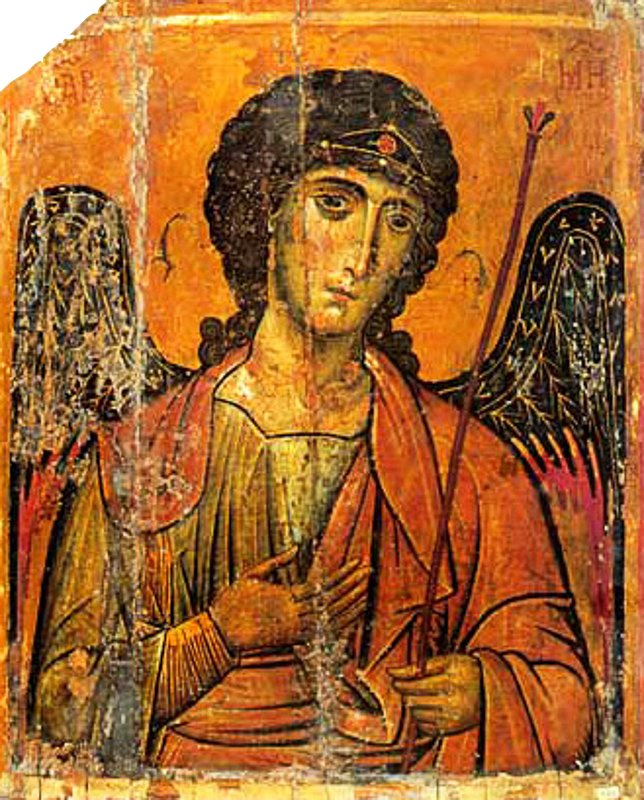
There are a number of angels that have names that relate to the Hebrew god, El. There is Gabriel, the “strong arm of god”; Uriel, “god is my light”; Azrael, “help from god”; and, well, you get the idea. Then there’s Michael, which can mean “gift from god” or “who is like god”.
These Hebrew angels may not have been conceived as angels in the sense of messengers. In the Torah and Hebrew folklore, they are rather like courtiers and soldiers, more like the djinn (genie) of the Arabic peninsula than the messenger gods like Hermes, Thoth and Iris. In mythology, angels and djinn are fiery and inhuman and obsessively concerned with rules and traditions, accounting and bloodlines. Like their cold northern cousins, the faeries, they’re also largely indifferent to humans. So, of course, we find them fascinating. (Who isn’t interested in humans?!?)
Today is Michaelmas, the feast of St Michael — who is not a saint. Michael is the angel with the flaming sword who keeps humans out of Eden. He also had a few dust-ups with various fallen angels and demons (no idea what the difference is). In Europe, he is associated with high mountains, especially those that stand alone like lonely sentinels over the plains. There are many towers built for Michael on craggy heights all around Europe.
One of the oldest stories of Michael has little to do with his biblical persona — I’m not even sure if it can be found in the Bible — but it explains this association with high places. Michael is one of the chaos fighters, those warriors of order who fend off the forces of disorder. However, in many versions of the story of Michael’s battle, there is no victor. Michael goes to the mountaintop to face the dragon of primordial chaos, who is a being of both earth and sky and therefore lives where these realms meet. Michael finds the dragon and they fight, but neither prevails. Often, this fight is described as stylized, choreographed even, more for appearance than aggression. In the end, there is an agreement reached between the combatants. The dragon will feed the primogenial force into the world while Michael gives that force form. Together, they weave order and chaos into wisdom and life. It is a beautiful illustration of the inherent balance in our world.
Michaelmas is the remembrance of that détente and a reminder to us to seek balance. It falls near the equinox, the season of balance. In the North, it is the autumnal equinox, the traditional Harvest Home feast for much of Europe. It is the third of the annual quarter days (the equinoxes and the solstices) in English traditions, a day when accounts were reconciled and much feasting took place. So the two ideas are conflated — balance and harvest. We see the scales of Libra in the stars around the sun at this time of year. And of course, the harvest is ongoing, though most of the work is done by now — hence Harvest Home, the harvest is brought home.
Michaelmas is a harvest feast, perhaps the original harvest feast. It is a time to give thanks for what we’ve received, especially what we have received from the more-than-human world. It is sometimes called the Witches’ Thanksgiving, and in my house that is exactly what it is. Sometimes I roast the traditional goose with juniper berries. Eating goose on Michaelmas is said to bring good luck throughout the year. This tradition may be traced to Elizabeth I who was eating goose when news was brought to her of the defeat of the Spanish Armada. She resolved to eat goose every Michaelmas for good luck. But it was already traditional to eat goose — hence she had it on her royal plate that day. The tradition might also have developed from the quarter day rents. Tenants, who needed to put off their payments until the full harvest was in, tried to persuade their landlords to hold off on collecting by giving gifts of fattened goose.
“Eat a goose on Michaelmas Day,
Want not for money all the year”.
In Scotland, St Michael’s Bannock, or Struan Micheil is part of the feast. This is made from grain grown on the family’s land, representing the fruits of the fields, and is baked by an open fire on a lamb skin, representing the fruit of the flocks. The cereals are also softened and somewhat fermented in sheep milk, as sheep are the basis of the household economy in Scotland, the representation of wealth. The bannock is kneaded and baked by the eldest daughter of the family (yours truly, growing up). When she presents the cake to the head of the household she recites a traditional kenning:
“Progeny and prosperity of family, Mystery of Michael, Protection of the Trinity”
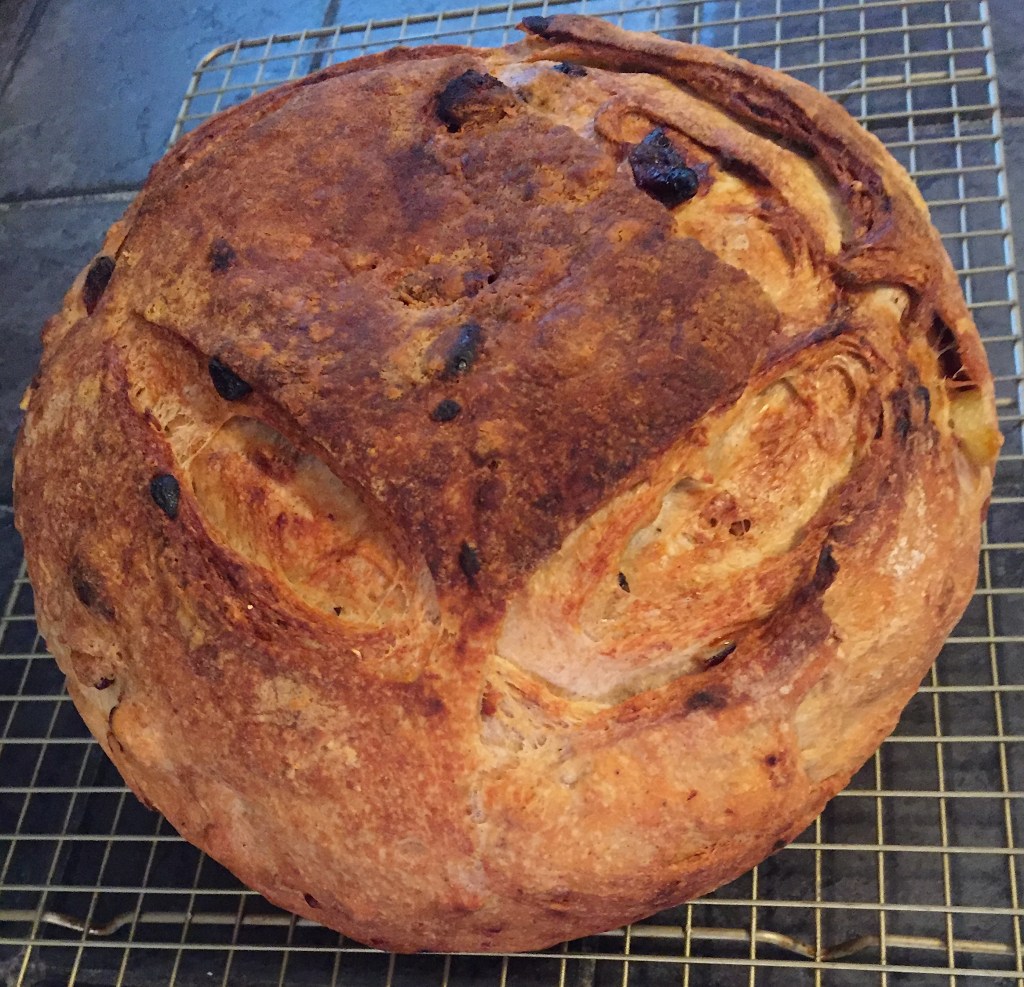
Most often, since I can’t actually eat goose without belly stress and I haven’t a lamb skin just lying about my home (nor an open fire… yet), I roast winter vegetables instead. These are the fruits of my fields. The potatoes and alliums, beets and turnips are stored in the basement. And I can get winter squash and carrots at the farm stand. Rather than sheep milk, I will use cheese, maybe goat cheese, to make a savory sauce. There are usually nuts and apples and the first of the autumn cranberries worked into this meal because we have these in abundance in New England in the middle of autumn. But I do bake a Struan Micheil each year — whole grain wheat and oats and full of flavor!
So set aside a bit of today to think on your own harvest bounty. Think about Michael and the dragon, holding all this life in balance. And if you can, sit down with loved ones and eat a sacred feast of thanksgiving.
Blessings!
giving life
all this life!
this lavish abundance
magnanimous hand that gives
in floods and fields and streams
satiating succulent sweet starlight
for all and sundry

who do we thank
where to direct this upwelling gratitude
what rings do we kiss in fealty
we come on bended knee
before this bounty
and offer ourselves
in thanksgiving
to being

all this life
is it not miraculous!
to be is, indeed,
the great mysterious gift
The weather continues to be baffling here in Central Vermont. We did get rain. Finally! Not enough to fill the rivers and replenish the wells, but enough to revive the dying plants. Which is good because after a brief brush with autumn temperatures, we’ve reverted to Midsummer. It was 80°F and dry and breezy yesterday. Fine weather for early August… little confusing for the end of September round these parts.
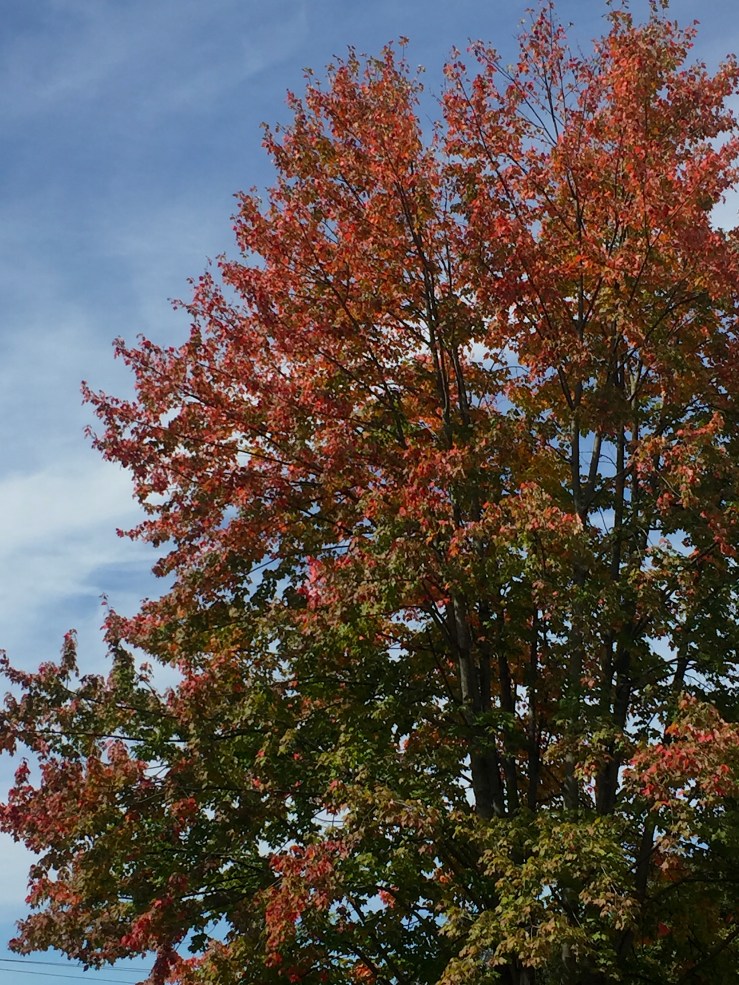
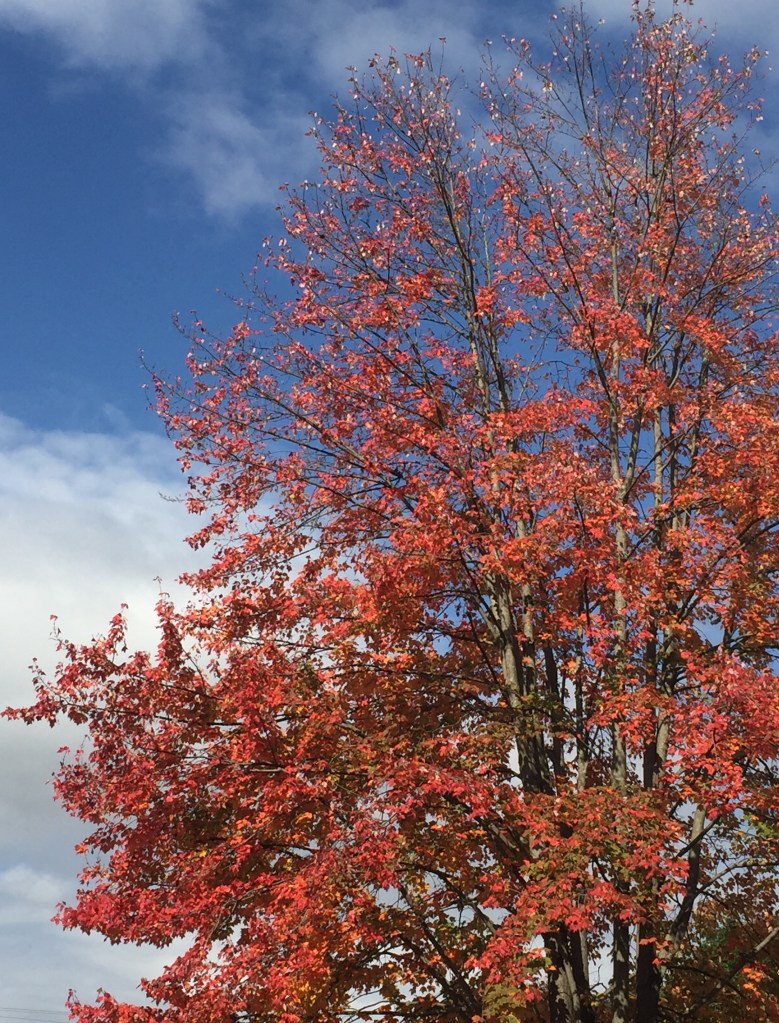
The trees don’t seem to know what to do… My jungle started to turn, then… just stopped. So there are a few spots of gold and orange, but it’s mostly still green. However, my neighbor’s maple, which was a bit more ahead of the game, went from some color last week to few leaves left on top and no green left elsewhere. Very strange contrast, my mostly green trees just across the street from a tree that is rapidly approaching the end of its fall.
And this is repeated all over the place, though the mountain tops are mostly brown now after a very brief show of color. Like, one day… Still, lower down, there are trees that are almost bare standing next to trees — of the same species! — that are still nearly fully green. I don’t know what this portends… but if the frost comes soon, those green trees are going to be hurting… and they just barely survived the drought…
©Elizabeth Anker 2025

 By My Solitary Hearth
Another interesting read 🙂
LikeLike