

Well, we still have not had a frost, though tomorrow night temperatures are supposed to “plummet” all up and down the eastern third of the country. We’ll see what happens… It may be that we get to have highs in the 60s (°F) rather than in the 80s. Still much higher than what is expected at this latitude in late autumn, but at least not uncomfortably hot and humid. You can’t even wear flannel in this weather. What’s a Vermonter to do!
We, here in central Vermont, have dipped slightly below freezing for maybe an hour or so before dawn a couple times, but it’s not been enough to freeze plants, nor enough to leave frost — except a bit on the north-facing windows in this house. Which is how I know it did, in fact, dip below freezing. Wouldn’t know it from most of the trees. Those that were most drought stressed turned colors, mostly brown, and dropped nearly all their leaves in the rain we had. However, the few trees that are not leafless are, by contrast, nearly all green. Also disorienting for a Vermonter in October.
Back in New Mexico, someone had the the dubiously brilliant idea to plant mimosa trees everywhere because it flowers prettily, is somewhat drought tolerant, and is mostly cold tolerant. Mostly. Because New Mexico is a desert, when the days start to shorten, the temperatures drop fairly rapidly. The Albuquerque Balloon Fiesta is held the first week of October (so… now…), and it is COLD for every morning liftoff. The alpaca merch tent does a hopping business, and every year sees a new fad in funny hats and puffy gloves. So those mimosa trees are put the test each October… They normally fail, though they don’t die. Instead, they remain fully leafed out in those broad, tropical green leaves until one morning, all the leaves — and I mean ALL the leaves — simply fall off the tree in an enormous leaf puddle under the tree. I fear we’re going to have a similar tree response here in Vermont this year, as soon as it does freeze. Whatever green leaves are left are going to drop in leaf puddles. My jungle will be a pond…

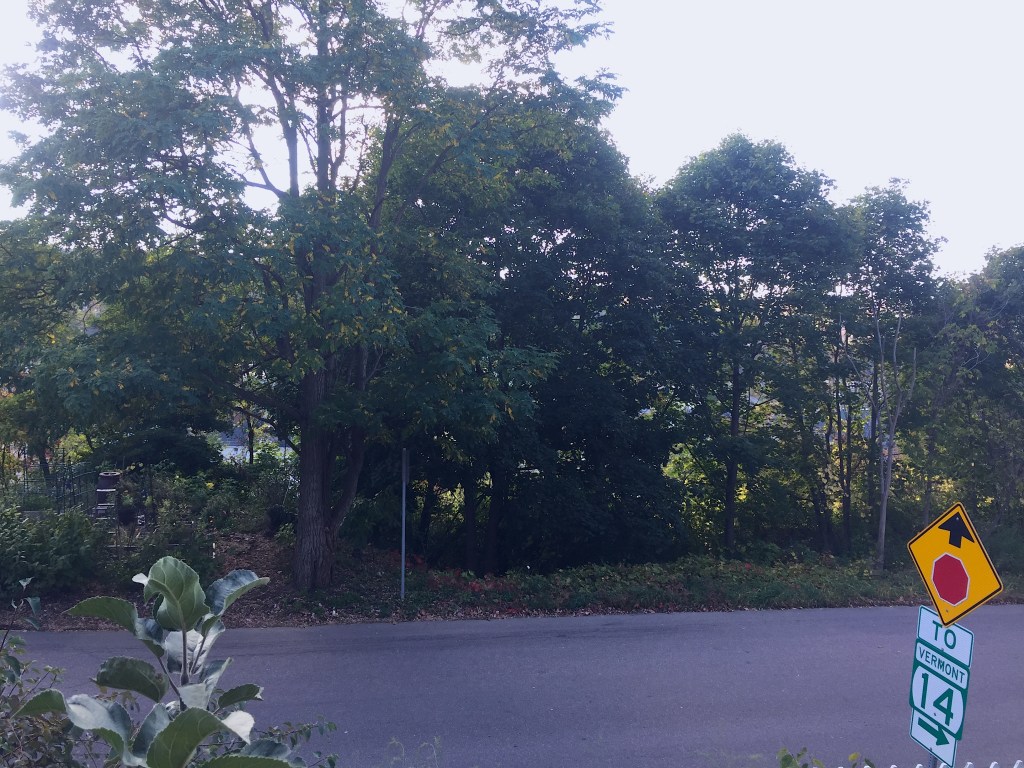
My neighbor’s tree is on a steep slope; my jungle’s level space can trap water… hence less stress
In addition to the green, note the smoky haze. Not sure where that is coming from, but it’s been hanging around again in the afternoons…
There is also rain in the weather forecast, but it seems we’re doing those forecasts where inches are predicted to fall ten days out… but nothing tomorrow. I think the bit of rain we received the week before last might be all we get this autumn. And I will add that it did nothing to relieve the drought. The entire state is now under severe drought conditions, with a thick band of extreme drought running through the middle of the state. Disaster funds from the flooding of the past two summers have not yet been fully allocated, and now we’re looking at even greater devastation from no rain at all.
Agricultural officials are calling for federal drought disaster designation for the entire state (though what good that would do with FEMA and the USDA gutted and left for dead is anyone’s guess). Our elders, people who have have been farming this land for five to six decades, say they have never seen a drought like this one. Lake Champlain, the body of water that supplies municipal systems in the northwest region of the state including the city of Burlington, has dropped to historic lows and continues to fall. Over 400 dry wells have been reported to Vermont’s Department of Environmental Conservation in the last eight weeks with unknown numbers going unreported. There has been a dramatic increase in fires, both natural and human-caused (though is there any fire that is not human-caused…). More acres are burning, and it is increasingly difficult to fight structure fires in rural communities that rely on surface-sourced water systems. There is no surface water. The Winooski River along my drive to work is down to a series of pools connected by trickling rivulets.
To add insult to injury — or perhaps lack of revenue to increase in expense — our famed fall foliage is largely a no-show, losing the state much-needed leaf-peeper tourist dollars. What’s more, if surface water is not replenished soon, there will be no snow-making at mountain ski resorts. That might prove the final, fatal catastrophe for that industry in Vermont, one that generates millions in revenues, billions if all the million-dollar second-home ski chalets are included. The tax dollars on those out-of-state-owned vacation homes alone runs to the millions for communities around the big resorts in Stowe and Killington.
But that’s just abstract economics. Right now, many Vermonters are trying to process and cope with the immediate effects of all too solid drought in their lives. They haven’t had time to think of the big picture nor to worry about the hazy future. When your well runs dry, life becomes a daily struggle of the most elemental kind. If you possessed the foresight to own a 500-gallon water drum (or perhaps a hastily converted sap collection tank), then you might have a bit of relief, only needing to buy and truck in water once a week or so. Though the places that are selling water are thinning out, so you might be driving for a while trying to find a shop that does not have a “no water” sign out front. The challenges do not end when you have succeeded in filling up the tank, because then every ounce must be boiled and filtered in some way and every gallon of use must be balanced amongst uncountable needs. Think of how often we, in humid climates, thoughtlessly run the tap. Even brushing your teeth can deplete that water tank by a gallon or more. And if you don’t have a water tank, then that gallon may be all you have for the day. Those who have not prepared for water shortages are now buying their daily needs by the five-gallon bottle. I imagine they are learning many lessons in water conservation these days.
When some have not yet recovered from flooding…
Vermonters are exhausted.
Me? I’m a desert rat… I say, welcome to climate change, compadres… (and she ironically tips her hat, climbs on her high horse and rides off into the burning sunset…).
Nah, seriously, this is scary even for a desert rat. Because in the desert, there isn’t this much fuel for fire. Nor are there houses everywhere. Natural deserts are sparse affairs. But turn a humid climate arid in less than a growing season, and you give disaster so much greater scope. (Witness Hawaii…) A forest fire starting in Bennington could burn straight through to the Northeast Kingdom without encountering a single fire break, destroying lives every mile along its line.
Now, desert rats know how to live without plentiful water. We do not use a gallon to brush our teeth. (Okay, so maybe nobody does that any more… but still…) We know how to clean our bodies and homes with minimal water use. We always plan on the day the tap will deliver nothing. We have those 500-gallon water tanks in addition to rain barrels and a few gallons of emergency drinking water stored in the closet. We also have charcoal water filters, and the more angsty amongst us stock iodine tablets. Some even have a dead switch of sorts to switch the house water system from failed outside sources to the home’s water storage system. But most of us just habitually use very little water each day.
Vermonters, on the other hand, do not possess these habits, these skills, nor whatever infrastructure needed to replace the tap. Because in Vermont the tap works… until it doesn’t. And they just don’t have the daily practice…
Still, this isn’t Vermont’s first arid autumn. Drought has been an increasing problem all across New England for a couple decades now. In fact, one of my favorite Chris Bohjalian novels, Water Witches, tells a story of dousing in Vermont set against a backdrop of drought and the politics of water use. The novel could be describing the tension in the autumn of 2025… except it was published in 1995. So this has happened before… Though the drought of 2025 is orders of magnitude more severe than any since the 1960s. One quarter of Vermont is in extreme drought. Over a third of New Hampshire is is in extreme drought. Communities from northeast Maine to western Massachusetts are under water restrictions. This is, in actuality, an historic drought. But… it’s an awfully quiet calamity.
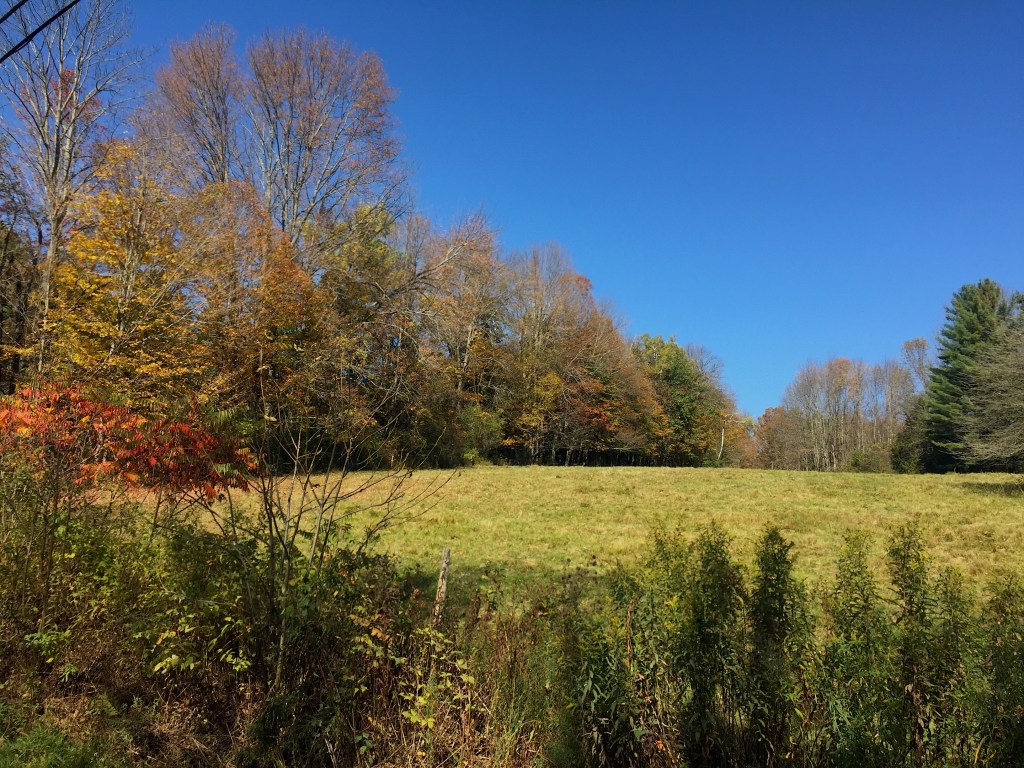
The eerily ominous thing about drought is that it comes from perfectly sunny days. The weather is objectively lovely, if a bit too warm for October. Blue skies and breezy, it’s often hard to remember to be terrified. This is an invisible, almost imperceptible disaster — as long as the tap is still flowing. So there are people who are hardly aware that we are living on the precipice. I work with several. Some of them seem to think this weather is perfect — it’s great for golf, if you don’t mind the brown putting greens. I get the feeling that they will truly be shocked when the tap runs brown and then runs dry.
I think this is an apt analogy for biophysical collapse in general. Many people are dying from this disaster, but so many more — the majority of those most responsible — are not even aware that disaster is unfolding all around them. They don’t notice the lack of insects. They say the weather has always been fickle and unpredictable. They demand insurance payouts for their flooded beach condos and then go right back to building on the sands. They are too comfortably insulated from the effects and probably not a little self-delusional. Can’t persuade someone to believe something if his paycheck depends upon disbelief, after all.
Most of these disbelievers are entirely unprepared to deal with disaster, and yet disaster will undoubtedly come for them. Their inability to cope with novel extremity is the stuff of dystopian novels. Truly, they could do with reading a few… The Water Knife comes to mind… Dry by Neal and Jarrod Shusterman is another. Though the true story is far less flashy, more like what Vermonters are experiencing this fall — a silent run of terrifyingly beautiful blue skies.
Or… the increasing cost of eggs… the mundanity of pandemics and drug-resistant microbes… smoke from wildfires routinely blanketing communities thousands of miles away… annual heat waves that overwhelm power grids and quietly kill thousands in their own over-heated homes…
Or… a clean windshield after a drive in the country darkness…
The most sinister faces of biophysical collapse are those we hardly see and certainly do not perceive as threatening. And so we are unprepared… and will remain so even as the water begins to boil…
But me? Well, I’m a desert rat.
The thing about living in an arid place is that you learn to live with little in a general way — and to routinely plan on times when there will be nothing at all. You learn to stockpile and make-do. You learn the mechanics of all your life-support systems because you know they will inevitably fail at some point, and you have back-ups in place in profligate layers of redundancy. You learn self-reliance, or at least to not depend for your needs upon deliveries and services from the center which will not hold. You learn neighborliness and how to share with strangers because the desert will come with claws out for anyone in discord. You learn to see, to be aware of subtle changes — like the sudden darkening of sand in the arroyo bed, your only warning minutes before a flash flood — you learn to watch for signs that things will soon be so much worse. But even more importantly, you learn to be content, to take each day as it comes. Plan, notice, be vigilant, but don’t worry overmuch…
Because worry is useless. Whatever happens will be much worse than your darkest nightmares… Or better than you most fantastic daydreams… In any case, it is not happening now and now is where you live.
So I am able to be aware of this disaster, to be concerned for my oblivious co-workers and for those who are literally losing the farm, to dial back the water use just in case… but still, I can appreciate the blue skies. I may think the sun is shining a bit malevolently, but I can be out in the sunshine happily working in my garden or walking in the woods, nonetheless.
Though I will say that the continuing existence of midges and mosquitos this far into New England autumn is absolutely unacceptable and there will be petitions filed…
And on that garden… I am in the middle of autumn planting. There are continuing repercussions from my neighbor cutting down the old maple that used to shade both our yards. I have weedy grass taking over where once nothing much could grow at all. So I am ripping out grass, much of which is dead now anyway, and putting in perennials and bulbs that like sun and poor, clay-rich, rather dry soil. Happily, many of my favorite plants are happy in just these conditions. I have planted species tulips, ornamental oregano and thyme, speedwell, and deep-rooted natives of the prairie like coneflower and agastache and coreopsis.
I also ripped out what had become a monoculture of goldenrod and filled that somewhat shady space with daffodils, phlox and penstemon. This bed is shaded by my two mature apple trees and an obnoxious forsythia that I just don’t have the heart to cut down. (Nor would that probably do any good… in my experience, it would just come back…) One of the apples, the one overshadowing the erstwhile goldenrod monoculture, is enormous and thick with leaves and yet has not produced one edible apple in my five years here. So in the process of ripping up unproductive perennials, I cut off many of the lower apple branches, hoping that maybe a bit extra pruning will stimulate fruit bearing on the remaining wood next year. At worst, I have opened up the surrounding bed to sunlight and made it easier for me to work in there without being bent double.
All this activity dredged up an alarming cloud of mold-ridden dust. Also… I had to work bent double until the branches were removed. So I’m still a little sore in the back and very much stuffed up with allergies. It was bad enough that I skipped gardening on Sunday and instead baked bread and watched a movie (The Electric State, Stanley Tucci channeling Steve Jobs..or many Jeff Bezos… should we maybe check to see if Bezos is still alive…). And this too is a gift of the desert. You learn to listen to your body and to sit out a few innings if you feel a bit off… because playing through the pain can be lethal under the desert sun. So, I only feel a little bad about the roses that are taking over the public walkway… because people have to go around the spines, you see… not because I haven’t yet tackled the unruly mess. In fact, I’m kinda tickled that I have exuberant roses even in the midst of an historic drought.
It’s all about perspective, you know… and you can see so much more in the desert…


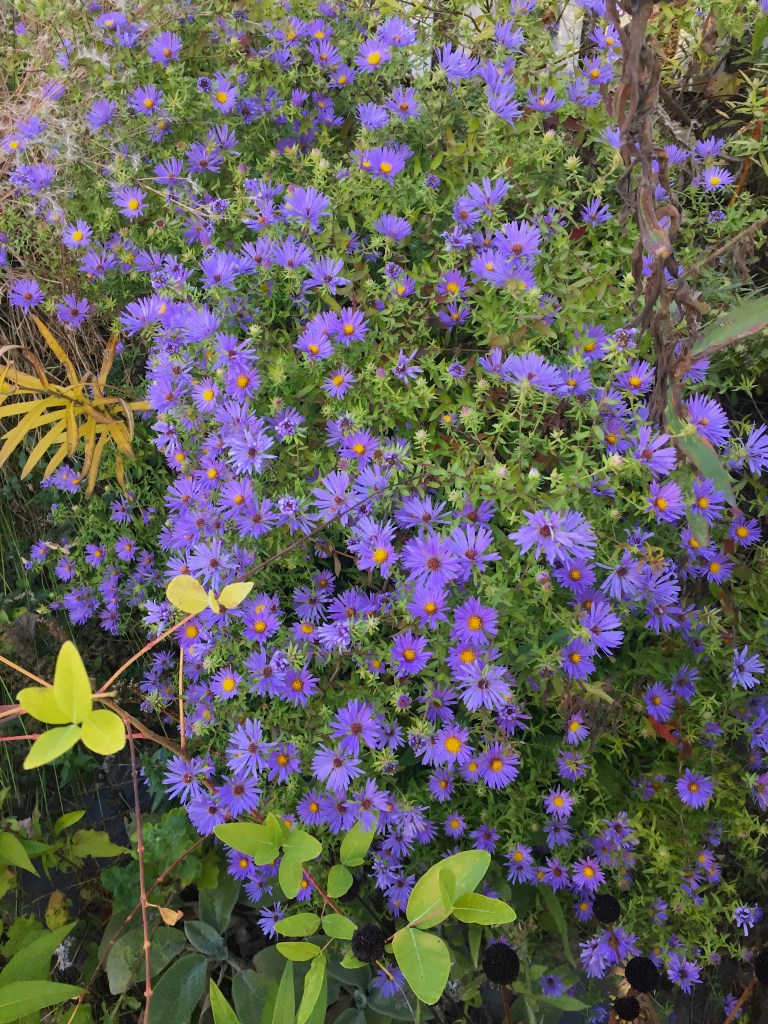
Here are some more pictures from the garden…


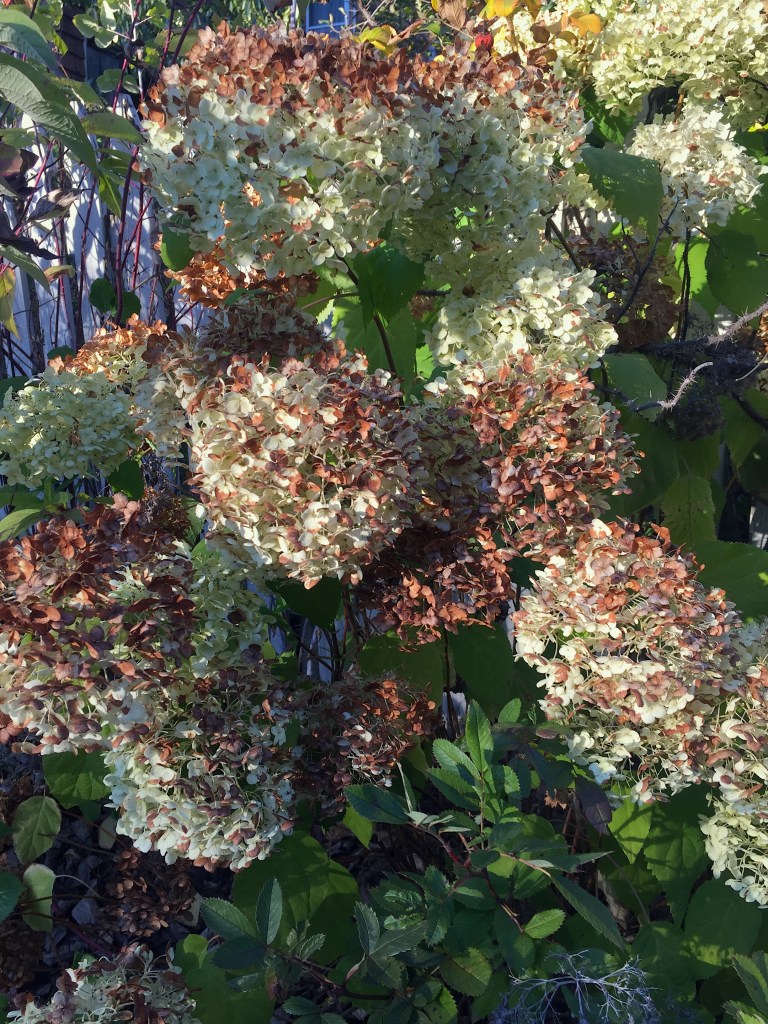
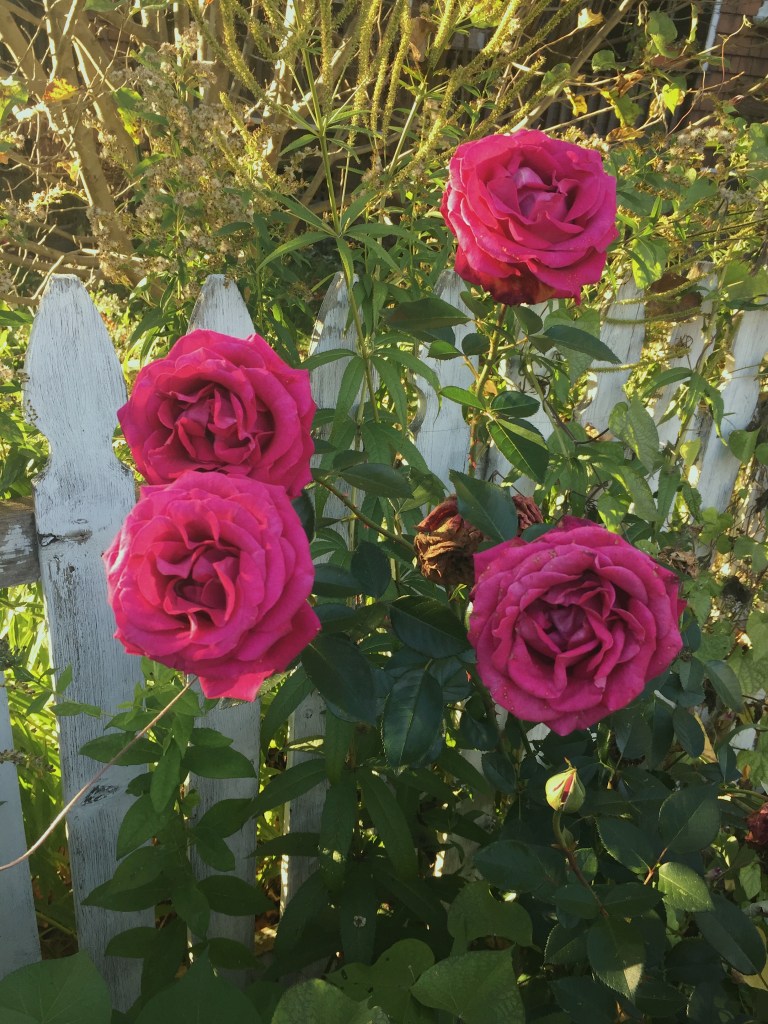
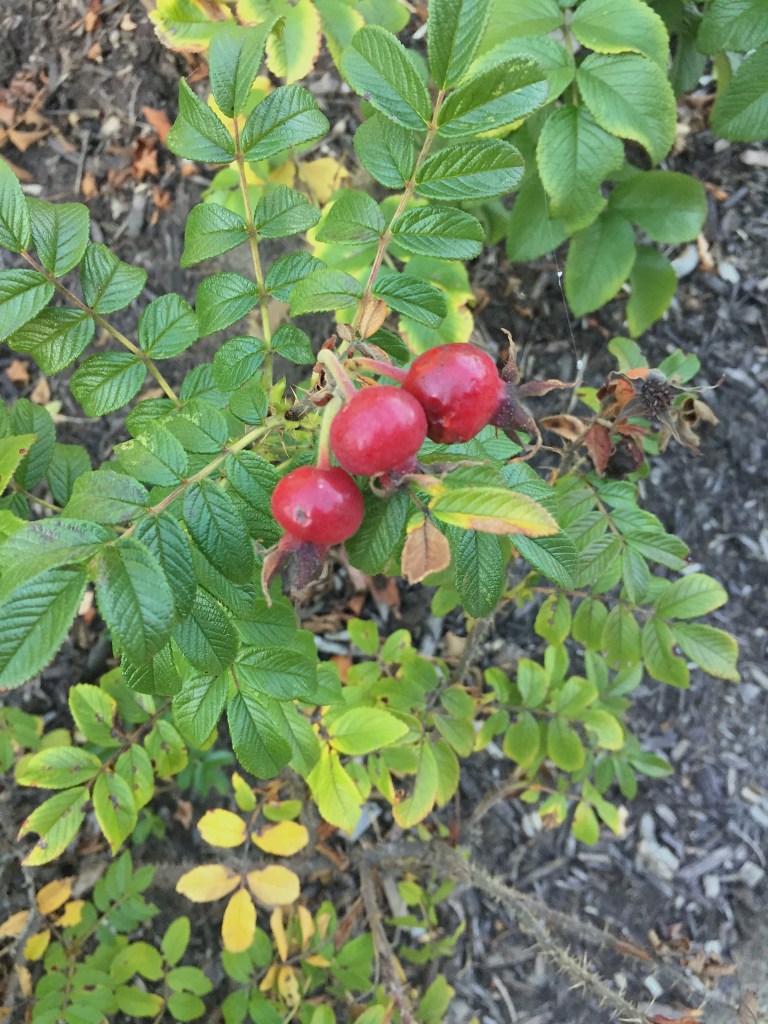

©Elizabeth Anker 2025

 By My Solitary Hearth
We spent several years living in a particularly arid part of the country and so the kind of preventative / survival measures you mention are second-nature to me too. The town we live in now is prone to several periods of no municipal water (not necessarily through a lack of water, but largely because of poor management and failing infrastructure) and we are often sans electricity. We are well prepared and have learned to take such incidents in our stride.
LikeLike
Your garden photos are lovely.
I hope you get rain and snow soon the make a dent in the drought. And hopefully it all doesn’t come in buckets and blizzards.
LikeLike