

There are two observances today that are dear to me. I am sure that there are more, even within my culture. And of course, it’s autumn down south. Which adds even more ways to celebrate the time.
The Navigation of Isis
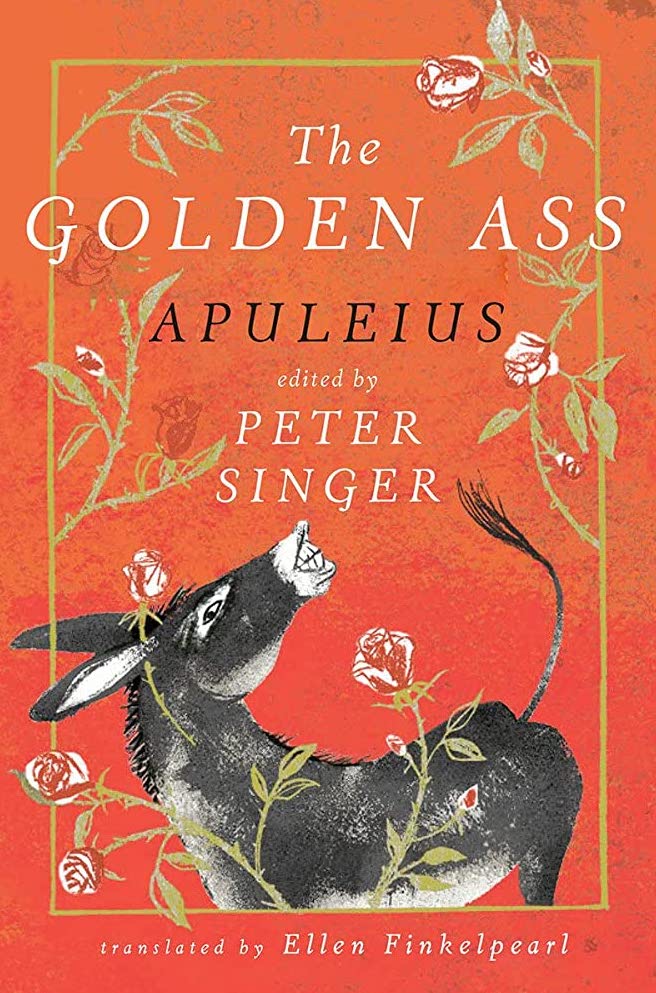
In Apuleius’, The Golden Ass, we find a description of another marker of spring. The Navigium Isidis fell on what is now 5 March. This was an ancient festival even in Roman times. It formally began the Spring and opened the Mediterranean sea trading season. Apuleius describes a procession with children, priests, flowers and statuary that wound down to the docks where a specially prepared boat was blessed and “offered to the sea”. From the narrative this boat may have been a carved model; it seems to have been smaller than the priests. But it’s likely that other peoples would have offered a true ship by sending it out to sea — either to sail alone until it sank beneath the waves or to make the first successful journey of the year.
Apuleius tells us that the goddess of the sea in the 2nd century CE was Isis, even in places like Corinth where there were many native sea deities. This is odd, but it’s not likely to be an author’s liberties because there is plenty of corroborating evidence in contemporary literature and inscriptions. Though she was not associated with sailing in her native Egypt — which seems to have not had any sea gods — by the early current era, Isis seems to have subsumed the aspects of many deities all around the Mediterranean, among them sailing and sea trade. And where most sea gods tended toward indifference to humans — if not outright malevolence — Isis was a loving protector.
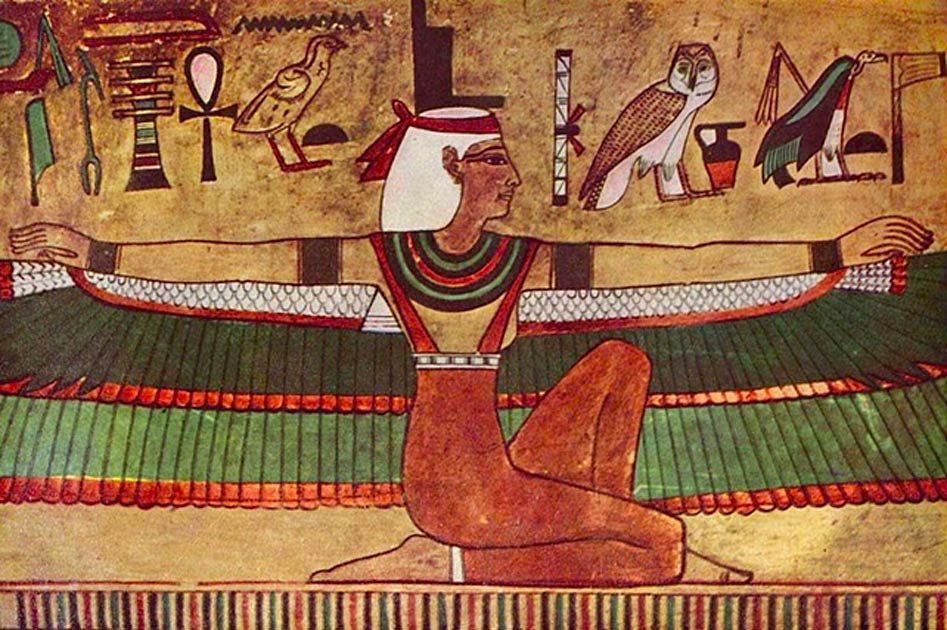
I suppose there is a certain sense in this. Isis is not particularly watery. She is not represented as living beneath the waves even in this late incarnation. She is a sky god, complete with feathers and stars. Seen this way, she becomes the breath of the wind that billows out the sails and the map of the skies which safely guides ships across the trackless seas. And she was a fierce mother who defended her children. She protected trade, which is always a fraught adventure. Isis smoothed the tensions between the normally belligerent Mediterranean peoples. She was the commonality that allowed commerce. She was also, from the very first, associated with bringing the changes in weather that engendered growth. She was the Spring and she created the Harvest — and the harvest is many things, successful trade dealings among them.
Perhaps the oldest celebrations of opening the seas for the year honored local deities. I can’t imagine the proud Mycenaeans choosing to worship a foreigner. But then they also weren’t much into trade. They tended more toward plunder and piracy. So I suppose their adversarial relationship with the sea mirrored their adversarial relationship with just about everything else. Still, the industrious Phoenicians seem to have honored a sea bird goddess, much like the Isis of Roman times. So there were probably others.
In any case, today our ancestors opened the Spring and welcomed Growth. So despite the frozen soil in my garden beds, I will set my ship a’sailing and put my trust in a horizon of verdant benevolence.
St Piran’s Day
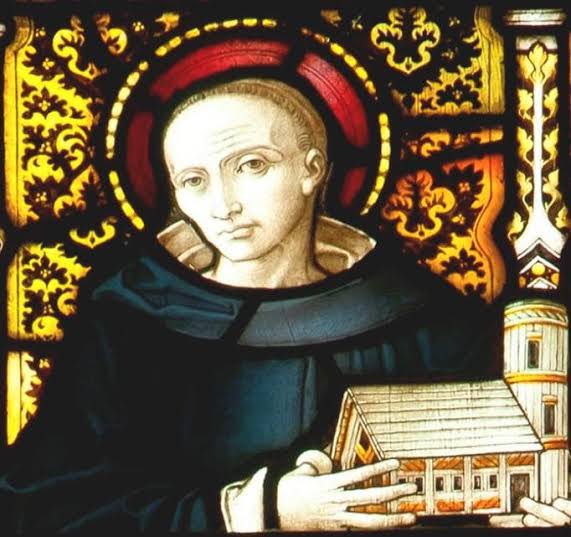
St Piran was a contemporary of St David and likely another student of St Illtud, the creator of Celtic monasticism. Piran is often conflated with St Ciarán of Saigir; and because the Brythonic languages rendered the Gaelic “c” into “p”, “Piran” may simply be “Ciarán”. The facts of both lives are similar enough. Both are Irish natives born in the 5th century. Both spent time in Wales before returning to Ireland to preach to a fairly unreceptive audience. Both were summarily expelled, dumped into the Irish Sea with a rock tied to their feet, and then miraculously washed up on the shores of Cornwall where they found a kinder welcome. However, Ciarán does not become the patron saint of Cornwall; Piran does (though St Michael and St Petroc also have some claim to that). And because Cornwall’s history is centered on tin mining, Piran is also patron of tin miners.
Cornwall’s tin mines made this peninsula on the southwest of Great Britain a focus of trade that has lasted since at least the Bronze Age. Essential to making bronze, which is an alloy of copper and tin, sea merchants traveled thousands of miles to carry this ore back to the large urban centers around the Mediterranean — maybe as far east as Persia. Certainly Cornish tin has been found in Israel. This sea trade created two industries that have lasted for millennia — mining, of course, but also piracy. (Think the musical…)
The rocky and deceptively dangerous coastline of Cornwall was deeply associated with a form of piracy called wrecking — which was pretty much as it sounds, though the image of a peg-legged guy in an outsized hat is far from the reality. Men, women, rich, poor and all in between were involved in this trade, known euphemistically as “harvesting” what came from the sea. Boats were lured into rocky coves where they capsized and sent their cargoes bobbing to the shore. Women and children were sent out to retrieve the goods under cover of darkness. The goods were quickly repackaged and sold to other merchant sailors— sometimes more than once. It was a highly lucrative method of squeezing extra wealth out of trade, not unlike the modern practice of “flipping” houses (which lacks the panache of boats, of course).
Piran is not the patron of pirates — that would be St Nicholas — but his story is bound up with perilous sea travel. He first sailed to Wales as a young idealist to train as a teacher of the new religion (which it must be said also has deep ties to boats…). He returned with a new haircut and a fiery message which the Irish simply refused. (Ciarán/Piran is a contemporary of Patrick, who made all these sea voyages in reverse — and with much greater success.) The punishment meted out to the unpopular messenger was drowning. In classic Irish-mafia style, they tied a huge millstone to his feet and dumped him over a cliff into the sea. But that rock was miraculously turned into a boat of stone which carried him all the way to Cornwall, where he set about building a chapel near the coast from which to continue his evangelizing. He remained in Cornwall until his death on the 5th day of March in about the year 480CE.
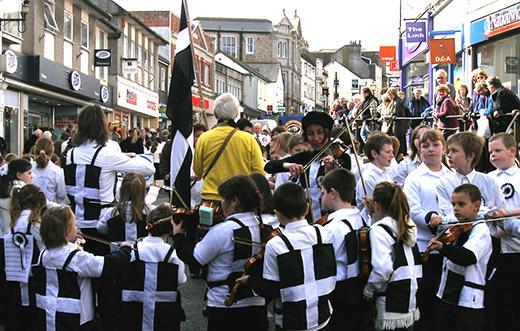
Today, March 5th is the national day of Cornwall. There are parades and concerts. St Piran’s flag, a white cross on a field of black, is emblazoned on every surface. There is also a good deal of feasting and drinking over the entire first five days of March, which are called Perrantide. Tinners have a tradition claiming that many of the secrets of their trade were given to them by Piran, so on his day they leave the mines and let the saint do the work. They head off to the pub where so much alcohol is consumed that March 6th is known as “Mazey Day” and “drunk as a Perraner” was a label used throughout Cornwall in the 19th century to describe anyone who had gone well beyond the bounds of propriety. This, in a land known for its pirates…
Piran’s body is buried in Perranzabuloe, just south of Perranporth. Perranporth Beach is likely where he crawled out of the Atlantic to set up shop. Today, it is a popular parkland with flat sandy beaches and rock pools, and another type of watery adventurer can be found here. It is a favorite haunt of surfers. Those same underwater rocks that capsize boats so efficiently also push ocean waves up into rolling breakers that are fantastic surf without the dangers of strong tides and fierce weather. There are sharks… but relatively fewer pirates!
©Elizabeth Anker 2026

 By My Solitary Hearth