

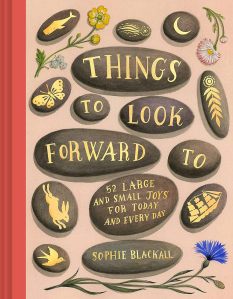
Things to look forward to…
rainbows
I was spoiled out west. There were rainbows nearly every day in the summer and shimmering rings of color around the sun in winter. I’ve seen double rainbows that each had mirror images so that the horizon was graced with up to six bands of color, though the reflections were always thin and faint and best seen through UV-reducing sunglasses. I’ve seen sundogs that nearly embraced the sun in neon arches. I’ve watched the sun set on the far side of a monsoon shower that painted an expanding arc over the whole Sandia Mountain Range to the east. I’ve had rainbows dancing around Albuquerque’s volcanoes as the solstice sun rose into a rare June morning shower. I am a connoisseur of rainbows.
I didn’t know how unusual a rainbow is for the rest of the world. Since leaving the desert, I think I have seen maybe a dozen. Probably less. Probably far less. But I’ve always had prisms, being somewhat of a nerd who regularly perused the Edmund Scientific catalogs. I line these up on my windows where they will catch the light. I also bought a couple cut crystals, sometimes called sun-catchers, and strategically hung these in the sunniest windows. So now I get rainbows indoors. Private rainbows. They aren’t much of a bow, being more of a chunky line of refracted sunlight. But it’s still beautiful.
It always amazes me that every sunbeam holds all the colors. When you think about that in terms of physics, it’s kind of breathtaking. Every beam contains a multitude of waves of electromagnetism, traveling at all speeds. What makes this photon so speedy that it turns purple? And why is that one so sluggish it can microwave your food? I’m sure there are Reasons… but I prefer to think of light as a chorus, all the colors harmonizing into a glorious angelic chord that plays over the skin… like a rainbow caressing the mountains.
The Feast of St Julian of Norwich
Julian of Norwich has been having a renaissance. Everybody knows the “All shall be well, and all shall be well, and all manner of things shall be well” quote. Her books are ubiquitous. Her name tops the list of Medieval women writers, mystics, and famous people. But… we don’t even know that it is her name.

She may have been named Julian. Margery Kempe, she of the copious tears and extensive road tripping, claims to have visited a “Dame Jelyan the anchoress” at St Julian’s Church in Norwich in 1413. There are a few wills that leave money to the anchorite, Julian — as well as her servants! Someone had a series of visions on her deathbed and, having been cured at the eleventh hour, recorded them. But that is all we know. Her writings were recorded, but they remained largely unknown for centuries. Her Long Text was published for the first time only in 1670, and few people read her work until the early 20th century. We don’t know her birthdate nor when she died. We know that she had her visions when she was thirty years old on May 8th, 1373, because she states that at the beginning of her book. Hence May 8th is her feast day, being the only day we can unequivocally assign to her life. It’s strange. Though she lived through the bloody Peasant’s Revolt of 1381 and suffered a plague outbreak that consumed years of her childhood and claimed possibly half of her city, there is not a word in her works that talks of these disasters.
(One might think that her revelations and immuration might be some form of dissociation from trauma.)
Despite the scant evidence we have for her existence, she seems to have been a celebrity in her time. Kempe certainly believed that Julian was interesting enough to go visit. There are oblique references to the anchoress at St Julian’s in Norwich from other contemporary sources, and copies of her writings were carefully preserved. She lived at a time when women mystics were the done thing on the Continent, but Julian was the first Englishwoman in centuries to follow that path. So she was something of a novelty. Nevertheless, it seems that she was respected as a visionary and theologian. That her writings exist is testament to high regard.
That admiration had to go underground during the Reformation and Julian had to wait for over half a millennia to be rediscovered. She was never canonized by the Catholic Church. (Because she lived in isolation, there were no witnesses to the minimum of two miracles necessary to become a saint.) Still, her name is invoked as a shining guide to those who would lead the contemplative life. Her ideas that god is both mother and father, and therefore that Christ was both man and woman, are highly unorthodox and resonate in a culture that is slowly shedding male dominance. And her influence goes well beyond Christian mysticism.
I first encountered Julian through the 2007 novel by Tod Wodicka, All Shall Be Well, and All Shall Be Well, and All Manner of Things Shall Be Well. Julian does not show up in this strange tale of a mentally unhinged Medieval re-enactor on a quest to reunite with his estranged adult children. But the title sent me digging through what we know of Julian. For a while I thought I might like to follow her lead. Hide from the world, giving pronouncements when prodded, able to dedicate all hours to thinking on the love and beauty in this world. That’s for me! It was said that there was even a cat in Julian’s life, possibly one that lived a miraculous forty years in confinement with the anchoress. (So there’s one miracle… though I suppose that was the cat’s not Julian’s.) But levity aside, the idea that even the Christian god could be a loving mother was profoundly influential, and that someone might entertain this idea so deep into the Christian era seemed solid evidence that the goddess was real and remembered.
So I celebrate Julian’s day. Her message that God is Love and that all shall be well is one I hold in my heart. I am not entirely convinced that deity exists, but if so then She is certainly a boundless and abiding care for every last thing in this universe.
Furry Day Dance
May 8th is also the traditional day for the Furry Dance in Helston, Cornwall. This is not (unfortunately, in my opinion) a dance when everybody dresses up as lions and tigers and bears. The name comes from the Cornish word, fer, meaning “fair” or “feast”. And that is how you pronounce the name also — FUH-ree, not fur-ree.
This is the Cornish festival of Flora, celebrating the passing of winter and the coming of summer. The dancing begins early in the morning with various troupes of dancers, including the Children’s Dance and the Hal-an-Tow Pageant. Then the lords and ladies dance at noon in top-hats and tails, bright gowns and white gloves. (These used to be the local aristocracy, but these days anyone can dance in the midday dance as long as they dress up for it.) Then there is an evening dance, which seems more like a free-for-all party, not the choreographed steps of the other dances.

The Hal-an-Tow is what I find fascinating. This morning dance features an amalgam of familiar morris dance stock characters — Friar Tuck, Robin Hood, St George and St Michael. The name may mean something like “raise the roof”, though it might also be a reference to garlands and bouquets. But the amazing thing is the beings that show up to dance entirely covered in greenery. It’s as though wood nymphs have come out of the forest to dance in the village square.
This festival is one of the oldest continuous British traditions still observed today. The earliest written reference to the Helston dance was in the late 18th century, but these dances and characters are far older. It might be one of the few customs to have survived the 16th century Puritan purge of all fun things. Certainly, a May dance with Robin in the Green and ambulatory bushes seems rather in keeping with the far older festival of Beltaine — and the Festival of Flora is ancient indeed. I think this is a living antique, a window on a time when we both honored and poked fun at the more-than-human world around us and when we welcomed in the summer in true style!
Wednesday Word
for 8 May 2024
bouquet
The seventh moon is the Flower Moon. It is new between 23 April and 21 May. It is full between 7 May and 4 June. This is the time of riotous blossom and rainbow color splashed everywhere. In the next several moons, all the green world is bent on reproduction — flowers! — but May through about Midsummer is when many of our favorite cut flowers are blooming. From tulips and hyacinth through monarda, roses, and daisies, you can cut vases of fresh flowers every morning and still have plenty in the garden.
This is when the garden becomes frenetic. Bees and butterflies are busy all over the garden (though in this time of extinction that is less and less true every year). The early baby birds are fledging. And it finally feels warm. (In some places, it’s verging toward too warm.) In this moon, the garden will be producing asparagus and rhubarb, peas, all manner of greens, cabbages, radishes and many of the roots. And usually sometime in this month, the ice cream stands will open their doors. This is the best time to clean out the freezer and pantry to prepare for the summer’s harvest.
The Greenleaf Moon went dark at 11:22pm last night, so the Flower Moon may be new today or tomorrow, depending on when the sickle is first visible over the western horizon. Because I don’t have the time or the patience to actually watch for the sickle — nor do I have a dedicated priest watching the horizon — I just declare the day after the dark moon to be the new moon. I probably can’t see a very young new moon anyway, even when the sky is clear, because there are mountains to the west. By the time the sky is dark enough to reveal the silver sliver, the Earth has turned too far to see that part of the sky. But I’m confident that the Flower Moon is there, a tilted smile above the sun. (Here is a handy chart to show what the moon phases look like from different latitudes.)
If you choose to blather on about all things colorfully floral, you can respond in the comments below or go visit the All Poetry contest for May. Your response can be anything made from words. I love poetry, but anything can be poetic and you needn’t even be limited to poetics. An observation, a story, a thought. Might even be an image — however, I am not a visual person, so it has to work harder to convey meaning. In the spirit of word prompts, it’s best if you use the word; but I’m not even a stickler about that. Especially if you can convey the meaning without ever touching the word.
Even if you don’t choose to scribble, at least I’ve made you think about… bouquets.
©Elizabeth Anker 2024

 By My Solitary Hearth
Perhaps the most fortuitous invasion in history, the Norman conquest of England was the catalyst that propelled English to become as close to a universal language as this planet is likely to ever see. With the French infusion, modern English has become a bouquet of sounds weaving together the West European languages north to south. I’ll admit however, that to my ear French is the most melodious language, most especially when sung. What little French I know however, comes from a year’s study in junior high, watching French TV cop shows (very highly recommend Astrid) and above all music from my favorite bands, Pink Martini, Chantal Chamberland, and the sublime neighborhood, now international, band Veronneau. It’s the sound of the words that I am in love with, and not knowing the meanings actually enhances my appreciation. Take the word, bouquet for example, even the various meanings are evocative of the sensual nature of the Romance languages, like a medley of flowers or songs, a compliment, or lovely fragrance.
LikeLiked by 1 person