

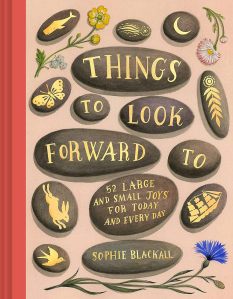
Things to look forward to…
falling in love
I’m fairly certain Sophie’s view of love is different from mine. Her short exposition on love mostly focuses on finding human sexual love later in life. I am all for human love, I just don’t have much use for it. Or maybe it doesn’t have much use for me. Either way, I don’t care about finding it late in life. I’m quite glad to be quit of it so I can focus on what’s real and enduring in my life.
First, we all know that there is a world of difference between love and falling in love or even being in love. In love is centered on the individual and her feelings. It is a “you please me” way of relating to someone — or something — else. And that is a great first step to finding actual love, but only the first step, and we often fail to recognize that we’re not loving when we are in love.
Being in love is fun and heady and, yes, emotional, though it is also dark and needy and desperate. In love doesn’t much notice the effects you are having on others; it is striving for the effects — mostly attention — of others on you. Real love is when the relationship of effects — how you make me feel — is replaced — though not entirely — by a relationship of cause — how I make you feel. Instead of “What have you done for me lately?” it’s a reciprocal what can I do to make you smile, to make you calm and content, to make you feel safe and protected, to make you happy. What can I do for you today? And then every day for as long as the relationship lasts — which is usually a lifetime and beyond.
This is the crucial difference between in love and love. In love is fleeting. It is that tentative first step. That attractive state is temporary and specifically evolved as an introduction. It will not last. It does not last. There is no way to make it last — millions of self-help books notwithstanding. And if you can’t make the transition to real love, in love turns sour and disgusting. Your object of in love is just an object, and you find one day not too far in the future that you don’t know why you ever felt pleased by it. Of course, this does not make for healthy relationships. Hence the prevalence of failed relationships in this culture.
But in love is a great way to play on the emotions of young and impulsive and somewhat stupid people to lure them into a relationship that benefits the economy.
This is what I have discovered about falling in love. Nearly everything we read or hear or see or “know” about falling in love has the brittle feel of propaganda. It comes with a “happily ever after” coda that is never explained or justified. There is no work, no reciprocity. There is no effort, no growth and becoming. It promises a life of scintillating ease, a magic state of grace where no aging or change is allowed or accommodated. It stops at falling in love — and then traps two people into this falso relationship for life.
Our culture’s fixations with youth and image and sex are symptoms of this warping of love. All these tales of meet cute and crossed stars… they’re all the same story. And they all end when life is actually beginning. Looking back on that time, it rather feels like all these happily ever afters that are never elucidated are smoke screens, a big set-up for an even bigger let-down that never lets go. The point of the story is hidden. Falling in love is the bait, not the goal, and the happily ever after is not found in the narrative.
I think our preoccupation with falling in love and the complete disregard for real love comes from outside us, outside those stories. It is dumped on us from princess movies all the way to self-help books for the golden years. We feel like we should believe in it… but the more you analyze those feelings, the more you think about those stories, the less it feels real and really how you feel. Step back from it all for just a little while and you begin to see other possible motives for this insistence on falling in love, especially when paired with a happily ever after sealed with a wedding ring.
Other people benefit far more from young people falling in love than the young people do… especially young women…
I think these stories are tragedies. They never portray the radiant joy of a life well lived. They never show the unflinching devotion of a relationship that has moved beyond attraction. They end too soon, never attaining fulfillment.
But the greatest tragedy is the loss of love. In these stories, there is no room for love outside of human romance. In the public narrative, we make gestures toward our parents and sometimes siblings and friends, and we dote on our children. But love is both reserved for one specific human relationship and diluted of all meaning by being spread all over nonsense like loving coffee or loving our jobs. There is never a fierce fidelity and constant care in either sense of the word — and that is what real love is. That is what wells up in a heart that gives itself to the world and especially those in close relationship — human or otherwise.
Think of all the stories that happily ever after never tells. Here’s one: I have fallen in love with my home — twice! And in that heady, introductory experience, I learned real love. I became embedded in and committed to place. Today, as Wes Jackson would say, I have become native to this place. It fills me up. It also challenges me as all relationship will. We work together to make life. I love my home, not like coffee, not like a sexual mate, but like a dear friend who clearly loves me as deeply. This love is an active verb. It is what I do, how I am, for my place in this world, and it is what this place is and how it cares for me.
This is the love that is missing from falling in love. This is the love that is the majority of love stories in the world. Truly, this love is the Ground State in the universe, a caring embedded web of relationship. A doing and being together, making life and making happy. Actively making happy. There is no passive entitlement like happily ever after in the real world. There is all working together for the entirety of a life to give happiness away. You never need a fairy tale or a self-help book to find real love. You don’t find love. You create it. And you give it away rapturously and imprudently.
If you can forge that love with the person you fall in love with, well, that is a story worth telling. And the best part is that it does not end in some flimsy ever after. It only begins with falling in love.

the emperor of nothing
the emperor of nothing
squawks from his puissant position
words he doesn’t hear
does not comprehend
meaning all dissevered
from material truth
nor even vague gestures to cake
in this feeble discourse
while the machine drones on
feeding on foundations
consuming his constituency
and hands reach up from the morass
grasping air like fire
only to sink into silence
resignation rather than death’s repose
because he must have subjection
and the emergence engine its fuel
so we plod on
papering our lives with pitiable lauds
wearing the ribbons of salutary service
to what we do not know
while the emperor preens
changes clothes for the occasion
and does not see
that he is naked
Wednesday Word
for 10 July 2024
emperor
If you have something to share on empire and its silliness, you can respond in the comments below or go visit the All Poetry contest for July. Your response can be anything made from words. I love poetry, but anything can be poetic and you needn’t even be limited to poetics. An observation, a story, a thought. Might even be an image — however, I am not a visual person, so it has to work harder to convey meaning. In the spirit of word prompts, it’s best if you use the word; but I’m not even a stickler about that. Especially if you can convey the meaning without ever touching the word.
Even if you don’t choose to scribble, at least I’ve made you think about… emperor.
©Elizabeth Anker 2024

 By My Solitary Hearth
emperor/empowered error
LikeLiked by 1 person
excellent!
LikeLike
Beautifully put. Thank you.
LikeLiked by 1 person
Without getting Platonic, I’ve got a question for Eliza. On the whole, has love done more harm than good? For an individual, for a couple, for a family, a society, a nation state or for the world? I know this question doesn’t have a quantifiable answer – perhaps no rational answer at all. But, what are your “feelings” about love on balance? On the cosmic scales has love been a force for good or bad or an indeterminate both?
For me, love has probably done more harm than good across the broad board of humanity. I would argue that the emotion of love has caused more misery than joy, more cruelty than kindness, more hatred, ill will and animosity than it has brought people together. Perhaps we should be talking instead about the banality of love? IMO however, there is an emotion, far less common than love, that on balance has been more a force for good – forgiveness. But maybe, forgiveness is just a special part of love?
P.S. I have a couple more questions. Has there ever been a woman emperor? Or are emperors reserved for men only? To clarify, I’m not talking about the head of tribes, or even nation states however large or small. Emperor implies empire and its political manifestation imperialism – the rule of one nation state over many other nation states and peoples.
P.S. No Maggie Thatcher was not an emperor, she was the prime minister of a has-been empire. What about Queen Victoria? I would contend that emperor implies some sort of absolute personal power.
LikeLiked by 1 person
I think what you are describing is that “in love” thing. The caustic me-centered definition. Real love is not that. It is definitely good. It is what holds us all together. It is the way we are held together and what we do to maintain that bond. It is not romantic. It is work, care work. But it is the most beautiful force in the universe, what I believe to be the Ground of All Being. It is rarely found in stories and songs. It is none of the images presented by this culture of love. The most common example is the bond between parent and child. Or the Earth and all her creations.
*********************************************
No, I’m pretty sure there has never been an actual empress, though the word exists. Katherine in Russia and Elizabeth I in her later years, both come close. Not so sure about Victoria… she didn’t have much power. She was more of a ruler than recent monarchs, but she was not free to make decisions of any kind. I don’t even think she could sign agreements with other states, never mind against them.
Over the millennia there have been several small empires on the West African coast led by women but they weren’t about conquest and control of distant lands — and labor and resources. They were nations that both took over and joined with neighbors to make something like empire. And the rulers were definitely absolute and charismatic.
But in the north… probably not.
LikeLike
I’m talking about much more than the “in love” thing. Love is perhaps the most complicated and inscrutable of human emotions. Throughout history and across the diversity of human cultures, love has been assumed to be a positive “good” thing. It is that assumption which I’m challenging. The kinds of love that seem to be the most destructive are love of country (nation state as opposed to the land), love of money, love of self, although there are certainly others. Whole religions have been founded on love – the Heavenly Father so loved the world that he gave his only begotten Son to save it. Religions, that historically have provided the spiritual basis for some of the most savage violence this sorry old world has seen. Even the love bond between parent and child has for many, many people been a two-edged sword. Clearly, some cultures have been better than others at promoting the positive, good side of love but looking at the broad expanse of the human experience, I can’t help but ask, “what has love got to do with it?”
P.S. I’ve never understood why Mother Earth never sent her daughter to save us? If she is going to do it, now would be the time. Otherwise, I sure hope Jesus gets back before we completely trash the planet.
LikeLike