

The eighth moon in my calendar is the Strawberry Moon. It is new between 22 May and 19 June, full between 5 June and 3 July. This year the Strawberry Moon is full tonight at 7:56pm here in the Eastern Daylight Savings Time Zone. This is not something that happens on local time. The Moon is full at the exact same moment all around the planet. The Moon reaches fullness at the same moment, though not at the same time, wherever you happen where you live. In fact, for those east of Vermont, you may not have a full moon until tomorrow morning. Rome, for example, sees its full Strawberry Moon at 1:56am on the 30th… but that is the exact same time as 9:08pm on the 21st here. Isn’t that a strange thing to consider?
This full moon is about as far as it can be from the Earth, so it looks smaller than usual. However, here in Vermont, the fullest light on the Moon’s face comes just an hour before moonrise at 8:57pm. So it will be very bright in the east as the sun’s light fades into the west, and the distance might not matter all that much. But, of course, it will be beautiful either way. Watching the rise of the Strawberry Moon is always a calming balm after the heat of a high summer’s day.
Here in Vermont, the heat hasn’t been too bad. I panicked back around Memorial Day Weekend when it briefly hit 90°F for a couple days and put the window AC unit in my bedroom (though not the one in the guest bedroom). However, I hadn’t used it much. In fact, there have been several days when I closed up the house entirely and fretted over my basil and begonias as the night temperatures dropped to 42°F. I haven’t worn a turtleneck since early May, but I’ve needed a jacket many mornings.
But it looks like summer might finally be setting in. My begonias are happy about this. Me, not so much. I consider humid heat to be something to endure… and I don’t… not well anyway. My garden is also of two minds. The sun is welcome, but the afternoons can cook the moisture right out of the soil (adding to the humidity…). My chiles are ok with this. The potatoes, under their mountain of compost and straw, are about three foot tall and lush. But the tomatoes are a bit droopy and the petunias need daily water.
I wanted to write about the glut of strawberries I thought might be happening this year. There were blooms everywhere, and, though the fruit was a bit late, there were green berries everywhere. Were being the operative word. There are still a few hard green fruits here and there, but the majority of my berry harvest ended up in rodent bellies. Probably the chipmunks that I’ve flushed out of the beds more mornings than I like.
They’ve also eaten the gooseberry and currant blooms. Or somebody has. I had flowers for a few days and then nothing. I have about a half dozen unripe gooseberries on one plant and no currants anywhere.
And then there’s the veg garden. As I said, the potatoes are going crazy. I also have a good bit of garlic and onion and a healthy pea harvest. But I caught a young groundhog in the summer squash bed… after the little demon had wiped out half the plants — including the tomatoes that I had planted in that bed! Aren’t tomato greens poisonous? Apparently, that doesn’t matter because they also nearly killed two more tomato plants and all the sweet pea vines I had planted in half barrels at the back of the garden. Then, because I guess they enjoy indigestion, the vermin ate every last sweet potato. There are zero left of the 36 that I planted. That bed is nothing but some turnips and beet greens now.
It makes me faintly dizzy to add up all the money and time I spend, only to flush it all down the gullet of a plague of rodents. I suppose I’ll have potatoes… But I’d really like some gooseberries from all these bushes I’ve planted. And tomatoes took up months in the guest bedroom, with daily waterings and heat mats to keep them happy. For nothing. Worse than nothing, because I suspect eating that stuff doesn’t even feed the vermin. It probably makes them sick. Idiots…
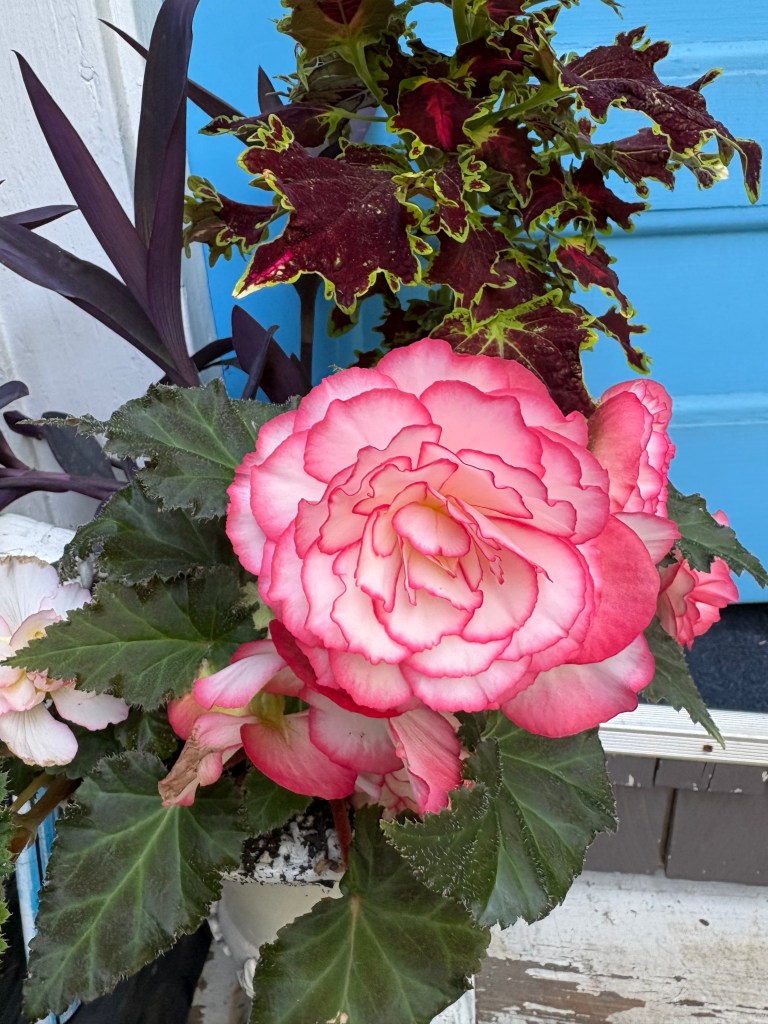
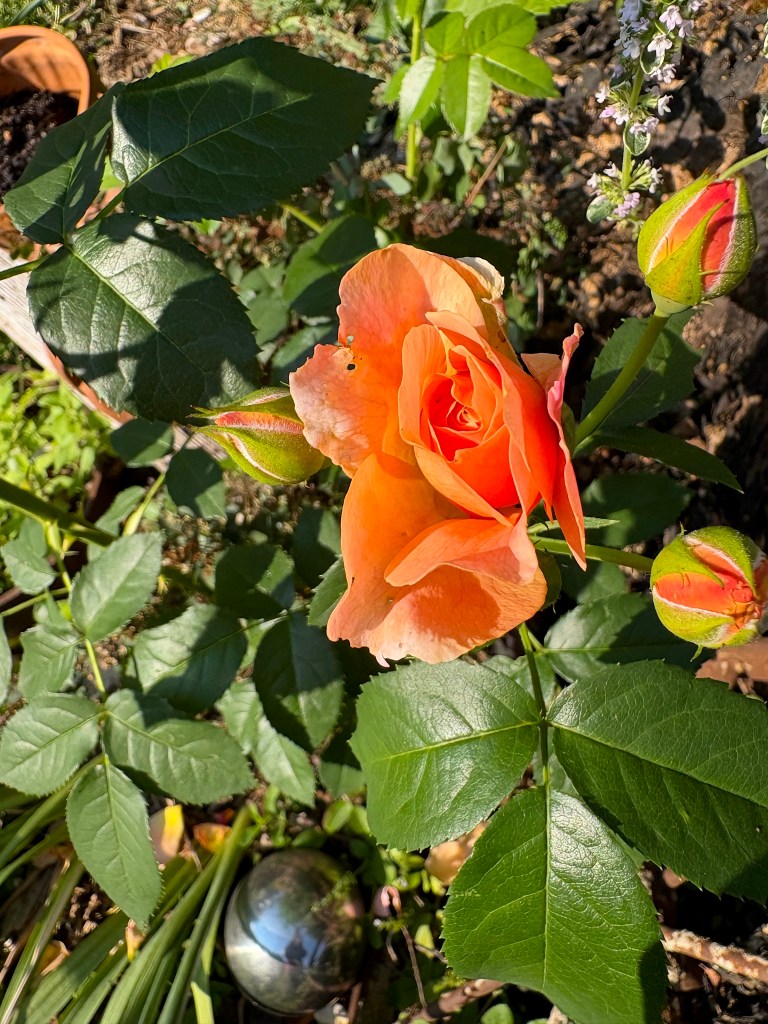
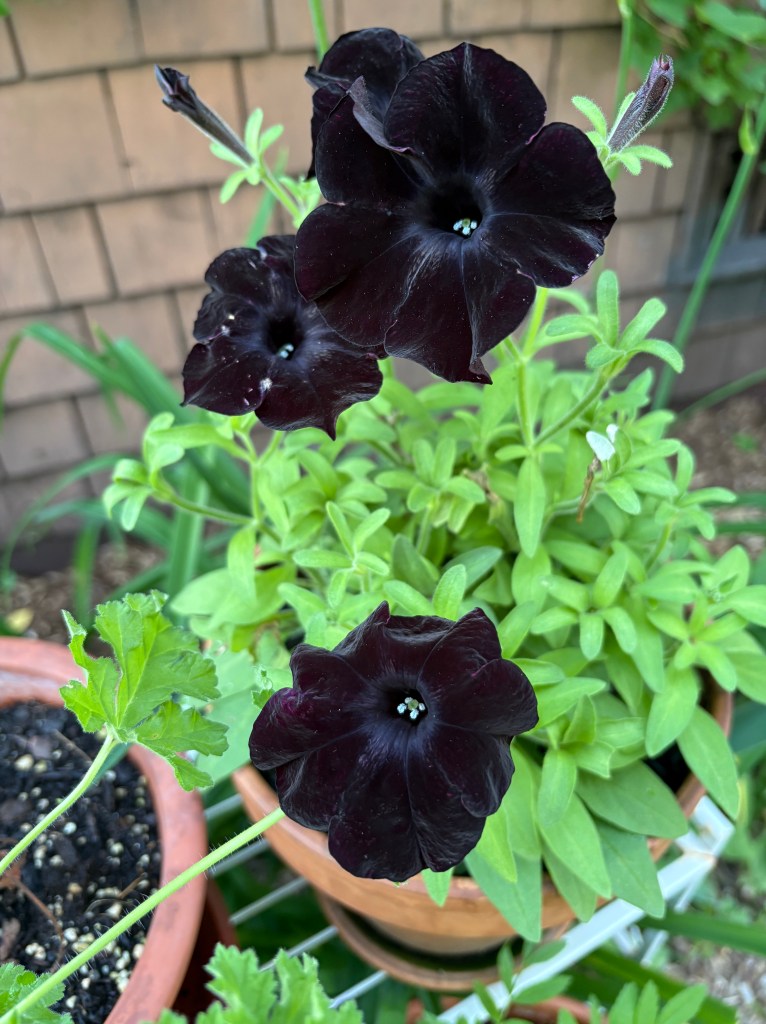
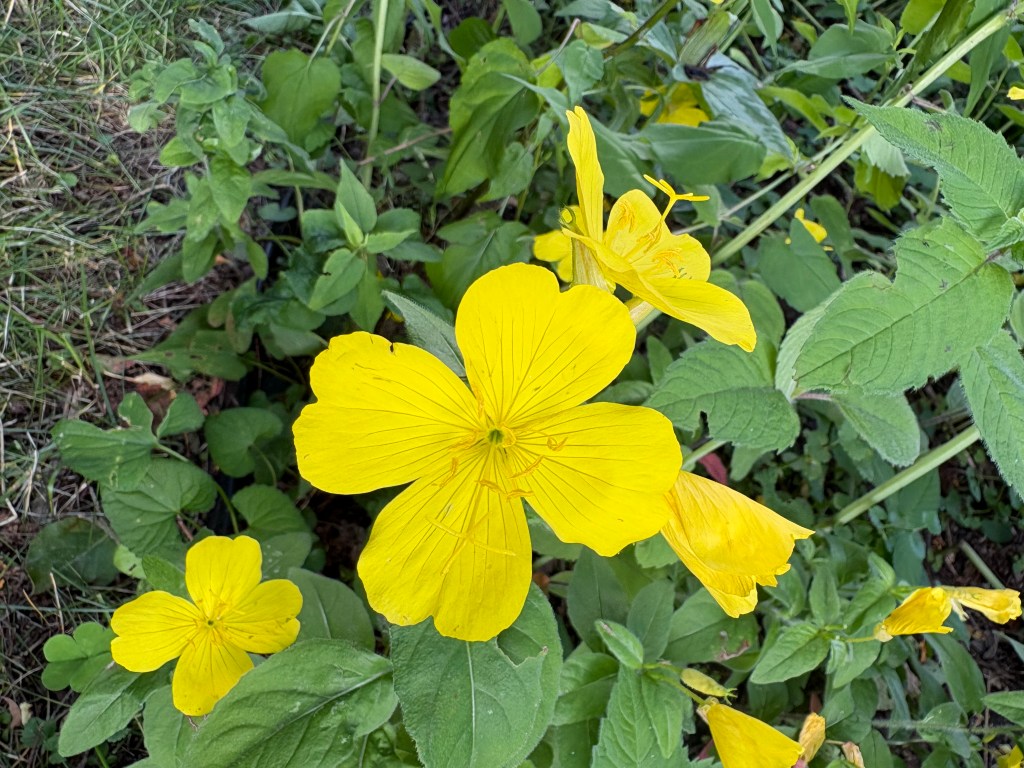
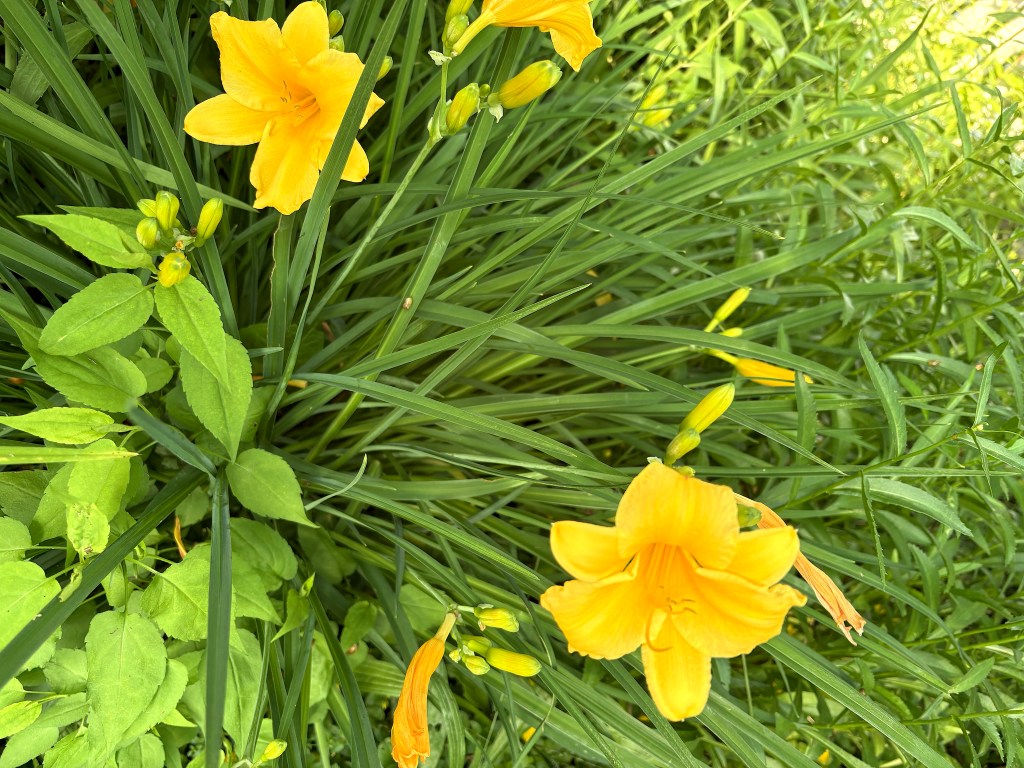
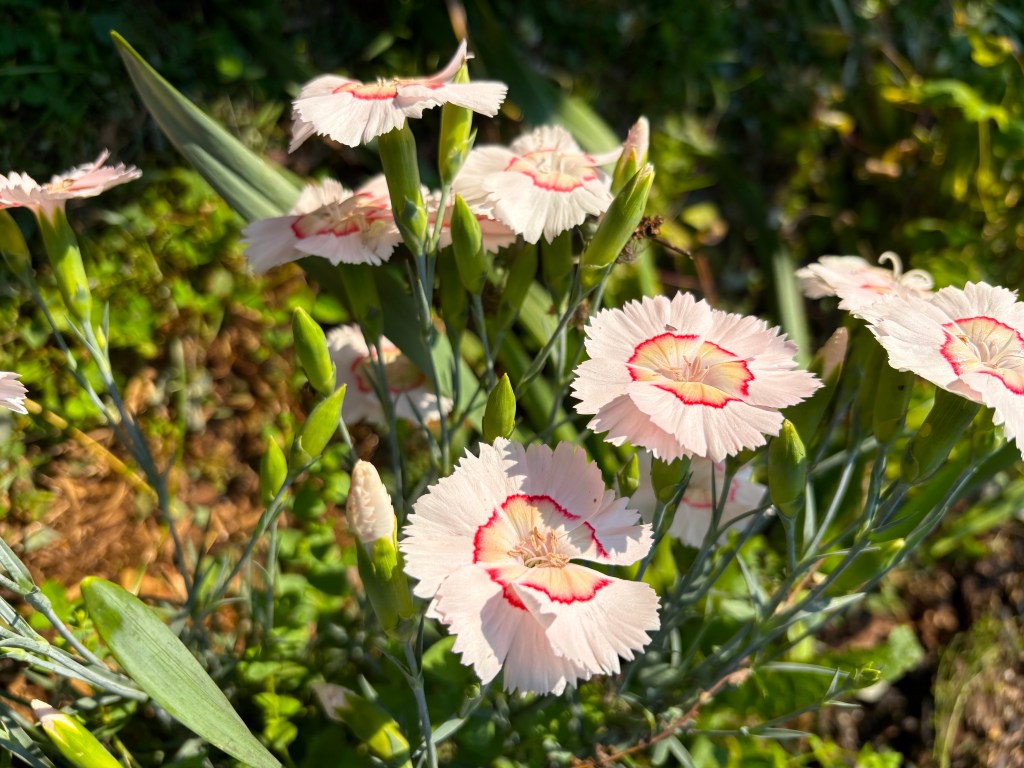
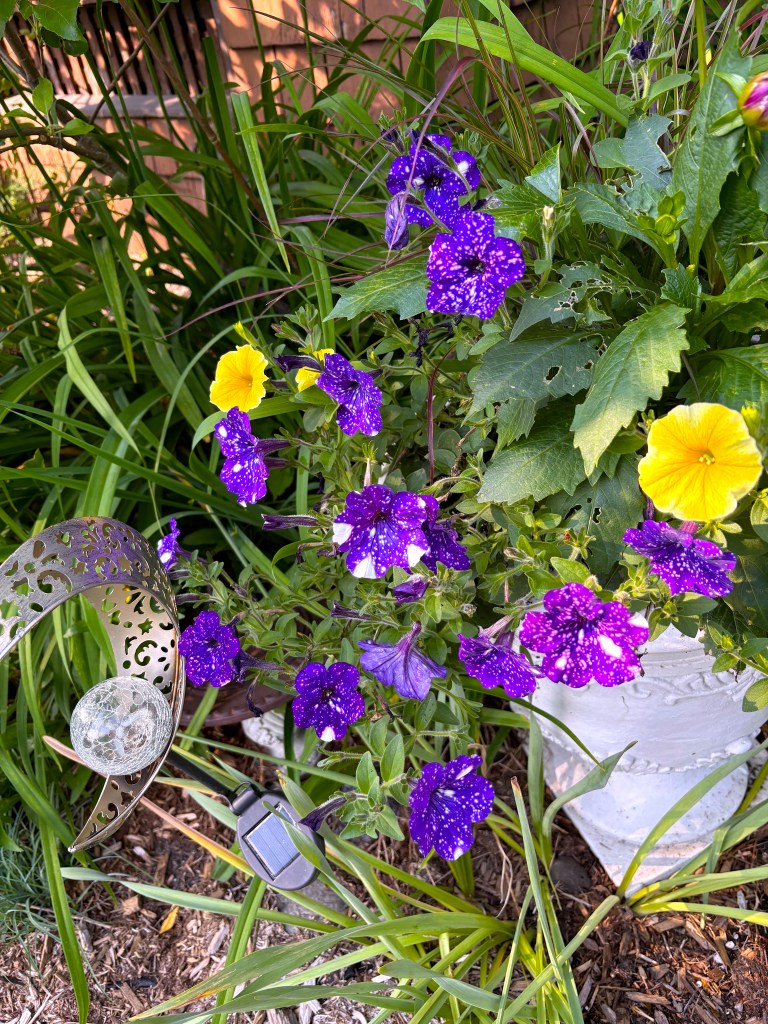
So… no strawberries. But I do have a Winifred Mumbles story for you. And there are flower pictures at the end of this post. That’s the best I can do…
Arroyo Strawberries: Winifred Mumbles
There’s a layer of ash visible high in the walls of the arroyo. It lenses in and out, thickening and thinning, breaking into eerie grey smiles in the upper bank face. It is not old. Bright plastic riddles the layers underneath this ash like malignant confetti and the droppings of giant clowns. And plastic is only a blink before my time, geologically speaking. This ash… this is the record of the end. And, I suppose, the beginning.
There are books from the days of crumbling. I suppose we keep them to remember our mistakes. They do not make good reading, not even as cautionary tales. Because how could humans have been so stupid? It’s embarrassing and uncomfortable. And not a little enraging. I pity those who lived through those stories with half a head on their shoulders and even just one eye open now and again. Must have been quite a lot of curdling livers. Half-moon prints of fingernails indelibly written on palms. Teeth ground to nubs… if you survived the plagues of idiocy for a nominal span of decades.
There were quite a large number of headache remedies back then. We have the bottles still. Or rather, the arroyo does. And the packrat middens. That plastic. The alluvial fans are nothing but piles of it. Straws and red cups. Tubs and buckets and basins that were big enough to bathe a horse. Broken wheels and doll heads and nubby, sharply angular blocks. Beads and buttons, fake faceted gems and remnants of garish fabrics. Fractured window-panes and abandoned doors and matted carpeting. Tubes and casings and cracked display panels. Strange disks that defy explanation and even stranger strands that don’t seem to have any purpose but to be broken. And bottles and bottles and bottles and bottles. Of every imaginable shape and size. All of it in riotous, synthetic, eye-watering, assertive color. And people ate off that stuff, as if any of it was not the pigment of poison.
But the bottles still have labels. Or some of them do, anyway. And so many contained pain relief. Enough that their contents must have been made to combat an ocean of immutable suffering.
Which begs the question: If it hurt that much, then why?
In any case, there are books from that time of plastic. Though not many. And then there is silence for a time. Silence, and scorch marks on ancient adobe walls. Plastic stratigraphy ends rather abruptly. Like a raucous laugh cut short. Or a scream.
I’d say even Cassandra’s prognostications fell short of the ashen silence. After the fire, the flood, the wind, the mud… what voice is there to tell the story?
Because though there are those books, we don’t know the story. Especially the why. And the consensus… How did that happen? Did it? Did they generally agree to their own detriment? Their own destruction… And how do you make that decision? For yourself? For your children? How do you decide to poison yourself? To agree to pain. For a mountain of plastic bottles worth of time. To agree to live with this pain relief rather than removal…
Though it seems that there was, in fact, little disagreement. Perhaps mostly because they didn’t see. If the books we have are representative, then few people could see what was right in front of their faces. They didn’t see the path between plastic and pain, poison and misery. They didn’t understand where they were headed when they filled up those tanks. They thought they were flying off to a golden future of perpetual progress. Evidence be damned, I suppose. Because, nope, those stories certainly don’t lead to here. Nor to the ashen silence.
But then, the pain relievers are a notable counterpoint to the book-tales. And there are far more bottles to quell the misery than there are of those bound self-congratulatory stories. I’d say the books were the exceptions. Bedtime stories for the intentionally blind. Blankets pulled up over their heads, telling themselves tales what they wanted to be true. Or that some folks with the money to print books wanted to be true. Who knows what the most of them with their plastic pill bottles wanted, aside from the obvious, of course…
Because the headaches were the ground state. At least, that’s what litters the ground in the arroyo these days.
Well, that’s hindsight anyway. But how could they not see as well? Doesn’t take a magic crystal ball to read “The End” on a dry well. Or a finite planet. But those books all seem to think they’d head off to the stars when they’d wasted Earth. Or that there would be no end to the wasting. Preposterous. Nobody would believe that. Even the chickens would laugh with as much scorn as a bird with a wattle can manage. The churros would just roll their eyes and turn away. Maybe they needed more churros back then. Nothing like the level-eyed disdain of a 4-horned ruminant to inspire reflection on your life choices.
Things to be grateful for: practical sheep.
And chickens. Though they’re a bit less sensible.
It’s getting on to midsummer. The monsoon will soon be filling the arroyo with muddy water and all the flotsam it can pick up between here and the mountain face. Cholla skeletons, Apache plume and chamisa brush-piles. The odd boulder or undercut piñon from higher up. And all that plastic, of course.
The jack rabbits are busy down there in the dry beds, getting in their breeding season before the water washes away all the delicacies and buries their burrows in sandy sludge and refuse. I’m not one for rabbit stew, but if you don’t eat them in early summer, they wash up out of the arroyo in monsoon season. And then they eat everything else. Just one can wipe out the garden. The owls do their part, but there just aren’t enough owls in this part of the world to keep up with even one pair of healthy rabbits.
So it’s down to check traps before the heat gets up. The arroyo is in mountain shadow in the early morning, turning the bronze and gold of daylight to dun and glaucous grey. The plastic jumps out of the walls in the low light. So does the ash, which turns to white rictus grins just under the topsoil above my head. No rabbits in my snares today. Not too saddened by that, though it means more will live to maraud my bean field. (Unless the coyotes are unusually lucky this year… ) But there were other surprises.
I don’t know where in all these blue skies they got the moisture. (Maybe it was coyote piss… ) But there were strawberries growing in the rotting remains of an old juniper. Bright red to rival the plastic trash. My eyes, trained to glance past vibrant color down there, almost missed the berries. And why would I be seeing them, all out of context like that? Strawberries don’t like heat. Or blue skies. Takes much water to make a berry. And while they like sandy soils, they sure don’t like salt. Give them a bed of pine needles and bit of summer shade and they’ll do well enough in the mountainside garden. But down in the arroyo in the early summer? That’s simply miraculous. And so I almost didn’t see them.
(Almost… but not… and so I have strawberry scones baking now… to go with the morning’s clotted cream from the churros… )
Amazing things: strawberries. Full stop.
It’s said there used to be farms of nothing but strawberry fields. I can’t imagine this. But then, I can’t imagine quite a lot of things from the synthetic age. There are unimaginable pictures though. Long rows of plants between long rows of weed suppressant. All hybrids. All heavily fruited in unnaturally uniform berries the size of quail eggs.
But hybrids don’t breed. Those fields of barren fruits satisfied berry cravings for a generation or two, I suppose. But who thought they would last, hm?
The plastic is still with us. The ash grins and the unbearable heat and the blue skies. But not the faux berries.
That ash… it is also said that there once were spruce forests on the mountains and ponderosas all the way down to the talus hills. The books have pictures of dark green peaks and granite cliff faces furred with trees. My eyes do not recognize the past. My eyes know rock and sand and wind in the canyons. And they see plastic when there are strawberries growing wild in the arroyo.
Did they think there would be no consequences? Did they think at all?
For the list of complete bafflements: plastic.
And nearly everything else from those crumbling days.
There are layers of ash in the arroyo walls. These are the mute rebukes of those tales of perpetual progress. Leering white in the ruddy beige sands. There were once fields of strawberries, and pine trees whispered all the way down the foothills. Or so say the books from those days. I only know the bare crags. And the stratigraphy of pain.
But there are sometimes strawberries growing wild in the arroyo.
And I have the level stare of churros to show me what is real.
And what is idiocy…


©Elizabeth Anker 2026


Lovely glimpses of your garden!
LikeLike