

The Sap Moon went dark yesterday at 7:52am. Today begins the Greening Moon. I have not written much about this lunation. Usually I am very busy in April because of Poetry Month with its various poetry readings and, to a lesser extent, because the garden is becoming demanding during this moon of leafing out. I’m not especially busy this year because the weather is only now becoming congenial to veg gardening. (Though the forecast for the week includes a couple days of snow…) But there are also very few Poetry Month events this year in central Vermont, and I’m not involved in any of them aside from being published in a couple April collections — neither of which may actually be published in paper form this year. Because there was no money to support the printing and because there was so little interest in buying last year’s edition that the publisher took a major loss on that project. This is interesting because it neatly encapsulates an issue that is looming over our whole culture. Indeed, it can explain much of what is happening politically and economically, as well as culturally. But more on that after I finally talk about this greening time.
The sixth moon of my year is the Greening Moon. This is the time of the Green Man, when all the trees finally put out their finest spring greens. The new moon falls between 25 March, Lady Day, and 22 April, Earth Day. So today is about as late as the Greening Moon can begin. It is full between 8 April and 6 May, and this year the Greening Moon lands at 1:23pm on May Day in my part of the world. So Beltaine will see a full moon rising as the day is ending. The Greening Moon is also called the Hare Moon in some calendars. The full moon that falls in April is often called the Flower Moon, though I put that one after the Green Moon when there are actually flowers in bloom. And sometimes the full moon closest to Beltaine is called the Faerie Moon. The night before May Day is Walpurgisnacht, which is traditionally thought of as a thin time when witches fly to the Brocken and the Fae are particularly mischievous. A full moon on May Day will surely draw out all the roguish nature spirits.
This is a lunation of frenzied garden activity and few holidays. Arbor Day falls in this period, but that’s just another day spent in the garden. Earth Day is April 22nd, along with the predawn Lyrids meteor shower. April 23rd is given over to St George, though I like the dragon better. St Mark’s Eve and Robigalia fall on the 24th, along with Cuckoo Day, a holiday that might have originally been synonymous with April Fool’s Day but which is now a day to go listen for cuckoo song to usher in the summer.
The fertility festivals of Floralia and May Day usually fall around the middle of the lunation, and Mother’s Day can fall near the end, though it more often falls in the Flower Moon which is new on May 17th this year. Hawthorn Day, the day of Bona Dea, falls on May 4th, and in some parts of my country Cinco de Mayo is celebrated on the 5th — which is also the exact cross quarter day this year, the day exactly between the vernal equinox and the summer solstice. Beyond that, there isn’t much happening. Holidays tend to thin out as the weather warms. Our calendrical cycle is largely based on the farming year, and this is a very busy time for veg gardening, sowing hay and corn, and tending to livestock. There aren’t slack days when the sun shines long and the growing season is going strong.
For those who like wild-crafting, this is mushroom season and spring field herbs are abundant. Dandelions will usually bloom in this month, marking the time to plant potatoes. Violets and clover are blooming in the grass, drawing pollinators and herbalists alike. This time between ice and the fully leafed out woodland canopy is the peak of spring ephemeral season, with trilliums, mayapples, bluebells, anemones and bloodroot nodding in the dappled sunlight under the maples. It’s time to gather fiddlehead ferns and ramps (wild garlic), though I’ve stopped doing that because these plants are so popular that we’re starting to see over-harvesting pressure. However, I planted ostrich ferns with my asparagus so I can have a plate or two each spring — which is all you really need. The ostentatious fern foliage also does a great job of hiding the scraggly asparagus trees of midsummer.
Usually, this month is the end of the heating season, so it’s a good time to clean out wood stoves and schedule chimney cleaning and maintenance. This is the year that I’ll finally get the chimney in this house up to code so I can burn wood next year (when fuel, even biofuel, is likely to be more than I can afford…). With the warming days beckoning me to air out the house, I’ve put away most of the draft blockers and begun opening up the storm windows. I’ve also turned off the heat for several days, though I haven’t been brave enough to leave it off at night.
One of the best parts of this time of year is that first day you can hang the laundry to dry outside in the warm breeze. Sadly, there is so much road salt and dust flying on the wind right now, it burns your eyes. I suspect that damp laundry would turn into a crusty grey mess. So I haven’t tried that yet and am still drying on racks in the dining room and basement — which latter is increasingly smelling like mildew. (Is it really too much to ask for a period between the season of intolerable cold and intolerable mold?)
The season of Easter shifts to the season of Beltaine around Arbor Day, at least before Floralia which begins on April 27th. If Easter is the time of children and chocolate, Beltaine is for young adults. (Though it’s probably still time for chocolate.) This is the celebration of sensual fertility, when all of nature is focused on creation and passion. May Day happens in this season. This is the beginning of summer in the ancient Celtic calendars. In fact, it is one of a very few established calendrical names that has come down to us from ancient times. People have been celebrating Beltaine since at least the Iron Age, and perhaps much longer by other names.
In the old calendars, Beltaine marked the time when livestock were led to upland pastures for summer grazing. Often the whole family would relocate to a summer cabin, since cows need twice daily milking at this time. May Day festivals were often centered on livestock protection. Cattle were led near the ubiquitous bonfires essentially to be smudged in the smoke. The idea is that this may have had a real beneficial effect by removing parasitic insects. I’m not sure that smoke in sufficient quantity to knock the lice and ticks dead (if that’s even possible, given the indestructibility of ticks) wouldn’t first make the cows and humans very ill. Maybe it’s a memory of a tradition of rubbing down the barn-bound dairy cows with ashes to get the bugs out before heading to the summer pastures.
This year the Greening Moon will end in the middle of May, a time when the weather so often reverts to colder conditions that the 11th-13th are known as the Three Chilly Saints Days and the 15th is Cold Sophie’s Day. In my part of the world, there is almost always a “late” freeze around this time. Following weeks of warm weather, it often catches us by surprise… though there is no reason to be surprised by something that happens every year. We’ve had snow storms and hard freezes around these days every year that I’ve lived in Vermont. This is why peaches, which bloom fairly early, are not overly productive in Vermont. The trees grow well, but the blooms are usually blighted by Cold Sophie’s breath. Only the latest blooms survive to make fruit.
The Greening Moon goes dark this year at 4:01pm on St Brendan’s Day, May 16th, a day that is not particularly important except in my Irish family. I do feel that the seafaring adventures of St Brendan ought to be more widely known because they’re just good fun. But that’s a tale for later in the lunation.
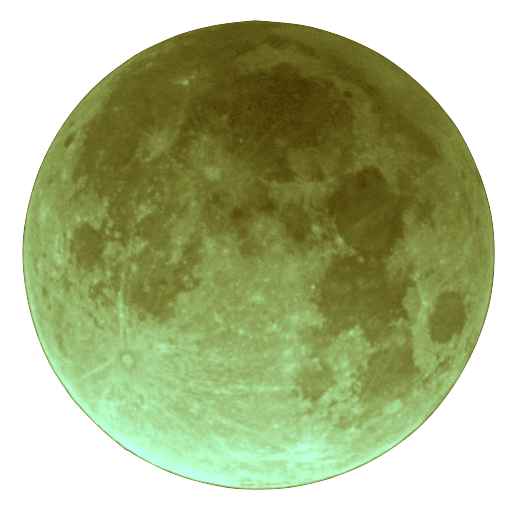
moon waxes full
and green spirit bestirs
flits through forest
canopy to soil
singing
awake! awake! awake!
send roots questing deep
spread blades to capture sun
sleep no more
let juicy desire flow free
summer days are long but fleeting
make of life what you may
grow joy!
nurture beauty!
be together!

green spirit
under full moon’s grace
quickens life
draws up spring streaming
to pool in furled leaf
gather in lignin wells
pond in dark phloem
till rushing essence
erupts in verdant geysers
surging from twig and stem

green spirit
kindles verdurous fire
enlivening and engendering
birch shivers into arousal
oak offers willing hands
cedars blush virgin viridescence
petals open to promiscuous airs
root tips drip beguiling light made sweet
to partners in the cyclic dance

moon limns new leaf in silver
while wood is stirring
swelling to vernal fullness
and permeating all
is this exuberant eidolon
— the spirit of the green —
for where does spring live
but in the heartwood
Returning to the reason I have time this April…
The Poetry Society of Vermont, which organizes and helps to fund many of the Poetry Month events and publications around Vermont, fell into a leadership vacuum last year. If you are at all involved with an organization that largely runs on volunteers and donations, you’ll know the story. The stalwarts of giving, both of money and time, are aging. With the pressures and infirmities of approaching the end of their days, their dwindling finances are going to medical bills and hospice care while their bodies are less and less able to do much of anything, never mind adhere to a schedule. And then there’s the simple and ineluctable math of age. These people are literally dying off…
This has been going on for a while. Over the last couple decades, the audience for most live music or theatre performance has been increasingly white-haired. Charity and social welfare boards are composed of decrepit bodies. Town councils and other low-paid or volunteer public servants are largely people who will not live long enough to fully implement many of the programs they initiate. Because old people, the people who preceded my generation (which is also entering its old age…), are the only people who have the wealth to donate and the resources that enable them to retire from waged work, they are also the only people who can engage with volunteering and financially supporting organizations and activities that are not viable in a market-based economy. Which is much of what makes living possible and pleasurable.
This is a disaster. And it came for the Poetry Society last year. We lost our president, our newsletter editor, and our membership director. Our archivist can only work a few hours a month now. I’m not sure if we have a treasurer or not. And I don’t know that any of these people have been replaced.
I tried to take over the archivist duties, figuring I could do that on my own time. But the Society uses Google Docs running on private computers to manage all its information, and my machine is too old to run that cloud stuff smoothly. (Not that I was particularly thrilled about becoming that intimate with Google’s surveillance…) So that didn’t work out…
I wonder if there were other people who did not have the tech capacity to manage the tasks, or if there were other people stepping up to volunteer at all. Because it doesn’t seem like much is happening now. The newsletter disappeared entirely for a while (mostly while I was out with meningitis, so I didn’t much notice at the time…). It is sporadic and thin now. There does not seem to be a president. And the archivist is handling membership reminders, which seems like quite a lot for someone who needs to dial back on volunteer duties for personal reasons.
So Poetry Month 2026 was not planned out or funded. The poems that usually decorate businesses and public buildings around downtown Montpelier are missing. The readings in libraries, churches and bookstores are few. And I don’t know if the collections of Poetry Town or Poem City verses are published at all. Which is very sad, because most of those collected works come from otherwise unpublished writers, many of them kids, and this is their first and sometimes only chance to read their words in print.
But this disaster runs well beyond a dimming of the light of poetry in central Vermont. This is at the core of our cultural implosion.
Of course, everything is connected. The fact that most people can’t afford to buy a home, the increasing destruction of the biosphere, endless everywhere wars, the collapsing socioeconomic systems. These are all parts of the same monster — along with the aging of the last demographic group that has the resources to volunteer.
That monster is the fossil-fueled, hyper-growth-based economy that extracts material and labor from the world to enrich this one group of people. That they have the time and wealth to give is bound up with the fact that they have taken so much from the world, leaving the rest of us impoverished and unable to take over public service and cultural support. Perhaps the worst aspect of this generation is a degree of self-absorption that has left them remarkably blind to their privilege. As a group, they are grossly entitled and impervious to any suggestion that they might need to share the world’s resources with younger generations, as well as with their contemporaries who do not possess the proper qualifications for status and wealth in their society. They are also reluctant to admit that they are aging and dying. They will not acknowledge that they’re embarking on the last stage of their lives, a time of letting go and passing on. Instead, they are holding on to their ill-gains in an arthritic death-grip.
In any case, these are the last people with discretionary time and money… because this is the last generation to live in a growing economy.
I’m one of the oldest GenXers. For as long as I and my generation have been alive, this culture has been desperately trying to replicate the post-War, early fossil-fuel years of economic expansion, a doomed project mired in the context of dwindling material resources, increasing deterioration and pollution, and concentration of any gains into fewer and fewer hands, hands that are now wrinkled with age. We have forced our pathological social structures on the entire world, destroying all cultural and economic alternatives and all the wisdom of those ways of being. As resources and labor have become scarcer and more costly, we have exchanged real material products for trade based on nothing but imaginary money and data gathering, so we have less and less material capital to supply our needs. And mounting degradation is forcing the already impoverished majority to pay more and more and more just to maintain a small, viable, nominally non-toxic place to lay our heads down at night. We don’t have time or money to give. It has all been taken from us and squandered on… nothing…
For much of my adult life, I assumed that the generations before me would eventually pass on their wealth and power, at which point maybe life for the rest of us would become easier. But I no longer think that is possible. I don’t believe that there is any true wealth to pass on. Real world resources have been churned into financial wealth, which is only useful if there are real world resources to buy. Adding on to that, the churning economy has caused real-world destruction at incomprehensible levels. We are facing multiple existential catastrophes that are costing us all the money and resources we possess just to patch up our lives and get by in this mess. And these mitigation efforts are eating up any wealth that might be in the hands of the few altruistic boomers out there.
As to power… well, we only need look to our current “leaders” to see how that succession is going…
I no longer think that there will be any surplus to give on the other side of this generation. There will be little but money and crumbling infrastructure passed on (and that’s if there is any money left after long and expensive efforts to prolong life at any cost). On the other side of the books, there will be no end to the expense of cleaning up the messes. Not for several generations, anyway. I think this is a disaster for human culture, especially for the expensive, media-based culture of the West. I doubt that my great-grandchildren (if I have any) will know a world that has Poetry Month. Maybe not even much in the way of poetry.
My single hope is that, with the passing of this last generation to assume the existence of growth, there will be some relief from the churning. There will be nobody demanding everybody’s time and resources. Perhaps then people will be able to live their own lives again. Make art. Make culture. Join together to make communities. Maybe in the absence of this fake growth, there will be real rewards, real material wealth, real sustenance and abundance. Maybe there will be time enough for poetry. Maybe there won’t need to be a poetry society because poetry will not be a scarce commodity, the purview of the privileged.
But for now, we’re firmly locked in the last days of imaginary growth. Those who last benefited from that system of artifice are grasping on to it with gnarled and bruised hands, unwilling to let go as long as they draw breath. And as they pass away, we are seeing the void at the center of this manufactured mirage. There is nothing to pass on. Except the destruction…
©Elizabeth Anker 2026


This was one of your best essays. It resonated for me as a central Vermont (Randolph) mid boomer who feels responsible for the crumbling, collapsing systems that my children and grandchildren will inherit. At the same time, I can see ways at the local level for hope and meaning, if not prosperity. Keep up with your good work.
LikeLike