


the thorn queen

she waxes full in fertile grace
queen of quick and fay, she reigns
in mantle green and seemly face
quelling fear and mortal pains
eternal mother, ever maid
undying wisdom in her glance
deathless weird is on her laid
to spin th' unceasing wheel of chance
again, she comes in crown of thorn
to lave the earth in blessed dews
through her travail is life reborn
hope and beauty she renews
thus verdant may unfurls soft leaf
and opens petals to the sun
and so we dance and banish grief
for summer’s now begun

May is the time of riotous blossom and rainbow color splashed everywhere. You can cut vases of fresh flowers every morning and still have plenty in the garden. Bees and butterflies are busy all over the garden. The early baby birds are fledging. And it finally feels warm in the north. (In the south, it’s verging toward too warm.) It is the month of Mother’s Day and graduations. School usually lets out at this time. In the United States, Memorial Day ushers in barbecue season. There is asparagus and rhubarb, peas and all manner of greens, cabbages and radishes, and many of the roots. Usually sometime close to May Day, the ice cream stands will open their doors. This is the best time to clean out the root cellar, freezer and pantry to prepare for the summer’s harvest. And if you haven’t done it yet, clean out the chicken coop and other animal housing. They won’t mind sitting out in the warming sun and will definitely mind if that same sun starts cooking the winter layers of slop.
Here is what a goat sounds like when she discovers a fouled bed.
The season of Beltaine gives way to Midsummer the last weekend in May. This is also the weekend that all the nightshades get planted out of doors. It is possible to do this earlier… but why? There is plenty to eat in the spring garden. So you might as well hold off until frost is absolutely not going to happen before putting out those tomatoes, chiles, sweet peppers, eggplants and potato slips. There is no sleep at all while this is happening but sunrises are just glorious!
Bealtaine

(from the children’s book of nursery rhymes, Come Lads and Lasses, 1884)
The astronomical seasons — the ones identified in our calendar — more closely match the thermal seasons than they do the solar cycle. In our modern calendars, we start the seasons on the solstices and equinoxes, but these are more properly considered inflection points in the year — not beginnings and endings, but peaks and valleys to the seasons. Our calendrical seasons do correspond to heating and cooling cycles, but not to length of daylight which is principally what governs the annual growth cycle.
The solar cycle is, therefore, the true agricultural year and what I tend to follow. Solar winter is when the days are shortest and there is the least potential for solar energy. Winter begins in early November and reaches its midpoint at the solstice, around December 21 (in the Northern Hemisphere). Solar summer has the longest days and the most sunlight. Summer begins in early May and reaches its full strength at the solstice.
For old agrarian communities of Europe — who would also have used the solar cycle to govern annual rhythms — May 1st was the beginning of summer, and it was ushered in with the ancient celebration of Beltaine, the year’s biggest fire festival. Bel means bright or fortunate. Tene means fire. Whether referencing the sun or the ubiquitous May Eve bonfires, Beltaine was named for the good luck of warmth and light.
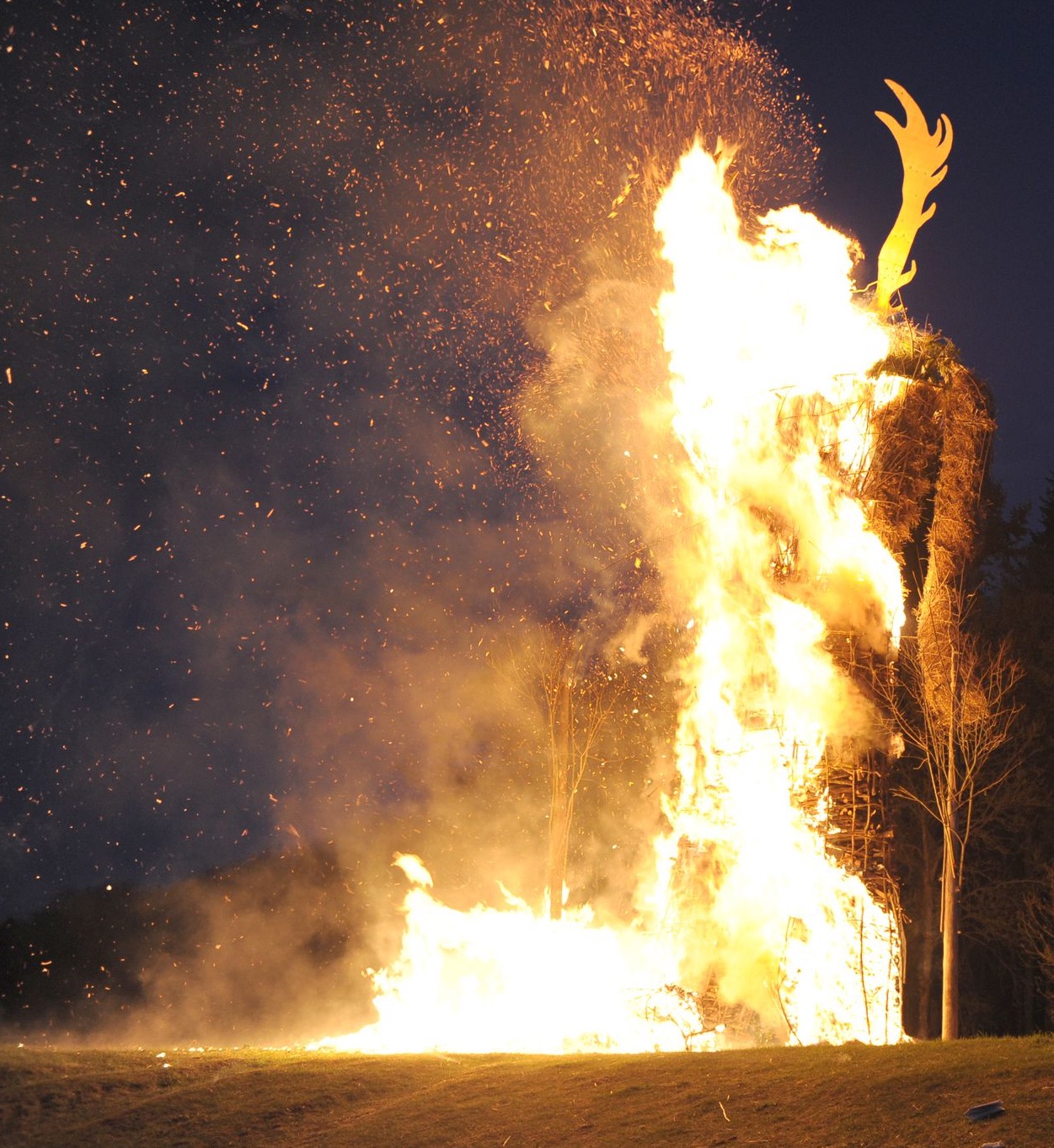
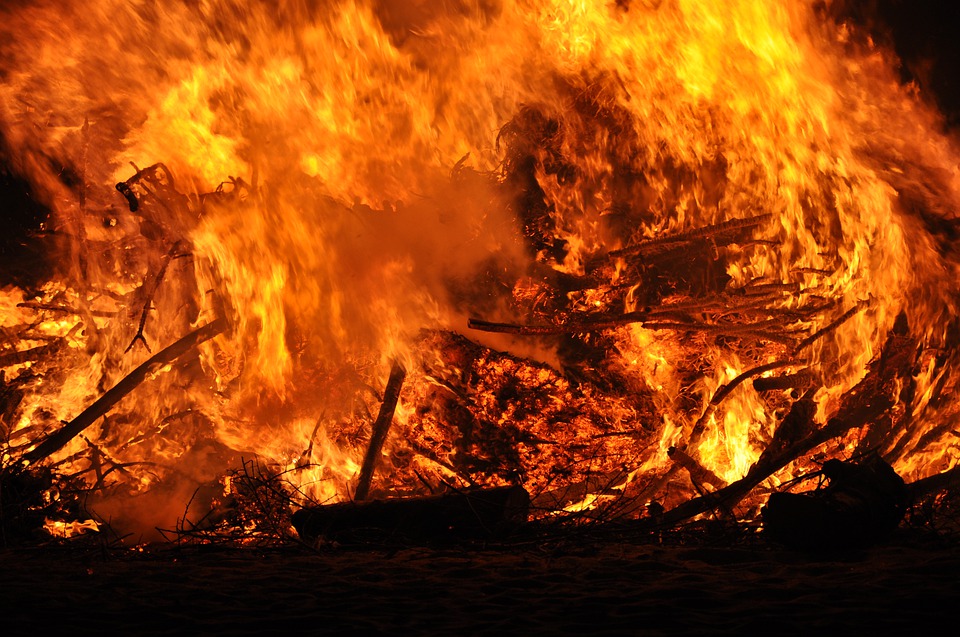
Bonfires were lit to honor the sun and welcome in the summer. On Beltaine, the people of Ireland (and possibly other Celtic-language lands) extinguished their hearth fires and drove their livestock from winter confinement to a high point where they would kindle two ceremonial fires. They would drive the animals between the fires for fertility, purification and protection from disease and thence on to summer pastures, thick with new grass. The fire itself was believed to have curative and protective powers.
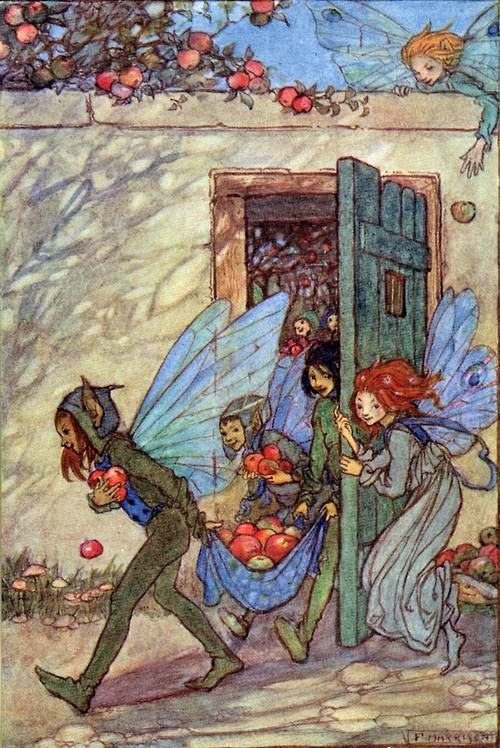
Hearth fires were rekindled by carrying a brand from the bonfire to the house. A peculiar superstition grew up around this. If a woman came to the house asking for fire, she was believed to be a witch, coming to steal all the butter from the house. The householder should absolutely not share out the fire, except if she had the foresight to deck the doorway with May greenery which prevented all witchcraft from crossing the threshold — and had the double benefit of blessing the dairy. On the other hand, bringing the greenery through the door, especially if it contained hawthorn in flower, was a sure way to introduce faerie mayhem into the household.
In 1769 Thomas Pennant recorded a Beltaine ritual in Scotland. Bannocks, ceremonial oatcakes, were baked in the bonfire. Nine knobs were baked onto the bannocks, each of which was dedicated to some preserver of the herds or some particular animal that caused harm. Celebrants stood near the fire facing away from it then broke off the knobs and tossed them into the fire over their shoulders, invoking the protection baked into the bannock. Using the same gesture, they offered the knobs that represented destruction to the wolf or fox, predators and disease, asking that these agents of harm turn their predation elsewhere.

by Charles March Gere (1948)
Through time, the ritual evolved so that the cakes eventually became cheese rounds and the knobs were replaced with crosses. These waxed discs of cheese were rolled down hillsides. If they landed cross side down, it was a sign of ill-luck. Some rituals were made into contests with teams of cheese rollers vying to roll their lump fastest or furthest. A fun cross-breed of bonfire and rolling fate games, is the fire wheel in which a wagon wheel is set alight and then sent careening down the hillside. Supposedly, bad fortune follows if the flames are doused before reaching the bottom. I tend to think this might be a better fate than introducing a rolling flame into the corn fields and village greens.
Another bannock ritual involved burning a portion of the cake and then breaking the whole cake apart and putting the pieces in a bag. People drew the cake bits from the sack. Whoever got burnt pieces had to leap the bonfire three times to assure a good harvest. This ritual is thought to be an echo of older scapegoat ceremonies in which the recipient of the unlucky portion was burnt in the fire. I remain skeptical of most human sacrifice stories because nearly all of them originate in propaganda pieces written long after the events they purportedly described happened. Also, there’s just not a lot of physical evidence for any of it to have been a common occurrence, happening every year (where are the piles of bones and charred teeth?).
But more importantly few humans would abide by such a stupid system. Kill off at least one healthy young person from the community each year? Not likely. Maybe slaves, but how many slaves were there out in the farming hinterlands? And I just can’t see the parents of the village standing by while their kids were sacrificed for what would clearly be no good empirical reason. The harvest would be good or bad regardless of the bonfire ritual. In any case, in the 18th and 19th centuries these titillating tales turned into rituals of leaping the fire to bring luck to the harvest. Probably while the farmers stood alongside, shaking their heads at the citified tomfoolery. As farmers are wont to do.
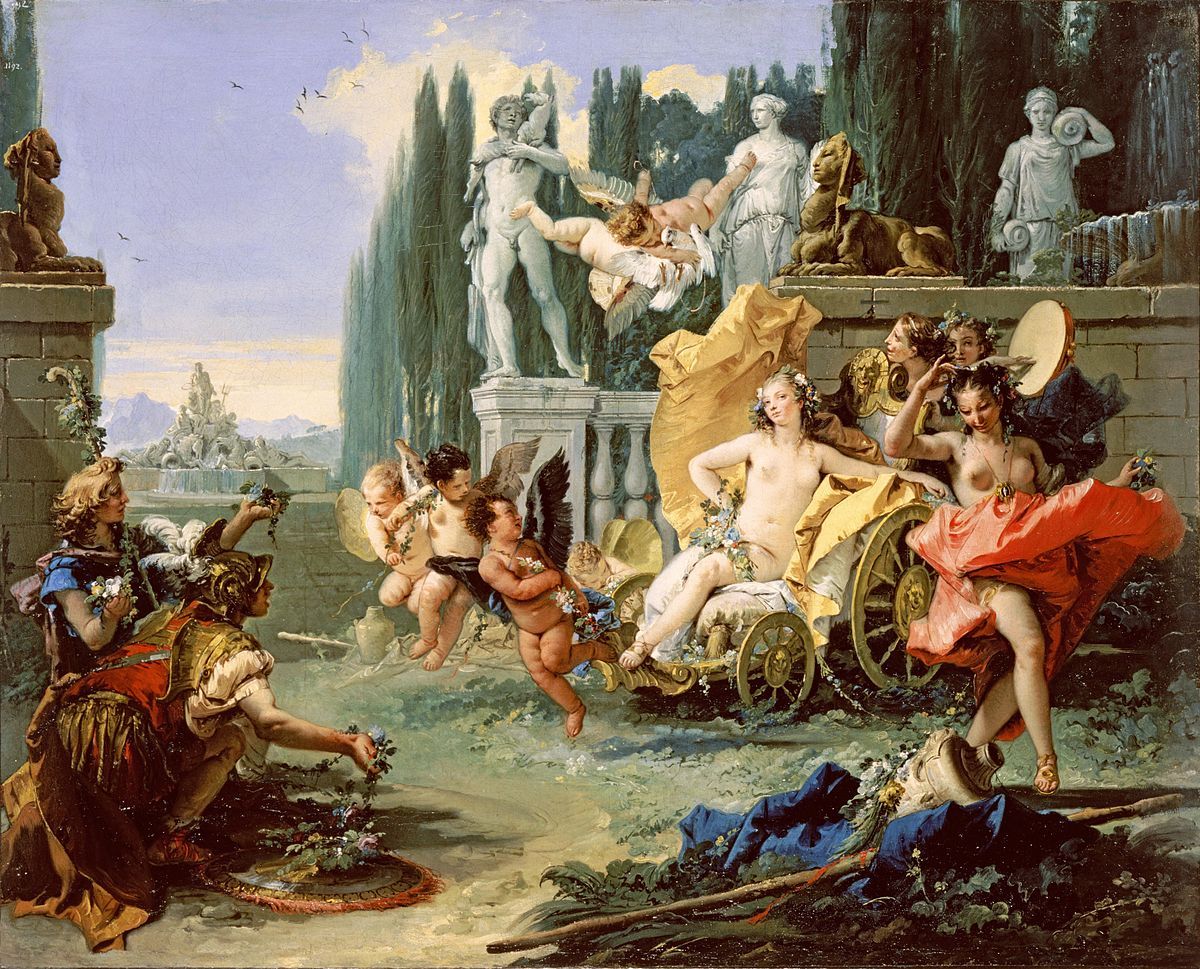
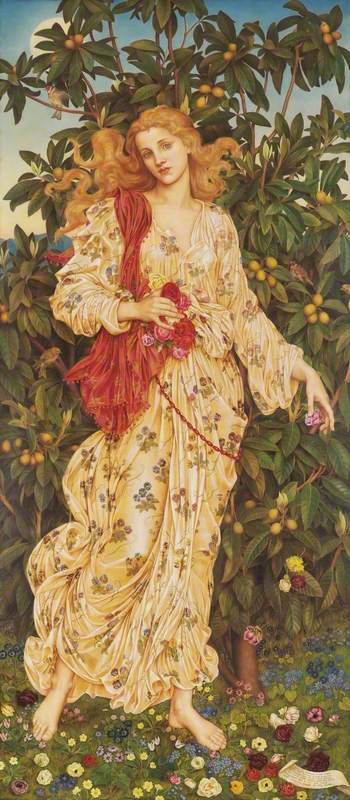
Roman incursion into the Northern lands produced a hybrid holiday, May Day, with aspects of both the Celtic Bealtaine and the Roman Floralia, which honored the goddess of flowers, Flora, but also celebrated the Bona Dea, the Good Goddess, and the household Lares. Floralia was focused on human fertility and licentiousness, but also had lavish floral displays, with every surface garlanded in bright blooms. During the Medieval Warm Period, it would have been possible to make garlands of greenery and flowers even as far north as Scotland by early May. It’s also possible that the celebration would not have taken place on a fixed date, but rather when the hawthorn, the May, bloomed. There are many preserved traditions that would not have worked well if the May Bush was bereft of blossoms.
One such was bringing a blooming hawthorn to the center of the village and decorating it with colored eggshells, ribbon and other bright tidbits. Communities competed for the most elaborate bush. Some even planted a permanent hawthorn tree in the village center for the annual celebration. Rival communities would not always compete fairly, going out to steal the competition’s May Bush under the cover of darkness. There are civic and parish records of wages paid to guards for the bush. There are also a few transactions where the community took up a collection so the local lads could more effectively trash the rival May Bush.
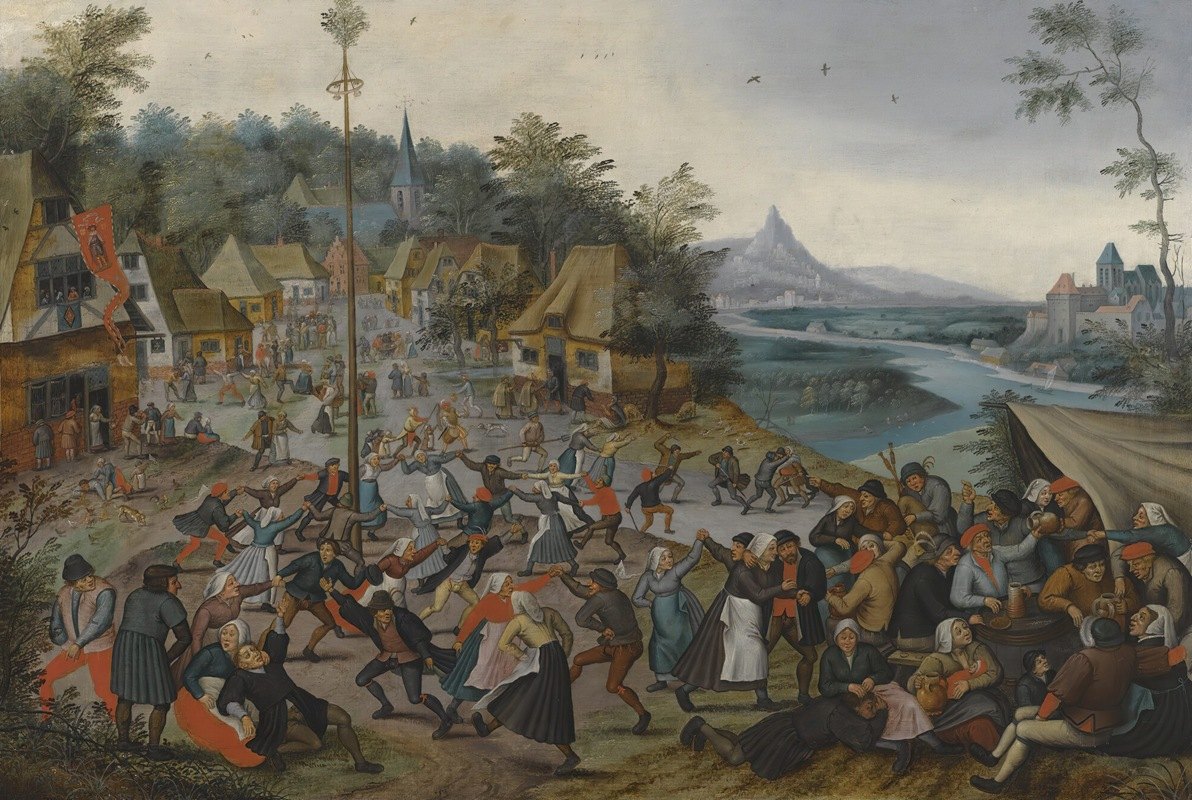
by Pieter Brueghel the Younger (16th century)

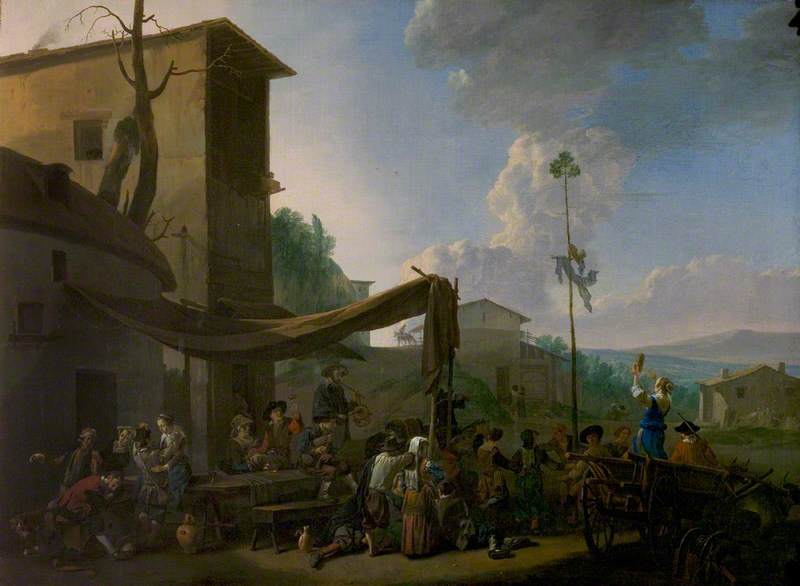
Somewhere in all this business the Maypole tradition evolved. This is not a Celtic tradition though. It’s almost nonexistent in Ireland, showing up neither in recent memory nor in legends. It may be an evolution of the May Bush festivities, though both were known to happen in some communities, especially in East Anglia. Both traditions involved erecting a tree in the common, decorating it, and gathering around it on May Day to feast and dance. There were even Maypole thefts between rival communities. But the Maypole was normally just the trunk of a young tree and was typically much taller than a bush. Records show that the type of tree used for a pole was highly variable, with birch, ash, oak, and pine all being used; it was the height and girth of the trunk that were important. In 1660, to celebrate the end of the religious wars in England, Charles II erected a 40-meter maypole on London’s Strand. This pole stood for nearly half a century, solidifying the king’s renown as “the merry monarch”.
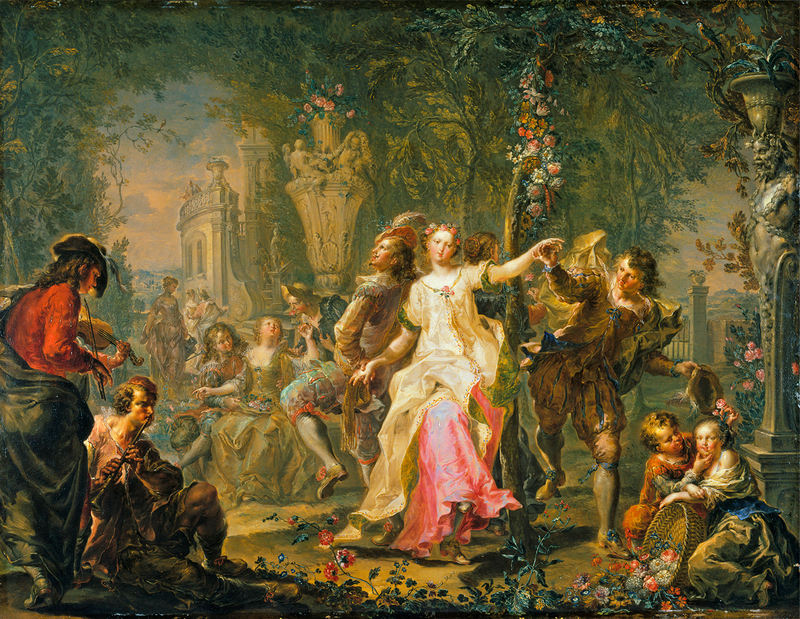
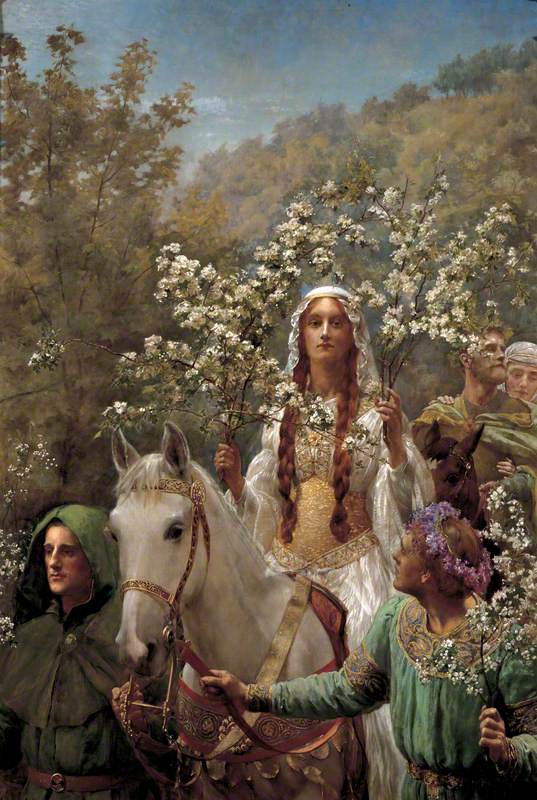
by John Collier (1897)
For centuries, cutting and bringing the Maypole into the village was the central ritual act in the tradition. Young folks would go out into the forest on May Eve — doing what young folks will do — and would process back into town with the largest trunk they could haul. The top branches were usually left attached and to these were added garlands and sprays of flowers and greenery with ribbons and trinkets. Some communities added local flavor to the decorations in the form of cakes and loaves of bread. Much later, the stylized ribbon dance that we know as “dancing the Maypole” was added to the festivities. Originally, this was also a competition — the more complicated the braid the better. By Victorian times, it was more of an innocent kissing game.
Perhaps the Maypole is completely disassociated with Beltaine and simply celebrates human fertility without the agricultural overtones (or gravity). It’s fairly indisputable that going to gather in the May, whether that involved erecting the pole or garlanding the village, was a thin excuse for woodland canoodling. “Of a hundred maids who enter the woods on May Eve, scarcely a third come out maiden still,” or so whined the Elizabethan Era prudes. I strongly suspect that few were maids to begin the night. Because teenagers. They weren’t all getting up before dawn just to gather May morning lady’s mantle, and that radiant glow wasn’t from rolling in the dew-damp meadows alone.
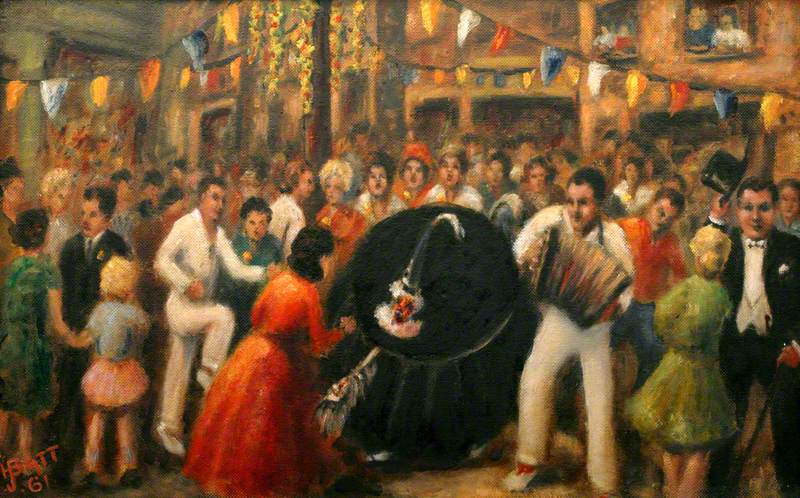
The processions into town quickly turned into full parades with a regular cast of characters. Robin Hood and Maid Marian led a motley assembly of Morris Dancers and mummers. At Padstow in Cornwall, the famous Padstow Hoss still dances around the town from midnight on May Eve to dusk on May Day to carols and accordion and drums. The giant hobby horse, played by a cloaked man wearing a horse’s skull, lumbers about, dying and being revived and pulling women under the cloak for luck. It’s believed that if the Hoss captures a young woman and covers her with the cloak, she will conceive soon. (Nudge, nudge, wink, wink, know what I mean…)

Much later, another sort of procession began to take place on May Day. The Labor Movement in the United States adopted this day as a general strike in 1886. This began as a peaceful march, but in Chicago tensions within the movement between socialists and trade unionists sparked violence at the McCormick Reaper factory on 3 May and again in Haymarket Square on 4 May. This tragedy was all but forgotten in the US but became a rallying point and a national holiday for many other nations. Even Pope Pius XII recognized May Day as a day to honor labor, though being vehemently anti-communist he proclaimed 1 May to be the feast of Joseph the Worker in 1955 — displacing poor Saints Philip and James in the process.
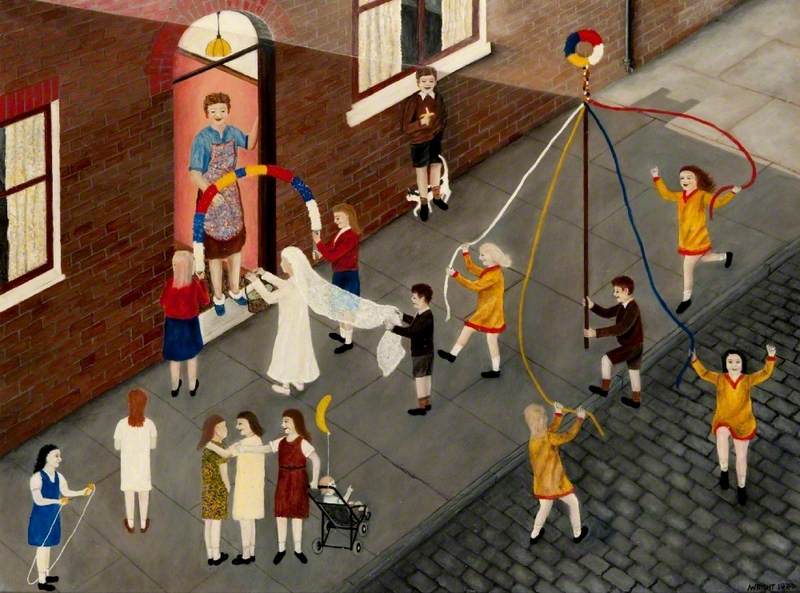
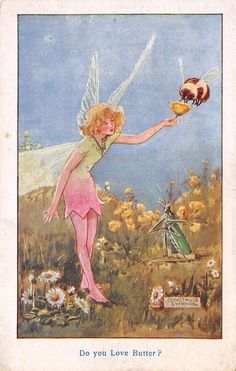
And so we have the modern bricolage of celebration with a little of this and a snippet of that and really not a whole lot of connection. What is happening in your part of the world in early May? What traditions mean something to you? There are so many more than I’ve included in this short essay. (I particularly like the Finnish tradition of mead-soaked picnicking with thousands of friends…) Go out and see what nature is doing today. Go see what’s happening in the garden. Go find out what your culture did to welcome in the summer. If your ancestors lived elsewhere, find out about the summer welcoming festivals of the cultures who live(d) where you are now. Then make your own fire festival!
But mind you leave the blooming hawthorn outside or the faeries will cause no end of mischief this year. That, and there will be an intolerable absence of butter.
If you missed the bonfires last night, never fear, you’ve still got plenty of time. For starters, Beltaine may not be today in your tradition. Recently, the cross quarter holidays — of which Beltaine is the second in a calendar year — have gravitated to the beginning of the calendar month in which they fall. But they haven’t always fallen out that way. Even today, the cross quarter holidays flutter between the 1st and the 2nd. Some contemporary traditions place all of them on the 1st, some the 2nd, some a mix. But historically, the old holidays have wobbled all over the calendar. Because these celebrations are not fixed to the civic calendar.
The cross quarter days are the halfway points between the solar equinoxes and solstices. This year, the actual cross quarter day that we name Beltaine, the day halfway between the vernal equinox and the summer solstice, falls on Cinco de Mayo, May 5th. But this halfway point is not always exactly May 5th. It bobs around with the wobbling solstices and equinoxes.
But our calendars have also wobbled. The second cross quarter day would have fallen in late April prior to the Gregorian calendar reform that erased eleven days from October 1582. And after the reform, stubborn elders, particularly in England where the “papish” calendar reforms didn’t take hold until the mid-18th century, added to calendrical confusion by insisting on celebrating the “old holy days”, some dozen days after the current calendar date.
To further complicate the calendar, most people didn’t know the exact timing of those solar events. Today we have almanacs and computer calendars telling us the exact second of the solar events, but almanacs did not exist before the printing press… and it’s rather difficult to name the exact moment of the equinoxes and solstices simply from observation. So people looked to the stars, to the animals and to the plants. They also followed the much shorter and easier to track lunar cycles. In this milieu, calendars were not planned outlines of future dates, they were records of experiential observations.
For most of human experience, the beginning of the month was when the thin crescent moon was first seen shining over the western horizon, not some fixed first of the month. And for those who celebrated the Celtic cross quarter holidays, the festivals began when some place-based event happened. For example, Imbolg was likely tied to the lambing season, which was itself tied to the breaking of dormancy for winter grasses. Lughnasadh was the gathering season marked by the breaking of summer’s heat, the onset of late summer storms.
Now, it was possible for people with much time on their hands to calculate out calendrical timing based on the sun’s annual round. The druids, Roman bureaucrats and Church clergy did just that. But most people didn’t have time on their hands. Most people just lived their lives day to day and named some days special based on what was obviously happening, not esoterica such as the exact moment the sun crosses the ecliptic.
And they had no use at all for such abstractions as the civic calendar. Calendar dates, as we know them, were not commonly known until very recently, calendars and other such printed materials being the sole purview of the wealthy until well into the 18th century. Most people in Europe knew when it was Sunday, because of Mass. Somewhat fewer people knew the civic calendar months and approximately when they fell. Very few common people could have named the civic calendar date on any days that weren’t major Church festivals — and they didn’t bother much with counting the days in between the festivals, trusting the Church to keep track of its liturgical calendar.
So, few people in history would have known when the exact cross quarter day fell; even fewer would have known when it was May 1st; and almost none of them would have equated these two very different calendrical systems. This has created a muddled record that makes it impossible to nail down a historically accurate date. But this also means there is considerable latitude for choosing a time to celebrate.
And to make that choice, one must first decide what is being celebrated.
If you’re honoring the labor aspects of May Day, then today is it, but that has very little to do with Beltaine… And that’s probably not what May Day means to most people. Most consider this a festival of summer’s burgeoning, a celebration of fecundity and fertility, a time when food becomes plentiful and being outdoors becomes delightful. This is, at its core, Earth Day.
And even that introduces more calendrical complication. Beltaine may not have been a May holiday. On a practical level, it predates the Roman calendar that includes a May 1st. But there is also reason to believe that Beltaine was transformed from a fluctuating feast into a fixed date tied to Floralia, the Roman or Etruscan plebeian fertility festival which falls in late April in Roman calendars. Historians consider this a likely merger because Romans would insist on turning everything into some version of their own traditions (which, of course, were largely lifted from Greece and Etruria). But also because Beltaine in its oldest, pre-Roman form, had very little to do with human fertility. That all seems to have been grafted on to the natural and agricultural holiday under Roman influence. So, rather than May 1st, the summer welcoming bonfires may have been lit on the Roman April 28th, with more emphasis on unbridled sex in civilized urban areas, while the pagans stuck to their livestock blessings and woodland peregrinations.
But there is also reason to believe Beltaine, the honoring of the holy Earth, the essence of the feminine divine, may have also influenced Rome in reverse. The festival of Bona Dea, the Roman Earth goddess who is cognate to Gaia, Nerthus, Hathor, Ishtar, and other faces of supreme divine fertility, falls on Hawthorn Day, May 4th in our contemporary calendar. As we’ve seen above, our May 4th is very close to the actual cross quarter day, the date that druids named Beltaine, according to many ancient writers (none of whom were quite as ancient as the holiday… not contemporary to or observant of the actual festival, unfortunately). So it is possible that the festival of Bona Dea represents a Roman adoption and adaption of Beltaine. Based on that logic, I know a few modern traditions, particularly in the Reconstructionist vein, that place May Day on May 4th.
All this means that there is no reason to assume that Beltaine must be celebrated on May 1st. I tend to think that the festival of Beltaine began with the blooming of the hawthorn. Since so many of the oldest traditions are tied to hawthorn blooms, it wouldn’t make practical sense to light the bonfires until the blossoms opened, regardless of the date. I don’t have hawthorn hedges nearby — and I’m not exactly upset about that — so I’ve chosen a local harbinger of summer, the forsythia, which has the further symbolical significance of being bright yellow, the color of the sun and the traditional color of good luck draped around the liminal places of your home. So these days, I time my Beltaine rituals to follow the blooming of forsythia in New England.
Not that I have many rituals. I do plant potatoes on or near May Day, but that’s not much of a festival. I also hang forsythia wreaths on the garden gates and a basket of golden silk flowers by the front door. I like the idea of going out in the early morning to collect dew from the clover and newly green grass. Unfortunately, this hasn’t been possible for most of my life. In New Mexico, dew isn’t much of a thing in early summer (which is actually the season of Hot out there). In New England, there isn’t much verdure when the forsythia blooms because it’s still rather too close to freezing.
I do get up early and light a candle in my small copper cauldron. If the weather is clement, I’ll carry this out to the Green Man plaque under the cedars in my garden. If it’s being Vermonty outdoors, I’ll place the cauldron on a table under a window where I can see the Green Man. Usually, I crack open the window to inhale the morning scents and listen to the dawn chorus, even if it’s freezing outside. I will have a mug of tea, usually something sweetly floral like rose or lavender. Often, I will bring in a few blooming twigs of forsythia because it’s pretty. Perhaps, as a hawthorn stand-in, I should leave it outdoors for fear of inviting in fairy mischief… only I don’t much believe that the Fae are coming into my house riding on flowers.
With the fire lit, I might stare into the dancing flame and let my mind wander in divination. As the dawn strengthens, I watch the light transform the grey cedars of twilight into glowing green and gold, a microcosm of the Greening Moon and the growing summer. The Green Man turns from a shadowed, faceless form into a visage of vibrancy and strength. And the rising summer sun finally eclipses my tiny cauldron flame.
So I blow out the candle, expressing my gratitude for the miracle of the green light-eaters who will be softening my world into summer warmth and who will bring full bellies in the coming months. I toast the Green Man and drink my tea. And I thank the Goddess for once again turning the Wheel another quarter.
That’s my rite. Beltaine contains such a wealth of living traditions, no doubt you can find something that resonates with your place. And if you wish, this year you could also salute the setting Greening Moon which will be full today and so will be westering as the May Sun rises for the next many days.
Full Greening Moon
The Greening Moon reaches fullness at 1:23pm, but the leaves in Vermont are a bit behind the moon. There is a bare wash of green and burgundy over my jungle. But the maple leaves are now as big as a squirrel’s ear, so it’s time to plant potatoes — which is the essential garden task of the waxing Greening Moon. So, I suppose, we’re only a little late.
This year, the full Green Moon ushers in May, while the Flower Moon waxes full on the last day of May. So May 2026 is a calendar month of two full moons, meaning the Flower Moon will be blue. If you are awaiting any unwonted events, “once in a blue moon” falls in the latter half of May and the first half of June.
Maybe there will be astrological effects on our spiraling socioeconomic systems…

the green man goes back to bed
he opens his heart to birdsong,
feels fizz-prickle of bud fissure —
a frisson of eternal expectancy.
he hungers for strong summer sun
but remains stoic under starlight and spring storm.
he yawns limbs unfurled,
sends sweet sap down to earth;
must pay mycorrhizal newsboys
for missed winter tidings
— cold comforts for the reluctant age.
ah well, but…
he becomes evanescent mind,
spreading thought tendrils
through soil and stone and stream.
he takes to thrawn brooding,
tallying bills,
reconciling accounts,
re-membering his being.
he sees you there, holding the ax,
smells your insatiable want,
tastes poison in air and water,
knows his children will fall.
though longanimous will of the wood abides
still…
there is much to reconsider
in his days of waking.
— his numbers are thinned
— his bodies are broken
— his skin gnawed to bone-wood
he is too old for this.
he thinks he may return to dreaming,
awaiting august fulfillment,
leaving youthful maypoles to unrequited lovers.
living time
the old river god huffed
    shook off ice floes
    riffling and churning in irritation
        pique and petulance
  these pestilential spring torrents
    think they know everything
always
    rush rush rush
    hurry hurry hurry
        no respect for the journey
  but head-long dash to the bottom
never stopping to ask directions
    suss out the news from crows and kingfishers
  no time for meanders
    oxbows rank with singing frogs and duck weed
  no appreciation for
    dancing sunbeams
    pregnant clouds
    whispering reeds
and no respect at all for traditional paths and bounds

slow down
    he thinks
  wouldn’t hurt to seep into the soil
  chat with rootlet and mycelia
  go make a tree
    or sail into the skies
but leave me be between well-worn banks
    flowing summer stately and serene
  was i ever that rash
    he thinks
  youth is wasted
and i’m too old for drama

because it’s not about
     the cold dark destination
it’s about enjoying this living time
©Elizabeth Anker 2026


